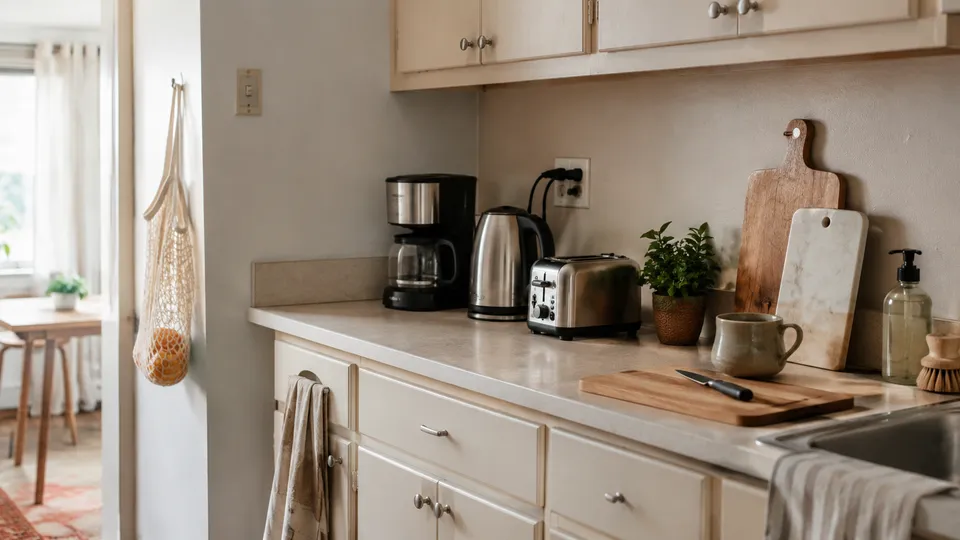
A coffee or tea corner sounds like something that belongs in a large kitchen with a built-in espresso machine and a dedicated sink. But the real version is much simpler: a small, organized spot where your coffee or tea supplies live together so you can make your morning drink without opening four different cabinets.
You do not need a big kitchen, a renovation budget, or a permanent coffee bar. A tray, a shelf, a cart, or a single drawer can do the job. The point is not to make the corner look impressive. It is to make your morning routine easier.
This guide walks through simple, renter-friendly ways to set up a coffee or tea corner at home, whether you have a full kitchen, a tiny apartment, or just a narrow stretch of counter space.
Start With What You Actually Drink
Before deciding where to put your coffee corner, look at what you actually reach for in the morning. Someone who makes pour-over coffee every day has different needs than someone who drops a tea bag in a mug and calls it done.
A coffee drinker’s station might include a coffee maker or dripper, filters, ground coffee or whole beans, a compact coffee grinder, and a mug. A tea drinker’s station might include an electric kettle, a few favorite teas, a spoon for honey, and a mug. Someone who does both might combine the two around a shared kettle and a small selection of each.
Be honest about your habits. If you buy coffee on the way to work most days and only make it at home on weekends, your station can be smaller and simpler. If you make coffee or tea at home every single morning, your station deserves more thought and a more accessible spot.
If you are choosing a one-cup machine for that routine, compare the filter, cleanup, and counter-space tradeoffs in our guide to pod-free single-serve coffee makers for small apartments.
If espresso is part of the plan, measure the machine’s depth and the clearance below upper cabinets before assigning it a permanent spot. Our guide to compact espresso machines for small apartments explains the tradeoffs between a narrow machine, a milk-drink setup, an all-in-one grinder system, and a stored manual press.
Five Simple Coffee or Tea Corner Setups
You do not need a dedicated piece of furniture to create a coffee or tea corner. Most setups use something you already have or can add without drilling, mounting, or renovating.
A Tray on the Counter
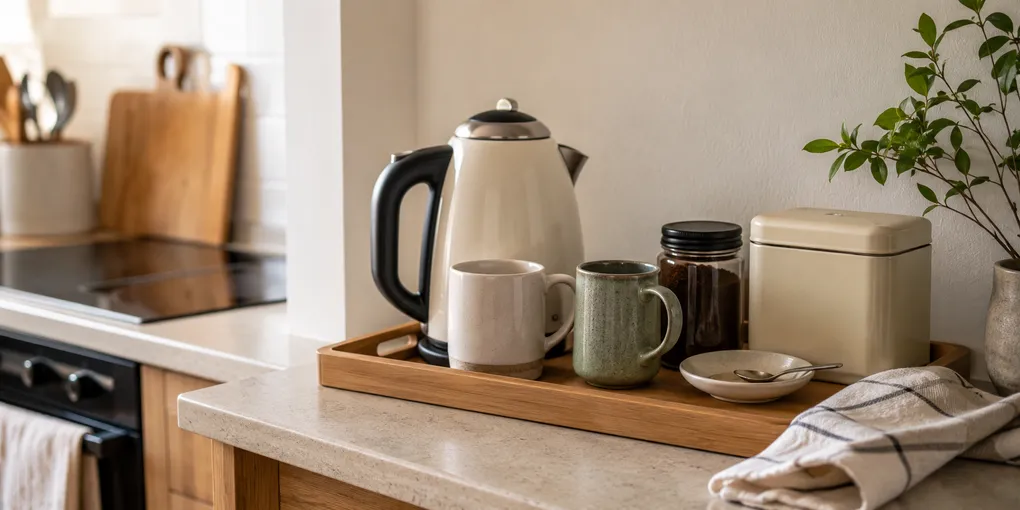
The simplest setup of all. A tray holds your coffee maker or kettle, a canister of coffee or a tin of tea, a few mugs, and a spoon. The tray keeps everything together visually and makes it easy to move the whole setup if you need the counter space for cooking.
Choose a tray with raised edges so nothing slides off. Leave enough space on the tray for your mug to sit next to the coffee maker or kettle while you prepare your drink. A small tray can hold the essentials without spreading across the entire counter.
This setup works well in a rental kitchen where you cannot install shelves or make permanent changes. It also works on a dining table, a sideboard, or a desk if the kitchen counter is too small.
A Cabinet Shelf
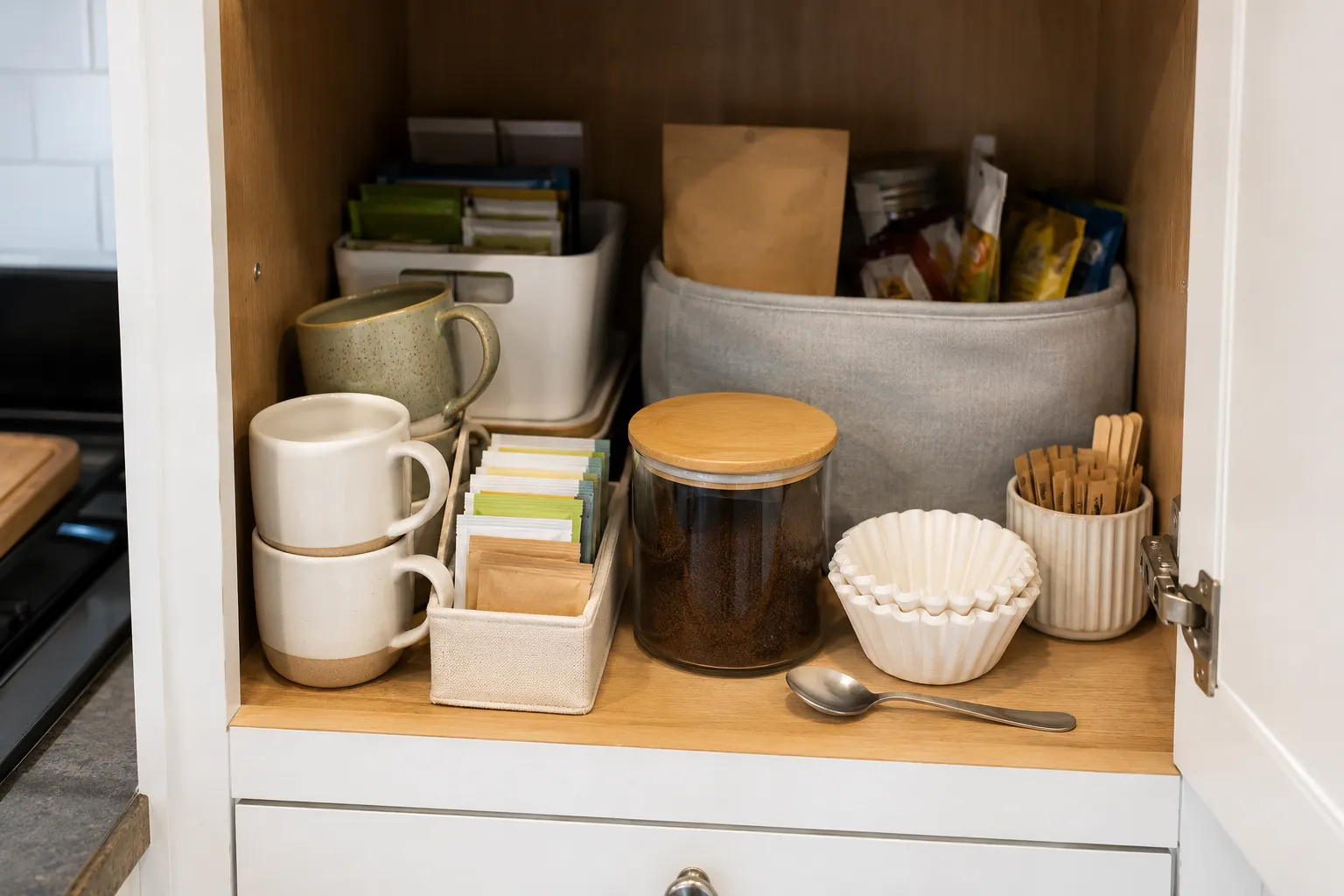
If you have cabinet space, dedicating one shelf to coffee or tea supplies can keep the counter clear while keeping everything easy to reach.
The shelf should be at a height you can access without stretching or bending too much. Group items together: coffee or tea on one side, mugs on the other, sweeteners and spoons in a small container in between. If the shelf is deep, use a small bin or basket to keep small items from getting lost at the back.
A cabinet shelf works especially well for tea drinkers, since tea bags and loose tea take up little space. A small tin of loose tea, a box of tea bags, a jar of honey, and a spoon can live on a single shelf without crowding anything else.
A Small Cart
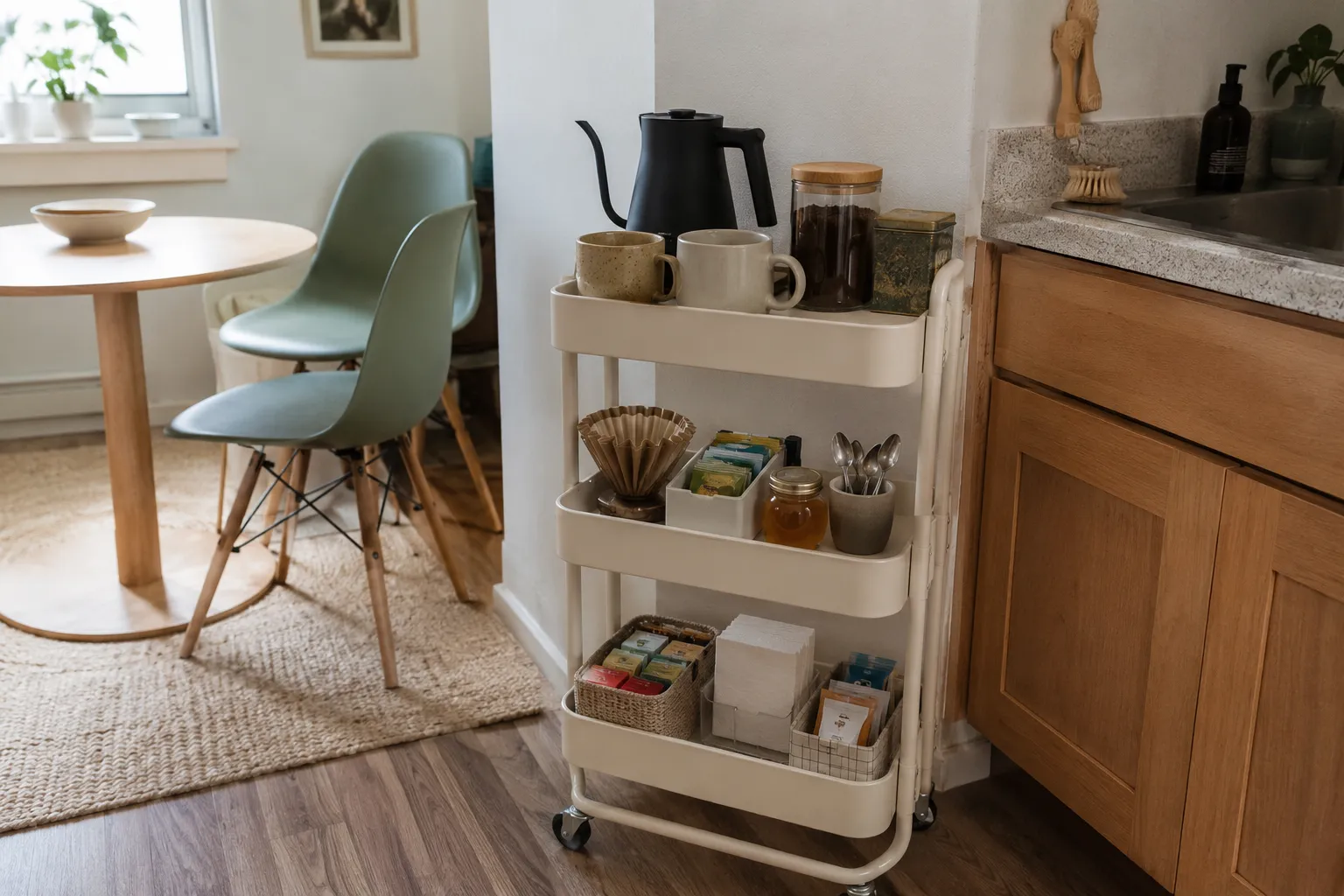
A slim rolling cart can become a mobile coffee or tea station that does not take up permanent counter space. The top shelf holds the coffee maker or kettle and a mug or two. The middle shelf holds coffee, tea, filters, and sweeteners. The bottom shelf holds backup supplies, extra mugs, or a small towel.
A cart works well in a small kitchen where counter space is limited but there is a narrow wall or an empty corner where the cart can live. It can be rolled closer to an outlet when in use and tucked back against the wall when not. This is also a useful setup for someone who rents and cannot install shelves.
Look for a cart that is narrow enough to fit your available space but sturdy enough to hold a kettle or coffee maker steady. A cart with rails on each shelf keeps items from sliding off when you roll it.
A Drawer Setup
If your kitchen has deep drawers, one drawer can become a coffee or tea station that stays completely out of sight when not in use. This is a good option for very small kitchens or for people who prefer a completely clear counter.
A drawer setup works best when the drawer is near an outlet, since you will need to pull out the kettle or coffee maker and plug it in each time. Use drawer dividers or small bins to keep tea bags, coffee filters, sweeteners, and spoons organized. Store mugs in an adjacent cabinet or on a shelf above the drawer.
This setup takes more effort each morning than a tray or a cart, since you have to set up and put away your equipment every day. It works best if you value a clear counter more than you value a few extra seconds of setup time.
A Sideboard or Freestanding Table
If your kitchen has room for a small sideboard, console table, or narrow freestanding shelf, that can become a dedicated coffee or tea station. This is the closest thing to a traditional coffee bar, but it works in a small apartment if you choose a slim piece of furniture.
A sideboard or table gives you more surface area than a tray, so you can spread out a bit. A coffee maker or kettle, a canister of coffee, a tea tin, mugs, spoons, and a small plant or lamp can all live together without feeling cramped. The surface below can hold backup supplies, a small basket for dish towels, or a few cookbooks.
Keep the station limited to daily-use items. The more things you put on a dedicated coffee table, the more it starts to look like clutter instead of a thoughtful setup.
Tea Corner Basics
A tea station is usually simpler than a coffee station because tea requires less equipment. An electric kettle, a few favorite teas, a mug or teapot, and a spoon for honey or sugar cover the basics.
Loose-leaf tea takes a bit more: a tea infuser or a teapot with a built-in strainer, and a small container for the used leaves. Tea bags are simpler and take up less space, making them a practical choice for a small kitchen or a busy morning.
If you drink both coffee and tea, center the station around a shared electric kettle and keep coffee and tea supplies side by side. A kettle makes hot water for pour-over coffee, French press, and tea. It is one of the most versatile tools in a small kitchen and earns its place in a combined coffee and tea corner.
Keep Only the Daily Items in the Station
A coffee or tea corner can quickly become a catch-all for mugs, random sweeteners, spare filters, recipe cards, and decorative items that do not belong there. The goal is to keep the station limited to what you use every day.
Daily items might include: a coffee maker or kettle, a coffee canister or tea tin, one or two mugs, a spoon, and sweeteners if you use them. Weekly or occasional items — spare filters, backup coffee bags, specialty teas you rarely drink, extra mugs — should live in a cabinet or on a lower shelf.
Not sure whether the daily supplies should be pods, ground coffee, paper filters, or a reusable filter? Read coffee pods vs. ground coffee for a small apartment before you build storage around a routine that will not suit you.
If the station starts to feel cluttered, remove everything that is not part of the daily routine and put it away. A clean, simple station is easier to use and easier to keep tidy.
Make It Work in a Small Apartment
A small apartment does not need to mean giving up on a coffee or tea corner. It just means being more deliberate about where and how you set it up.
If counter space is extremely limited, use a wall-mounted shelf, a narrow cart, or a drawer. If the kitchen is part of an open living area, a small side table or a corner of a dining table can serve as the station. If outlets are scarce, position the station near the nearest accessible outlet and manage the cord neatly with a clip or wrap.
The tray method is especially useful in a small apartment because it creates a defined zone without requiring any permanent setup. You can move the tray to wherever makes sense that day, and you can clear it away entirely when you need the counter for cooking or entertaining.
Do not overthink the setup. A kettle, a mug, and a small tin of tea on a tray is already a coffee or tea corner. It does not need to look like a café. It just needs to make your morning easier.
Common Mistakes to Avoid
A few common pitfalls can turn a simple coffee or tea corner into a source of daily frustration.
Putting the station too far from an outlet. If you have to stretch a cord across the sink or unplug something else every morning, the station is in the wrong place. Move it closer to a safe, accessible outlet.
Storing mugs on the opposite side of the kitchen. Your mug should be within arm’s reach of your coffee or tea station. Walking across the kitchen to grab a mug from a cabinet every morning adds friction to a routine that should be easy.
Letting the station sprawl. A coffee corner that starts on a tray and gradually spreads across half the counter is no longer a corner. It is just clutter. Keep the station contained to its tray, cart, shelf, or drawer.
Keeping supplies you rarely use in the station. That specialty coffee you bought on vacation, the tea someone gave you as a gift that you never drink, the extra filters that do not fit your current dripper — all of these should live elsewhere. The station is for what you use daily.
Making it look good but hard to use. A beautiful arrangement of jars and canisters does not help if you have to move four things to reach the coffee filters every morning. Prioritize function over appearance. A station that is easy to use will be a station you actually use.
Simple Coffee or Tea Corner Checklist
Use this checklist to set up a coffee or tea corner that works for your space and your routine.
- Drink type: Do you mainly make coffee, tea, or both? Let this decide what lives in the station.
- Equipment: Coffee maker, dripper, French press, or electric kettle — pick the one you use daily.
- Supplies: Coffee beans or grounds, tea bags or loose tea, filters if needed, sweeteners.
- Mugs: Keep one or two daily-use mugs in or beside the station.
- Spoon and extras: A small spoon for stirring, honey, sugar, or other daily add-ins.
- Tray or container: A tray, bin, or basket that contains the setup and defines the zone.
- Outlet access: The station should be near an outlet that can safely handle the kettle or coffee maker.
- Backup storage: A cabinet, lower shelf, or cart shelf for backup supplies and items you do not use daily.
- Cleanup supplies: A small dish towel nearby for drips, spills, and drying.
FAQ
What is the simplest way to set up a coffee corner in a rental?
Use a tray on the counter or a small cart. Both require zero drilling, mounting, or permanent changes. A tray holds your kettle or coffee maker, coffee or tea, a mug, and a spoon. A cart can be rolled near an outlet when in use and tucked away when not.
How do I set up a coffee corner if I have almost no counter space?
Use a cabinet shelf, a drawer, or a slim cart that can sit against a wall or in a corner. If the kitchen is part of an open living area, a small side table or a corner of a dining table can serve as the station. The goal is a defined spot for your daily coffee or tea supplies, even if that spot is a single drawer.
Should I keep my coffee maker on the counter?
If you use it every single day, yes. If you use it on weekends only, consider storing it in a cabinet and pulling it out when you need it. The daily-use rule applies: only items you reach for every morning should live on the counter.
Can I combine a coffee and tea station?
Yes. Center the station around a shared electric kettle, which makes hot water for both coffee and tea. Keep coffee and tea supplies side by side in the same tray, cart, or shelf. A combined station works well in a small kitchen where you do not have room for two separate setups.
What if I do not have an outlet near my ideal coffee corner spot?
Position the station as close to an outlet as you can. If the nearest outlet is a few feet away, use a kettle or coffee maker with a cord that reaches comfortably without stretching. Do not run extension cords across walkways, sinks, or stovetops. If no outlet is safely accessible, a cart that rolls to an outlet when in use is a practical alternative.
How many mugs should I keep in my coffee or tea station?
One or two daily-use mugs. Extra mugs belong in a cabinet. Keeping only a couple of mugs in the station keeps it from turning into a mug collection that crowds out the things you actually need.
What is the biggest mistake people make with a coffee corner?
Putting too many things in it. A coffee or tea station should hold only what you use every single day. Backup supplies, occasional-use items, and decorative objects belong elsewhere. A station that is too full becomes harder to use and harder to keep tidy, which defeats the purpose of having it.
Final Thoughts
A coffee or tea corner does not need to be elaborate to be useful. It needs to hold the things you reach for every morning, live in a spot that is easy to access, and stay contained enough that it does not take over the counter.
Whether it is a tray, a cart, a cabinet shelf, or a drawer, the best setup is the one that makes your morning routine feel a little smoother. Start with the essentials, keep it simple, and adjust as your habits change.
A good coffee or tea corner is not about how it looks. It is about starting the day without a search party for the coffee filters.