Small rooms have zero chill. Drop one hoodie on a chair, leave one coffee mug on the desk, let one tote bag slide onto the floor, and suddenly the whole room feels like a disaster zone.
That doesn’t mean you need a giant dresser, a tall bookcase, or a storage cabinet that blocks half the wall. In a small bedroom, studio corner, dorm-style room, or first apartment, big furniture can make the room feel tighter. It may give you storage, but it also takes away floor space, blocks walkways, and makes the room feel heavier.
The better move is usually smaller: trays, hooks, under-bed bins, cable clips, over-the-door organizers, drawer dividers, and a few simple routines that make the room easy to reset.
This guide is for real small rooms — the kind where your desk is also your vanity, your chair is secretly a laundry station, and your closet is already doing its best. The goal isn’t to make the room look empty. It’s to make it easier to live in.
Why Small Rooms Feel Cluttered So Quickly
A small room doesn’t give you much visual breathing room. In a larger space, a sweatshirt on a chair might barely register. In a small room, it becomes the first thing you see.
The other issue is that small rooms usually have too many jobs. Your bedroom might also be your office, closet, reading corner, getting-ready spot, laundry zone, and storage overflow. When one room has that many roles, clutter builds fast.
It helps to separate clean from organized. Clean means the trash is gone, the floor is vacuumed, and surfaces are wiped. Organized means your stuff has obvious places to go back to.
A room can be clean and still feel chaotic if your charger, glasses, skincare, work papers, and half-worn clothes are all sitting out. The real goal is simple: make the room easier to reset when life gets messy again.
Start With a 10-Minute Small Room Reset
Don’t start by shopping for organizers. Start by figuring out what’s actually making the room feel messy.
Set a timer for ten minutes and sort the obvious clutter into five groups: trash, dishes, laundry, things that belong elsewhere, and things that need a home in this room.
That last group is the one to pay attention to. These are your repeat offenders: headphones that always end up on the bed, mail that keeps landing on the dresser, shoes beside the desk, hair tools on the floor, or the tote bag that never makes it back to the closet.
A small “not for this room” basket can help if your room collects random apartment clutter. Toss in mugs, returns, grocery bags, mail, or anything that belongs somewhere else. Empty it once a day or every few days.
This isn’t a fancy system. That’s why it works.
Use Existing Furniture Before Adding New Storage
The cheapest organizing move is making your current furniture do its job better.
Start with the spots you touch every day: your nightstand, desk, dresser top, side table, windowsill, closet shelf, or the top of a storage cube you already own. These places become clutter magnets because they’re convenient.
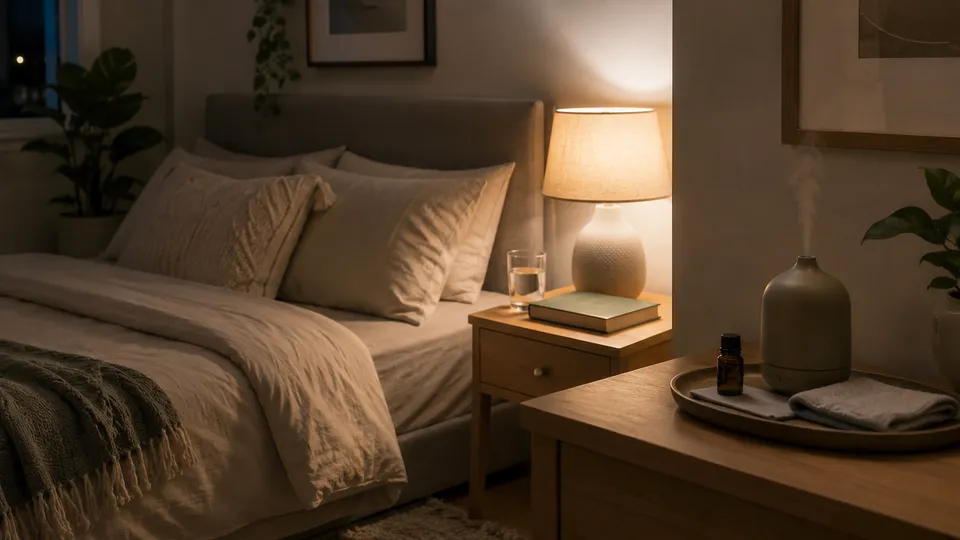
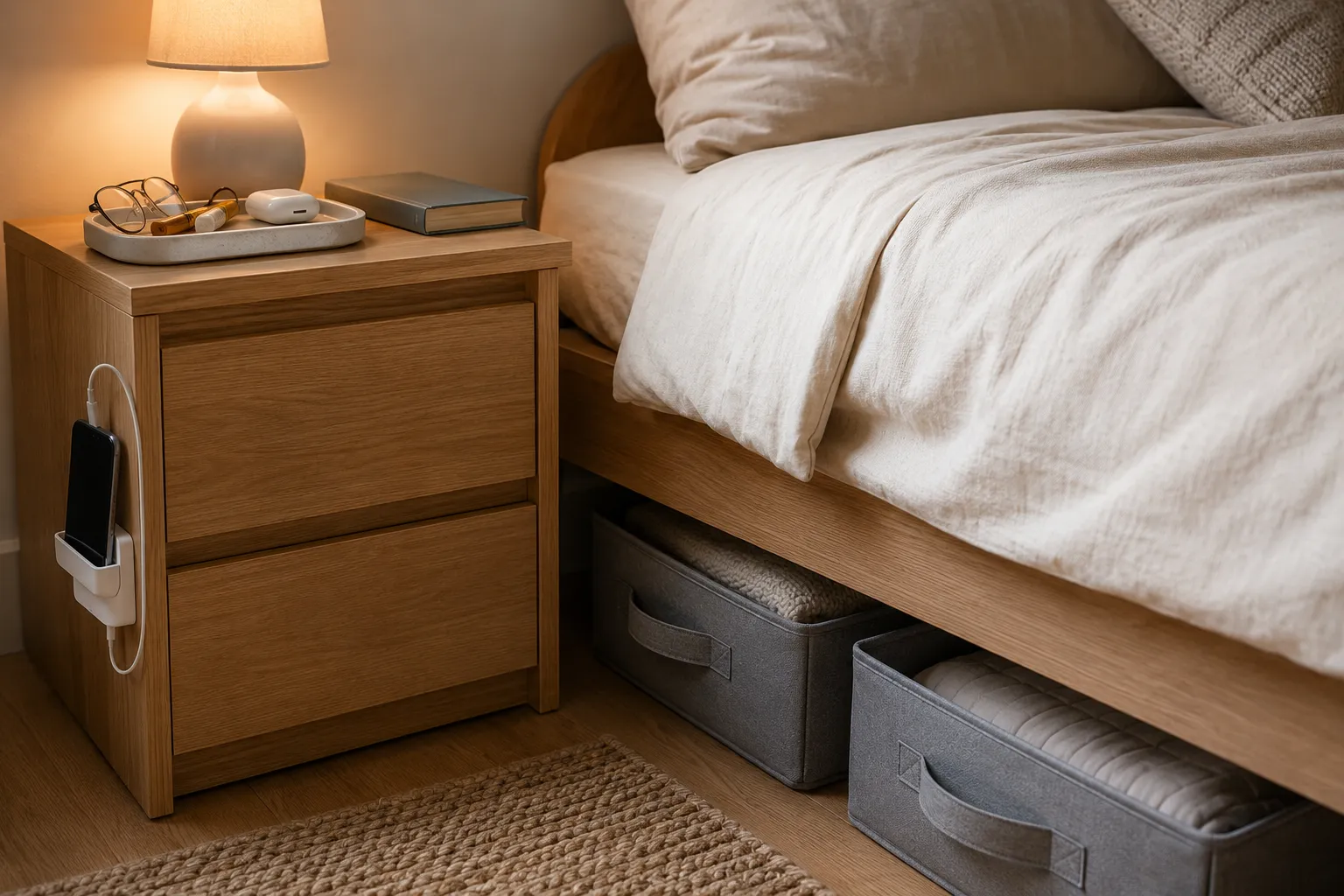
Take the nightstand. It probably only needs a lamp, water, glasses, a charger, and maybe the book you’re actually reading. But somehow it ends up holding lip balm, receipts, jewelry, cough drops, coins, tangled cords, and one mystery object you keep meaning to deal with.
A small tray helps, but the bigger fix is deciding what belongs there. Bedside items stay. Everything else moves.
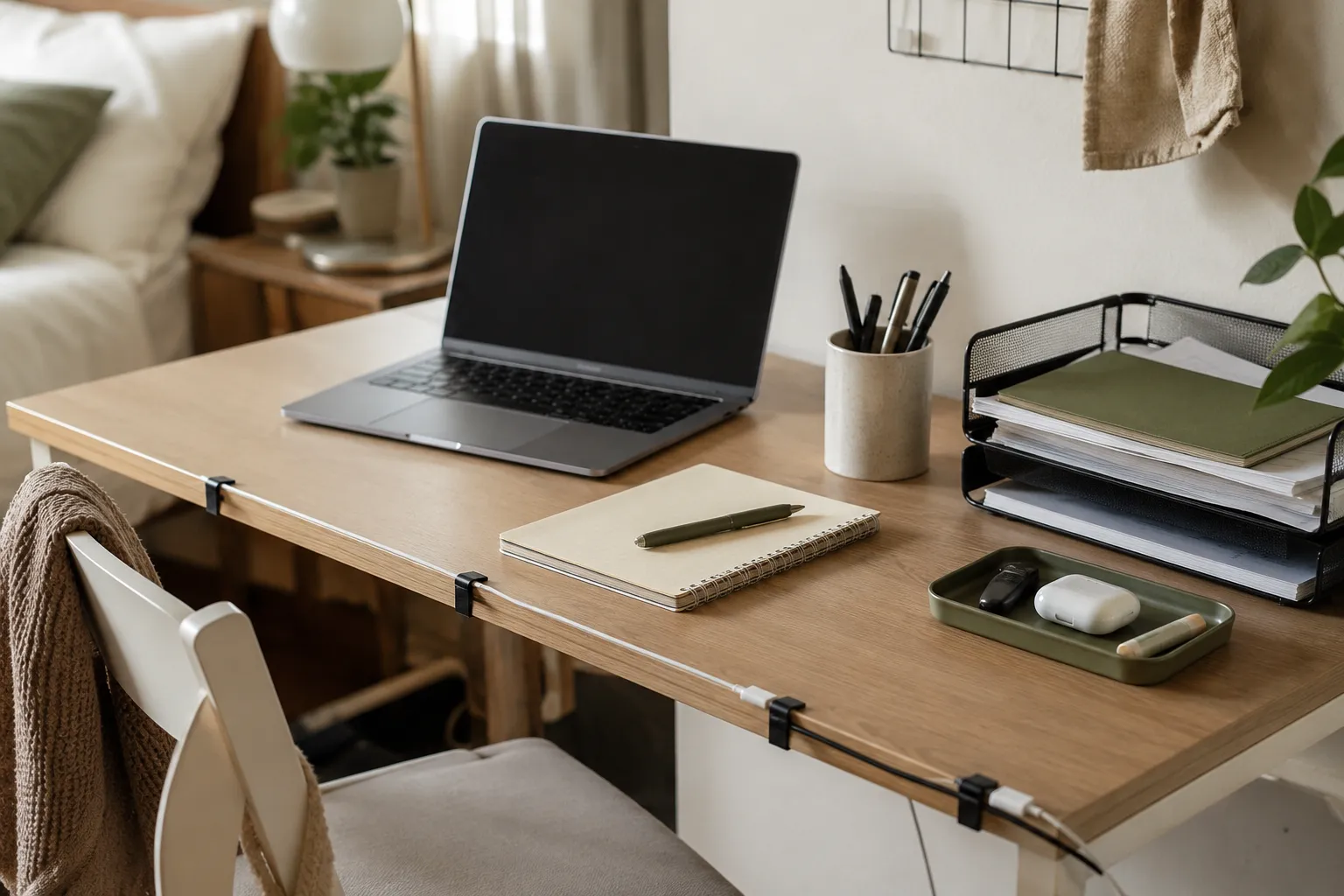
Do the same with your desk. A desk can’t be a work area, mail station, snack shelf, makeup counter, and tech junk drawer all at once. Keep current work items on top. Move old paperwork, extra cords, and non-work clutter into a drawer, bin, folder, or another zone.
When each piece of furniture has a clearer job, the room starts feeling organized without adding anything bulky.
Small Storage Zones for Daily Routines
A small room feels more organized when items live near the routine they belong to. Think in zones, not furniture pieces.
Bedside zone: Keep the lamp, book, water, glasses, and phone charger together. Add a small tray for tiny items like lip balm, rings, or earbuds.
Getting-ready zone: Use a pouch, small bin, or shallow basket for daily skincare, hair ties, jewelry, or grooming tools. If you get ready at your desk because there’s no vanity, give those items a container so they don’t spread across the workspace.
Work zone: Keep your laptop, notebook, pen cup, current folder, and main charger in one area. A cable clip can stop your charger from falling behind the desk every time you unplug it.
Repeat-wear zone: Give not-quite-dirty clothes a real place. A hook, small basket, or single closet section is better than sacrificing your chair forever.
These zones don’t need to look perfect. They just need to make sense when you’re tired.
How to Use Vertical Space in a Rental Without Losing Your Deposit
Vertical storage can save a small room, but it can also make the walls look chaotic. The key is using it carefully.
Over-the-door organizers: Great for shoes, scarves, hats, hair tools, small bags, cleaning cloths, or dorm supplies. They’re especially useful when you don’t have much closet space.
Heavy-duty adhesive hooks: Helpful for tote bags, robes, headphones, jackets, reusable shopping bags, or the hoodie that usually ends up on the chair. Check weight limits and test carefully before loading them up.
Hanging closet organizers: Good for folded clothes, workout gear, pajamas, accessories, or soft items that don’t need a drawer.
Tension rods: Useful in closets, window areas, or awkward gaps when drilling isn’t allowed. They can hold lightweight curtains, scarves, or hanging storage depending on the setup.
Leave some blank wall space. A room where every vertical surface is holding something can feel just as cluttered as a room with stuff all over the floor.
If you ever add tall freestanding storage, think about safety. A tall dresser, bookcase, or cabinet should fit the room, leave space to move, and be anchored when required.
Under-Bed Storage Ideas That Don’t Turn Into a Junk Zone
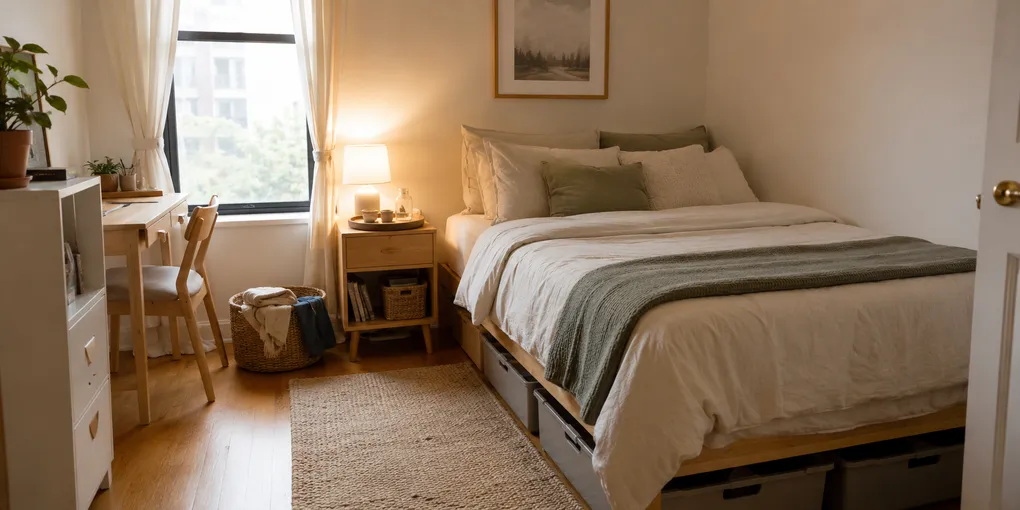
Under-bed storage is one of the best small-room tricks because it uses space you already have. But measure first. Before looking at bins, check the clearance between the floor and the bed frame. Some beds only have a few inches to work with, while others can fit taller bins or rolling containers.
Use under-bed storage for things you don’t need every day.
Good under-bed items: Off-season clothes, extra bedding, guest linens, less-worn shoes, keepsakes, backup supplies, or bulky sweaters.
Bad under-bed items: Dirty laundry, loose papers, snacks, random cords, daily clothes, or anything you’ll forget because it isn’t labeled.
Clear bins are useful when you want to see what’s inside. Fabric bins can look softer if the storage is slightly visible. Rolling under-bed bins are helpful if your bed is low enough and you want easier access.
The rule is simple: if you’d be annoyed pulling it out every morning, it shouldn’t live under the bed.
Trays, Bins, and Baskets That Make a Small Room Look Cleaner
This is where small purchases can actually help. Not big furniture. Small tools that give messy items a boundary.
Acrylic trays: Good for nightstands, desks, dressers, and bathroom-style getting-ready zones. They keep small items visible but contained.
Woven baskets: Better for softer items like blankets, repeat-wear clothes, scarves, or tote bags. They add texture, but they can look messy if they’re overfilled.
Clear plastic bins: Useful for under-bed storage, closet shelves, hobby supplies, and anything you want to identify quickly.
Fabric bins: Good for open shelves, cube storage, closets, and rooms where you want storage to look softer.
Drawer dividers: Great for socks, underwear, accessories, office supplies, makeup, cables, and tiny items that usually become drawer soup.
The mistake is buying a matching set before you know what you’re storing. Declutter first. Then choose the container based on the category.
One basket labeled “random stuff” won’t solve anything. One basket for repeat-wear clothes might.
Cord Management Ideas for Desks and Nightstands
Cords make a small room look messier than it is. A few tangled chargers beside the bed can make the whole corner feel unfinished.
Start with one charging spot. Keep your phone, earbuds, tablet, watch, or laptop chargers together instead of letting them migrate around the room. A small tray, cable clip, or charging box can keep the area from turning into a knot.
Cable clips: Useful for keeping a phone or laptop charger from falling behind a desk or nightstand.
Cord ties: Good for shortening extra cable length so it doesn’t hang everywhere.
Cable management boxes: Helpful if you have a power strip near a desk or media area and want the setup to look calmer.
Cord labels: Useful if you have multiple black cables and no idea which one belongs to what.
Be careful with floor cords. Route them along furniture edges where they’re less likely to trip you. Don’t run cords under rugs or hide them in ways that could damage the cord.
No Dresser? How to Organize Clothes with Zero Floor Space
The chair pile deserves its own intervention.
Those clothes aren’t fully clean, aren’t dirty enough for the hamper, and don’t feel ready to go back in the closet. So they sit on the chair. Then more clothes join them. Then the chair is no longer seating. It’s a fabric mountain.
Give repeat-wear clothes a real home.
One hook: Best for jeans, hoodies, robes, or the sweatshirt you reach for constantly.
One small basket: Good if you prefer tossing clothes instead of hanging them.
One closet section: Works if you have enough hanging space and want repeat-wear clothes separate from clean clothes.
One over-door hook rack: Useful when floor space is gone but door space is available.
If you don’t have a dresser, use closet shelves, hanging organizers, slim hangers, under-bed bins, or labeled fabric bins. Keep daily clothes easiest to reach. Move off-season items to under-bed storage or higher closet shelves.
The best clothing system is the one you’ll still use on a tired Tuesday night.
Paper and Mail Organization for Small Spaces
Paper clutter doesn’t need a full filing cabinet. It needs one place to wait and one regular reset.
Use a single inbox tray, folder, or slim document box for current papers only. That means bills, forms, receipts for possible returns, lease documents you need soon, or notes you still have to act on.
Everything else needs a decision: recycle, shred, scan, file, or move it out of the room.
Don’t create five paper piles. One on the desk, one on the dresser, one on the nightstand, one in a tote bag, and one “temporary” pile on the floor is how papers become permanent furniture.
A weekly paper reset is enough for most small rooms. Open the folder, deal with anything urgent, and remove what no longer matters.
Small-Room Organization Mistakes to Avoid
The biggest mistake is buying storage too early. More containers won’t help if the room is holding too much or if the categories are unclear.
The second mistake is making things too hard to put away. If your charger lives across the room, it’ll end up back on the bed. If your hamper is hidden behind a closet door you never open, clothes will land on the floor.
Too much open storage can also backfire. Hooks, shelves, and baskets are useful, but too many visible items make a small room feel busier. Mix open storage with hidden storage so your eyes have somewhere to rest.
And be careful with big furniture. A tall bookcase or dresser can add storage, but it also needs to fit safely, leave room to move, and be secured properly when needed. Bigger isn’t automatically better.
FAQ
What should I buy first to organize a small room?
Start with the smallest tool that solves the biggest daily problem. If clothes pile up, try a hook or repeat-wear basket. If cords are messy, start with cable clips or ties. If surfaces are cluttered, use a tray. Don’t buy a big furniture piece until you know the problem can’t be solved with a smaller tool.
How do I organize a small room without drilling into the walls?
Use over-the-door organizers, tension rods, freestanding baskets, under-bed bins, removable hooks, drawer dividers, and closet organizers. Check your lease and surface limits before attaching anything, especially to painted walls, doors, trim, or cabinets.
How can I make a small room look less cluttered today?
Clear the floor first. Then remove dishes, trash, and laundry. After that, reset the most visible surface, usually the desk, dresser, or nightstand. Finally, gather loose items into one tray or basket so they stop spreading across the room.
For practical comfort upgrades beyond storage, read small home upgrades that make your space feel more comfortable.
Final Thoughts
A small room doesn’t need to become perfectly minimal to feel organized. It just needs fewer loose items, smarter storage spots, and a reset system that doesn’t fall apart when you’re busy.
Skip the bulky furniture until you’ve tried the smaller fixes: trays, hooks, under-bed bins, cord clips, drawer dividers, baskets, and over-the-door storage. These little tools won’t change the size of the room, but they can change how the room works.
The best small-room organization is quiet. You don’t have to think about it all day. Your stuff has a place to land, your floor stays easier to clear, and the room feels less like a storage problem and more like a place you can actually live.