A comfortable home is not always about having more square footage. Sometimes it is about making the space you already have less annoying to live in.
That matters when you rent, live in a small apartment, or are setting up your first place. You may not be allowed to paint, swap fixtures, drill into tile, or replace old flooring. You may also be trying to make smart choices without spending heavily on furniture or decor you might not keep forever.
The good news is that comfort usually comes from small, practical changes. A lamp in the right corner. A rug where your feet hit the floor in the morning. A basket that stops your mail from taking over the kitchen counter. A better spot for your bag so it does not end up on the dining chair every night.
These upgrades are not about making your home look perfect. They are about making ordinary moments easier: finding your wallet when you are already late, making coffee without clearing a pile of dishes first, or sitting down at night without feeling like the room is working against you.
Here are simple home upgrades that can make a rental, small apartment, or first home feel more comfortable day to day.
Renter-Friendly Lighting Upgrades for a Cozier Space
Bad lighting can make even a clean apartment feel cold. Many rentals rely on one overhead light in the middle of the room, and that light is often too harsh for relaxing but not useful enough for tasks.
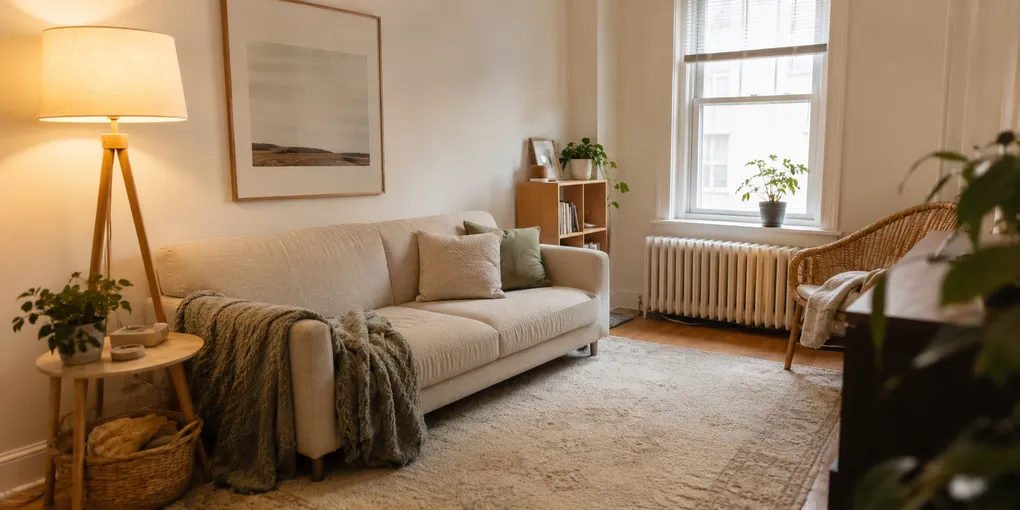
Instead of depending on the ceiling light, add lighting where life actually happens. A floor lamp beside the sofa makes the living room feel more settled at night. A small bedside lamp keeps you from blasting the whole bedroom with bright light before sleep. In the kitchen, wireless rechargeable LED puck lights under the cabinets can make a shadowy counter much easier to use.
Battery-operated sconces are another useful option for renters because they can add wall-level light without hardwiring. They work especially well near a bed, reading chair, hallway, or small dining nook. Just make sure any adhesive or mounting method is safe for your wall surface and allowed by your lease.
When choosing bulbs, look at lumens for brightness. Watts tell you how much energy a bulb uses, not how bright the light will feel. For relaxing areas, a warmer bulb usually feels softer. For kitchens, desks, and closets, brighter task lighting is more practical.
One well-placed lamp can do more for a room than a cart full of decorative objects.
Small Apartment Seating Upgrades That Make One Spot Feel Better
An uncomfortable sofa can ruin a living room, even if the room looks nice. Before you replace furniture, troubleshoot the setup.
Start with the seat you use most. Maybe the sofa is too deep, so you slouch every time you sit down. A firmer back pillow can help. Maybe your dining chair doubles as your work chair and starts bothering you after an hour. A seat cushion may make that spot more usable. Maybe your reading chair is fine, but the blanket is always across the room and there is nowhere to set a drink.
A comfortable seat is not just about the chair itself. It is about the little zone around it. Keep a lamp nearby. Add a small side table, tray table, or sturdy stool if there is no surface within reach. Use a basket for remotes, chargers, books, or the throw blanket that always ends up on the floor.
This is especially helpful in small apartments where one piece of furniture often has to do several jobs. A sofa may be your movie spot, guest seating, afternoon nap place, and occasional work zone. Make it support the way you actually use it.
Bedroom Comfort Upgrades for Better Wind-Down Routines
A bedroom does not need to look fancy to feel good. It needs to help the day slow down.
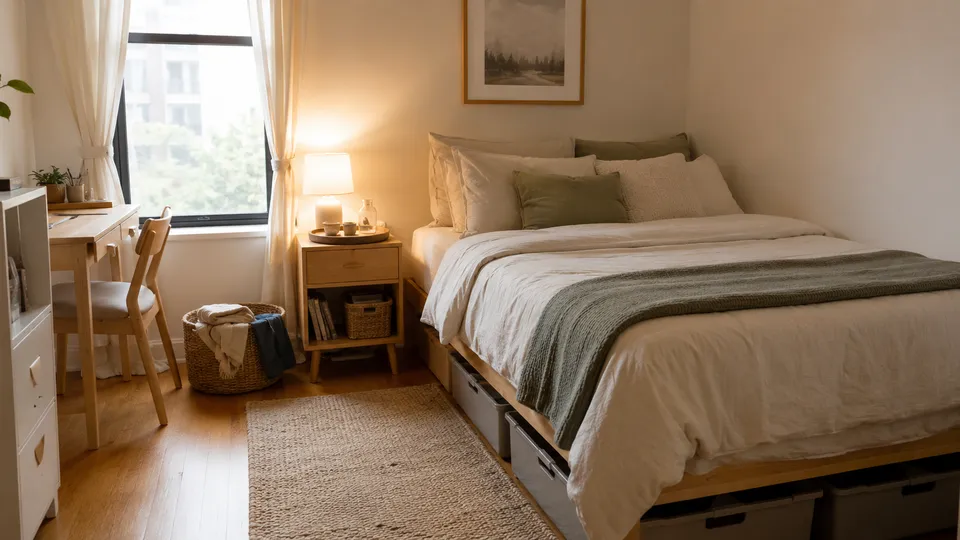
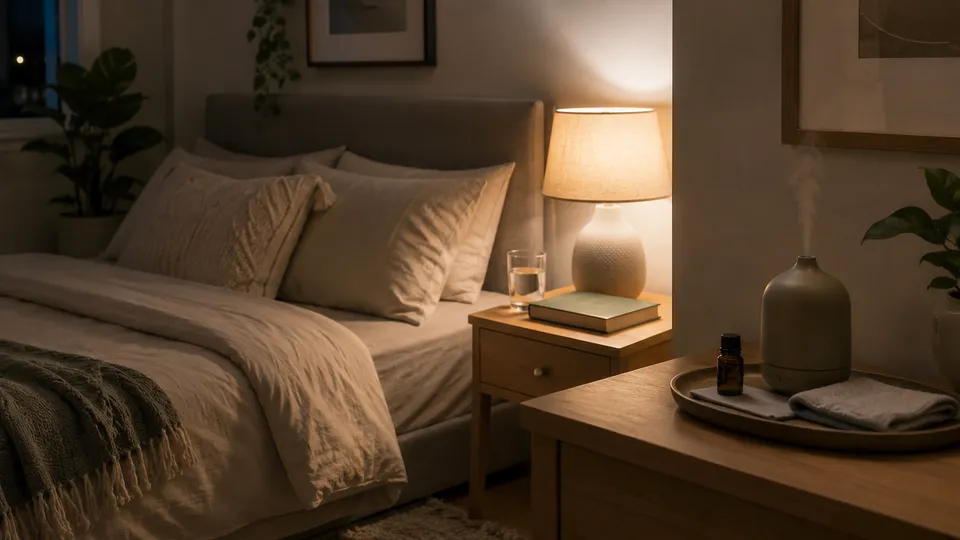
Start with the bed area. A bedside lamp, a place for water, a spot for glasses or a book, and bedding that feels comfortable can make the room feel more intentional. A blanket folded at the end of the bed adds warmth without adding clutter. A small rug beside the bed makes mornings feel less abrupt, especially on hard floors.
Light control matters too. Streetlights, parking lot lights, or early sun can make a bedroom feel less restful. Renter-friendly curtains, tension rods, a sleep mask, or even rearranging the bed can help. For windows where drilling is not allowed, look into tension rods or no-drill curtain hardware that fits your setup.
Try to keep the bed from becoming a holding zone for laundry, packages, and random clothes. In a small apartment, the bed is often the largest surface in the room, so clutter lands there quickly. Once that happens, the whole bedroom feels more chaotic.
A calmer bedroom often starts with fewer things on the bed and better light beside it.
Using Area Rugs to Define Small Apartment Layouts
Rugs are useful in small homes because they solve more than one problem at once. They soften hard floors, reduce the bare feeling of a room, and help define areas in open layouts.
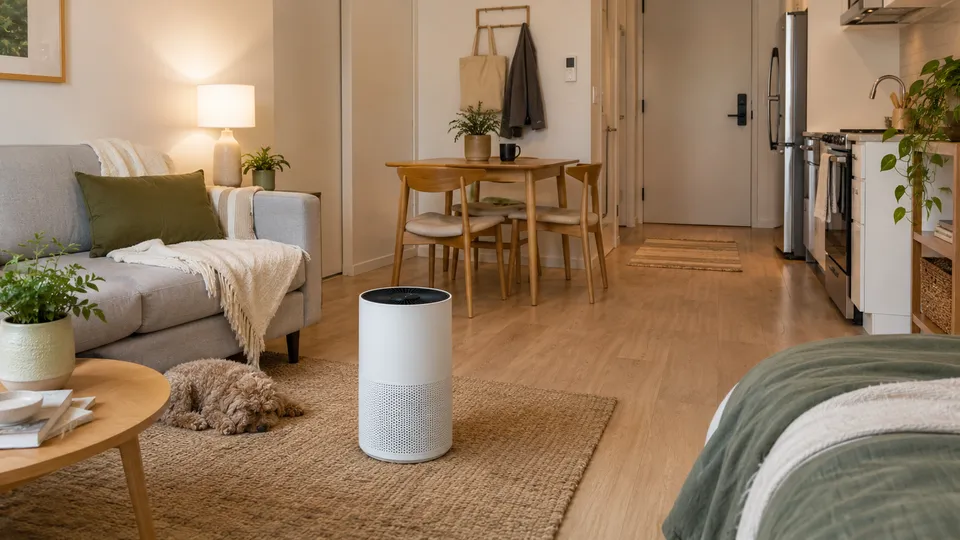
In a studio apartment, a rug can visually separate the living area from the sleeping area without adding a divider. In a bedroom, a rug beside or under the bed makes the space feel more finished. In a kitchen, a runner near the sink can make standing more comfortable while you wash dishes. In an entryway, a durable mat gives wet shoes and grocery bags somewhere to land.
Size matters. A tiny rug floating in the middle of the floor can make a room feel smaller and more chopped up. In a living area, the rug usually looks better when it connects to the main furniture, even if only the front legs of the sofa or chairs sit on it.
Do not skip the practical side. A rug that slides, curls, or bunches becomes irritating fast. A rug pad can make it feel more secure and more comfortable underfoot.
Entryway Storage Ideas for Apartments Without an Entryway
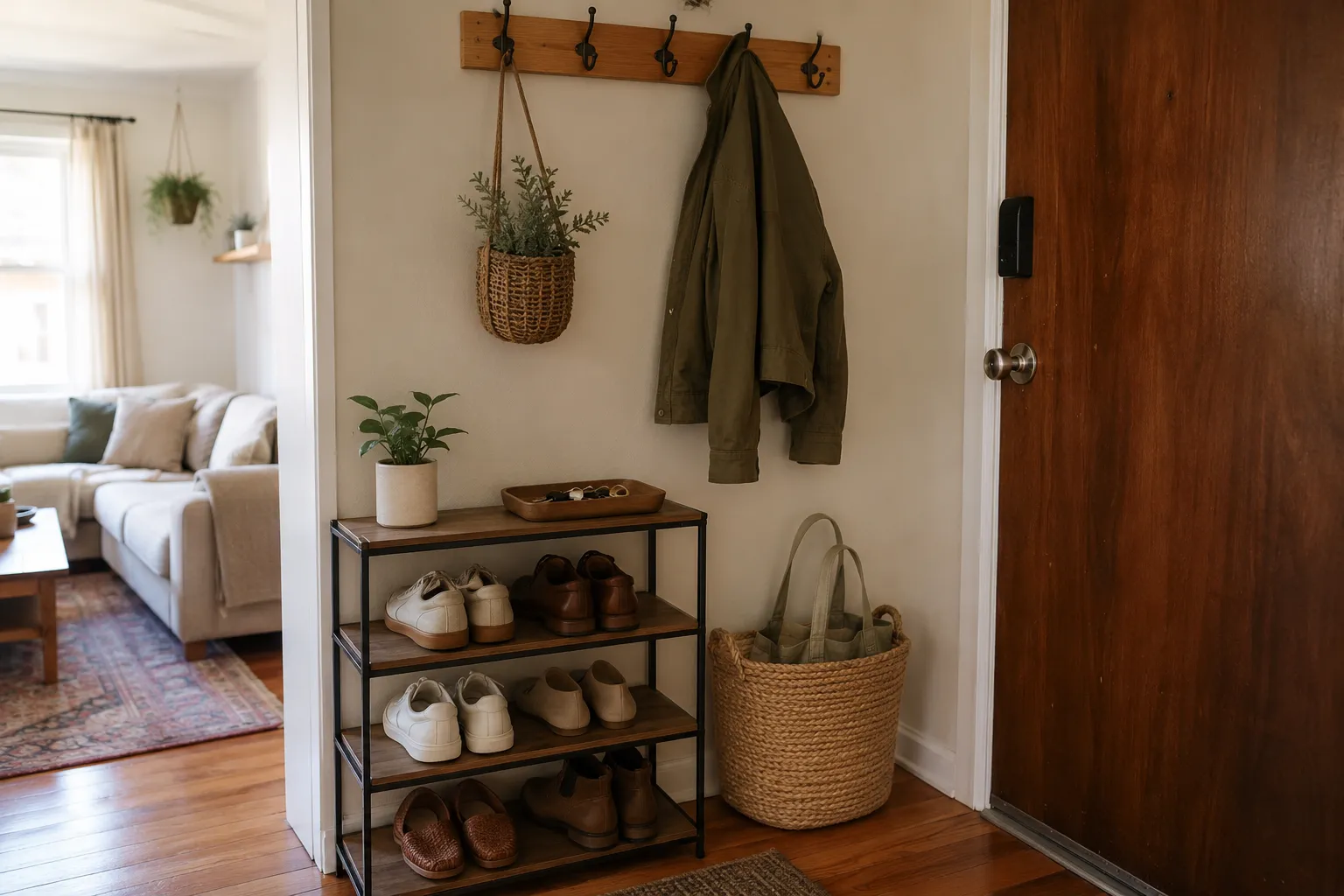
Many apartments do not have a real entryway. You open the door and immediately hit the living room, kitchen, or hallway. That is exactly why you need a landing zone.
Without one, daily items spread everywhere. Keys end up under mail. Shoes drift toward the sofa. Tote bags hang off dining chairs. A jacket gets tossed over the nearest surface “just for now” and stays there for three days.
A landing zone can be small. Use a narrow wall hook area, a tray for keys, a basket for bags, a slim shoe rack, or an over-the-door organizer if floor space is tight. Even one vertical row of hooks can change how the apartment functions when you walk in.
Match the setup to your real habits. Someone who always drops mail on the counter needs a mail tray near the counter, not a filing system hidden in a closet. Someone who takes shoes off at the door needs shoe storage at the door. Good organization works because it meets you where you already are.
Simple Storage Upgrades That Reduce Visual Clutter
Clutter feels louder in a small space because everything is close together. You see the cords, the receipts, the lip balm, the mail, the remote, the extra keys, and the half-empty water glass all at once.
The easiest fix is not always more storage furniture. Sometimes it is better boundaries.
A tray on the coffee table can hold remotes, coasters, and a candle so the surface looks calmer. A small bin inside a cabinet can group cleaning supplies. Drawer dividers can stop kitchen tools, socks, or bathroom items from turning into a daily dig. Under-bed storage bins can help with seasonal clothes, extra linens, or items you do not need every week.
Over-the-door organizers are especially useful in first apartments because they use space that would otherwise sit empty. They can work for shoes, cleaning supplies, pantry extras, hair tools, or accessories, depending on the room.
The point is not to hide every sign of life. A home should look lived in. But daily objects need a place to return to, or they will slowly take over every flat surface.
Tiny Kitchen Upgrades That Make Daily Cooking Easier
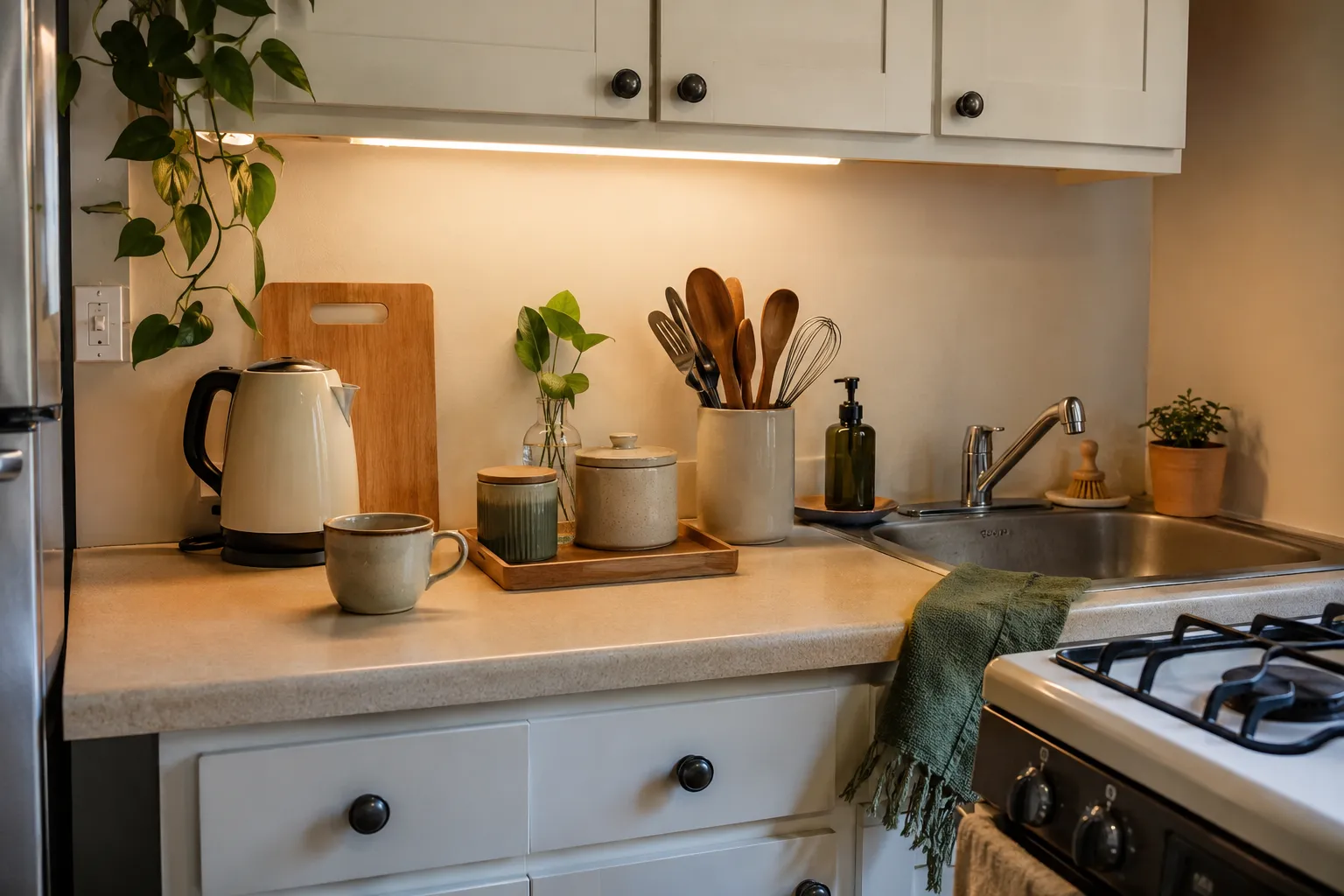
A small kitchen can become stressful fast. One cutting board, a coffee mug, and a pan in the sink can make the entire counter feel full.
Before adding anything decorative, make the kitchen easier to use. Clear the counter down to the items you reach for daily. Group coffee or tea supplies together. Put cooking oils, salt, and frequently used utensils in one zone instead of scattering them across the counter.
Then fix the bottleneck. A dish-drying rack that actually fits your sink area can make cleanup less annoying. A cabinet shelf can help you stack plates or mugs without wasting vertical space. A turntable can make oils, sauces, or spices easier to reach. Under-sink bins can separate trash bags, sponges, and cleaning supplies so you are not knocking everything over to find one item.
Lighting helps here too. A few under-cabinet puck lights can make a dark prep area feel much more usable. This is not about creating a dream kitchen. It is about being able to chop vegetables, make coffee, and wipe the counter without moving a dozen things first.
Bathroom Upgrades for Rentals That Feel Fresher
Rental bathrooms often come with choices you would not have made yourself: old tile, basic fixtures, limited storage, or lighting that does nobody any favors. You may not be able to change the bones of the room, but you can improve the parts you touch every day.
Focus on the bath mat, towels, shower curtain, soap area, mirror area, and storage. A clean shower curtain makes the room feel fresher immediately. A soft bath mat helps the floor feel less cold. A tray or small container on the counter can keep daily items from spreading everywhere.
The quickest way to ruin a bathroom’s freshness is trapped moisture. Towels need room to dry. Bath mats should not stay damp all day. Use the fan when you have one, and keep an eye on corners, window areas, under-sink cabinets, and spots near the tub or shower.
Recurring dampness, leaks, or suspected mold are not styling problems. Document the issue and contact your landlord or property manager in writing.
Airflow and Moisture Fixes for Stuffy Apartments
A room can look clean and still feel uncomfortable when the air is stale. Small apartments are especially prone to this because furniture, storage, and closed windows can limit airflow.
Start by checking the obvious things. A sofa, bed, curtain, or storage bin may be blocking a vent. A closet may be packed so tightly that clothes never fully air out. A bathroom towel may be staying damp because it is bunched on a hook behind the door.
A small fan can help move air in a stuffy room. Opening a window can help when weather, safety, and outdoor air conditions make sense. In moisture-prone areas, dry damp surfaces instead of letting water sit. Kitchen sinks, bathroom corners, windowsills, and under-sink cabinets deserve regular attention.
Comfort is not only about softness and decor. It is also about whether a room feels good to breathe in, sleep in, and cook in.
Noise-Softening Ideas for Apartments and Shared Walls
Apartment noise is frustrating because you cannot control all of it. Neighbors, hallway doors, traffic, elevators, pipes, and shared walls can make a space feel less peaceful.
You may not be able to make the apartment silent, but you can make the sound less sharp. Rugs help with echo. Curtains soften bare windows. Fabric furniture, bedding, and bookshelves can make a room feel less hollow. A door draft stopper can reduce hallway noise while also helping with drafts.
In the bedroom, moving the bed away from the noisiest shared wall can help when the layout allows. A fan or white noise machine can also create a steady background sound that makes sudden noises less noticeable.
Think of this as softening the edges of the apartment. You are not soundproofing the space. You are making it easier to relax in.
Personal Decor Ideas That Do Not Add Clutter
A home feels better when it has signs of your life in it. The trick in a small space is choosing a few clear personal moments instead of filling every surface.
A framed photo by the door. A small stack of favorite books next to a chair. A plant near the window. A print leaning on a shelf. A bowl from a trip used as a key dish. A blanket you actually use, not one that only exists for photos.
Personal details work best when they have breathing room. One meaningful object on a nightstand often feels better than six tiny things you have to move every time you dust.
For renters, lean on removable and flexible options: leaning frames, tension rods, removable adhesive hooks, freestanding shelves, trays, lamps, textiles, and plants. Before attaching anything to walls, doors, cabinets, or tile, check your lease and test carefully.
FAQ
My landlord will not let me put nails in the wall. What can I do?
Use no-drill and removable options: tension rods for curtains, removable adhesive hooks for lightweight items, leaning frames or mirrors, freestanding shelves, over-the-door organizers, and floor lamps instead of hardwired sconces. Always check weight limits and test surfaces before committing.
What should I upgrade first in a tiny apartment?
Upgrade the thing that interrupts your day most often. For many people, that is lighting, entryway clutter, kitchen counter space, or the bed area. A small apartment feels better when the most-used routines become easier.
How do I make my apartment cozy without making it cluttered?
Choose fewer, more useful layers. A lamp, a rug, a throw blanket, and one tray can make a room feel warm without crowding it. Avoid buying lots of small decorative pieces before fixing lighting, storage, and seating comfort.
What are easy rental upgrades for bad lighting?
Try floor lamps, table lamps, plug-in wall lights, battery-operated sconces, LED puck lights, and warmer bulbs in relaxing areas. Focus first on the places where you read, cook, get ready, or relax at night.
What can I do if my bathroom always feels damp?
Let towels and bath mats dry fully, run the fan if there is one, open the door after showers when appropriate, and avoid leaving wet fabric bunched up. Watch for recurring damp spots around windows, under sinks, and near the tub. Report leaks or suspected mold to your landlord in writing.
Are peel-and-stick upgrades worth it for renters?
They can be useful, but they are not risk-free. Test a hidden spot first, avoid damaged or delicate surfaces, and read removal instructions carefully. Peel-and-stick products can be helpful for backsplashes, hooks, or small visual upgrades, but “removable” does not always mean damage-proof.
How can I make a rental feel less temporary?
Add pieces that move with you: lamps, rugs, curtains, bedding, art, books, plants, and storage baskets. These make the space feel personal without requiring renovation or permanent changes.
For a storage-first approach before you buy more furniture or organizers, see how to make a small room feel more organized without buying big furniture.
Final Thoughts
A comfortable home is not built in one big makeover. It comes from noticing the small moments where your space makes life harder and making those moments easier.
That might mean better light over the kitchen counter, a real place for your keys, a softer landing beside the bed, or a chair that finally feels good to sit in. None of these changes need to be dramatic. They just need to make the space feel more supportive.
The best home upgrades are the ones that quietly improve your everyday life. Over time, those small fixes add up to something important: a place that feels easier to come home to.