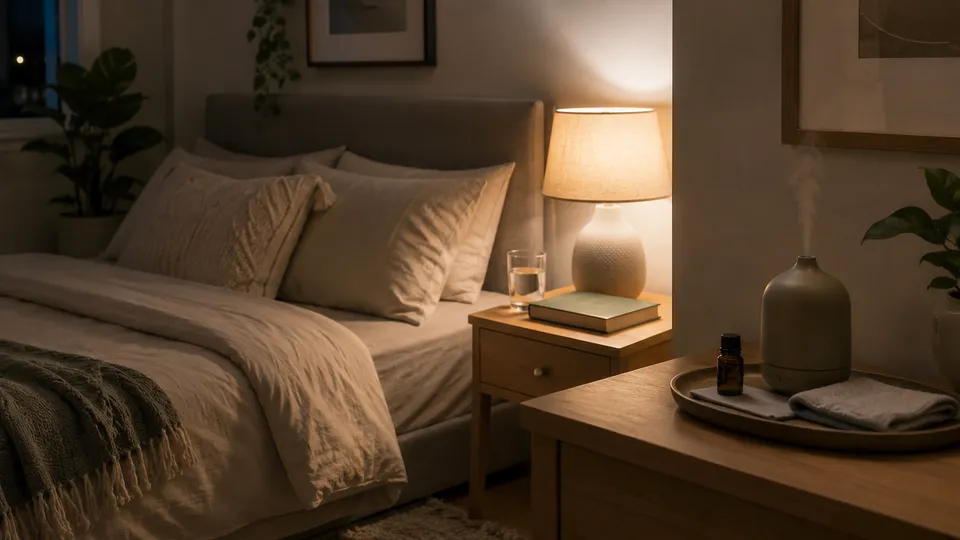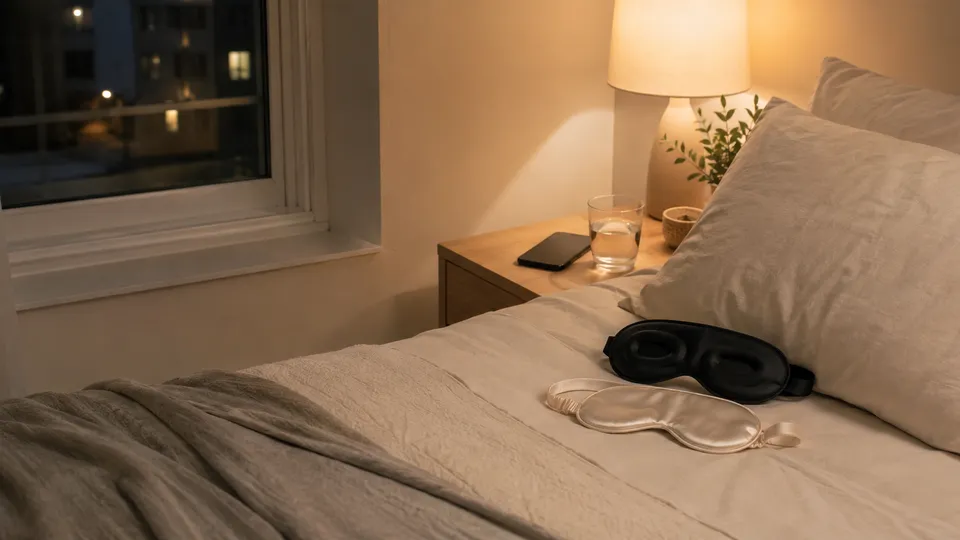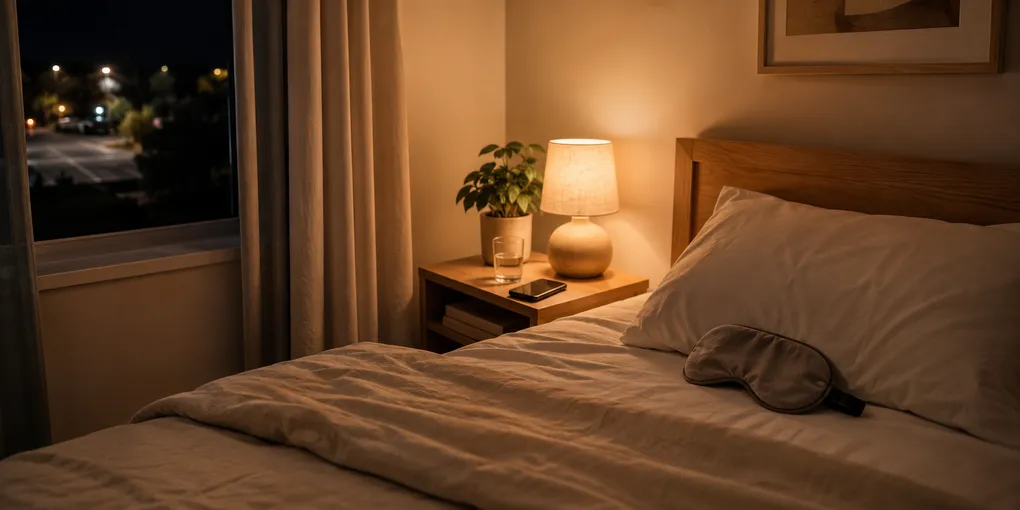
If your bedroom never gets fully dark, a sleep mask can be one of the simplest fixes to try. Maybe your apartment blinds leave a bright stripe from the parking lot. Maybe the hallway light slips under the door. Maybe your partner reads later than you do, or the sunrise hits your window before you are ready to get up.
A sleep mask will not change the whole room, and it should not be treated like a cure for sleep problems. But as a light-blocking tool, it can make a bedroom feel darker without drilling into walls, installing blackout curtains, or adding more stuff to a small space.
The trick is choosing one that feels comfortable enough to actually wear.
Quick answer
Choose a sleep mask by fit first, not by how thick or fancy it looks. Start with your sleep position, then think about eye pressure, nose fit, strap comfort, material, and cleaning.
Side sleepers usually need a lower-profile mask with soft edges. If you dislike fabric touching your eyelids or lashes, look for a contoured mask. If your room runs warm, choose lighter fabric and less padding. If light leaks near your nose, the mask shape matters more than simply making the strap tighter.
Start with the light problem in your bedroom
Before comparing materials or shapes, think about what kind of light you are trying to block.
If streetlights or parking lot lights shine through rental blinds, look for fuller coverage and a shape that sits well around the lower part of the face. This is common in apartments where blinds do not fully meet the window frame.
If early morning light is the issue, the mask needs to stay comfortable for several hours, not just when you first put it on. A mask that feels fine at 11 p.m. but shifts by sunrise will not be very useful.
If your problem is a partner’s lamp, a bathroom light, or a glowing hallway, you may care more about quick comfort and easy nightly use than maximum blackout.
Small electronics matter too. A bright alarm clock, charger, router light, or laptop standby light can make a small bedroom feel busier than it needs to. A sleep mask can help, but it is still worth turning bright clocks away, moving chargers farther from the bed, or covering tiny lights safely.
For renters and apartment dwellers, this is where sleep masks are especially practical. They do not require landlord approval, power tools, curtain rods, or extra storage space.
What makes a sleep mask comfortable?
A comfortable sleep mask does three things well: it blocks enough light, stays in place, and does not make you overly aware of your face.
It should feel secure, not squeezed on. If the mask has to be pulled hard to work, the shape probably is not right for your face.
It also should not create irritating pressure around your eyes. Some people are fine with soft fabric resting over their eyelids. Others notice every bit of contact, especially on their lashes. Neither reaction is wrong; it just points you toward a different style.
Finally, the mask should stay put when you roll over. A mask that slips upward, twists, or catches on the pillow will be annoying even if the fabric feels nice in your hand.
Choose the right sleep mask shape
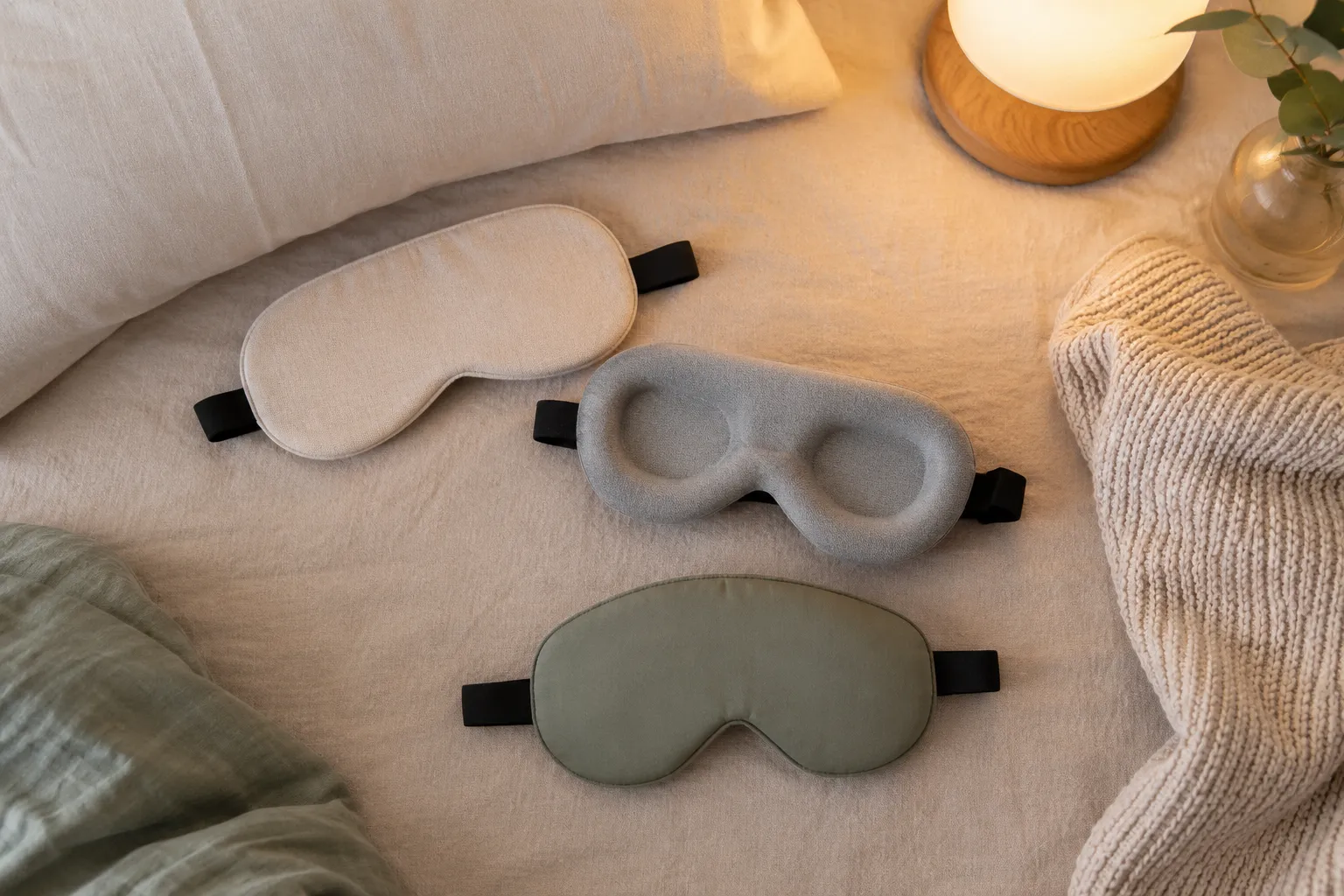
Flat sleep masks
Flat masks are the simplest style. They are usually thin, flexible, and easy to keep in a nightstand drawer or travel bag. They can work well if you want something lightweight and low-fuss.
The downside is that a flat mask may touch your eyelids or lashes. It may also leave gaps near the nose if the cut is too straight for your face.
Contoured sleep masks
Contoured masks have raised areas around the eyes. These raised sections create more room between the fabric and your eyelids, which can feel more comfortable if you dislike direct eye pressure.
They are not automatically better for everyone. Some contoured masks feel bulky against a pillow, especially for side sleepers. The best contoured mask gives your eyes space without creating hard edges or awkward pressure points.
Structured sleep masks
Structured masks hold their shape more than soft fabric masks. They may offer stronger coverage, but only if the shape matches your face.
If the mask is too stiff or too large, it can gap around the nose or press into your cheeks. Choose structure for fit, not just because it looks more serious.
Weighted sleep masks
Weighted masks add gentle heaviness across the eye area or forehead. Some people like that feeling. Others find it warm, heavy, or restrictive.
If you already know you dislike anything pressing on your face, skip this style. If you are curious, pay close attention to weight, heat, and whether the mask feels practical for all-night use.
Cooling or gel-style masks
Cooling masks are designed to feel cool against the skin. Some can be chilled before use. They may feel pleasant during a wind-down routine, especially in a warm apartment.
For regular nighttime use, judge them the same way you would judge any other mask: fit, strap comfort, nose coverage, and whether they work with your pillow.
Match the mask to your sleep position
Side sleepers
Best fit: low-profile, flexible, and soft along the edges.
Side sleepers need to be careful with bulk. A mask that looks plush can press into the pillow once you turn your head. Look for minimal hardware near the temples or ears. If the strap adjuster sits exactly where your head meets the pillow, it may bother you during the night.
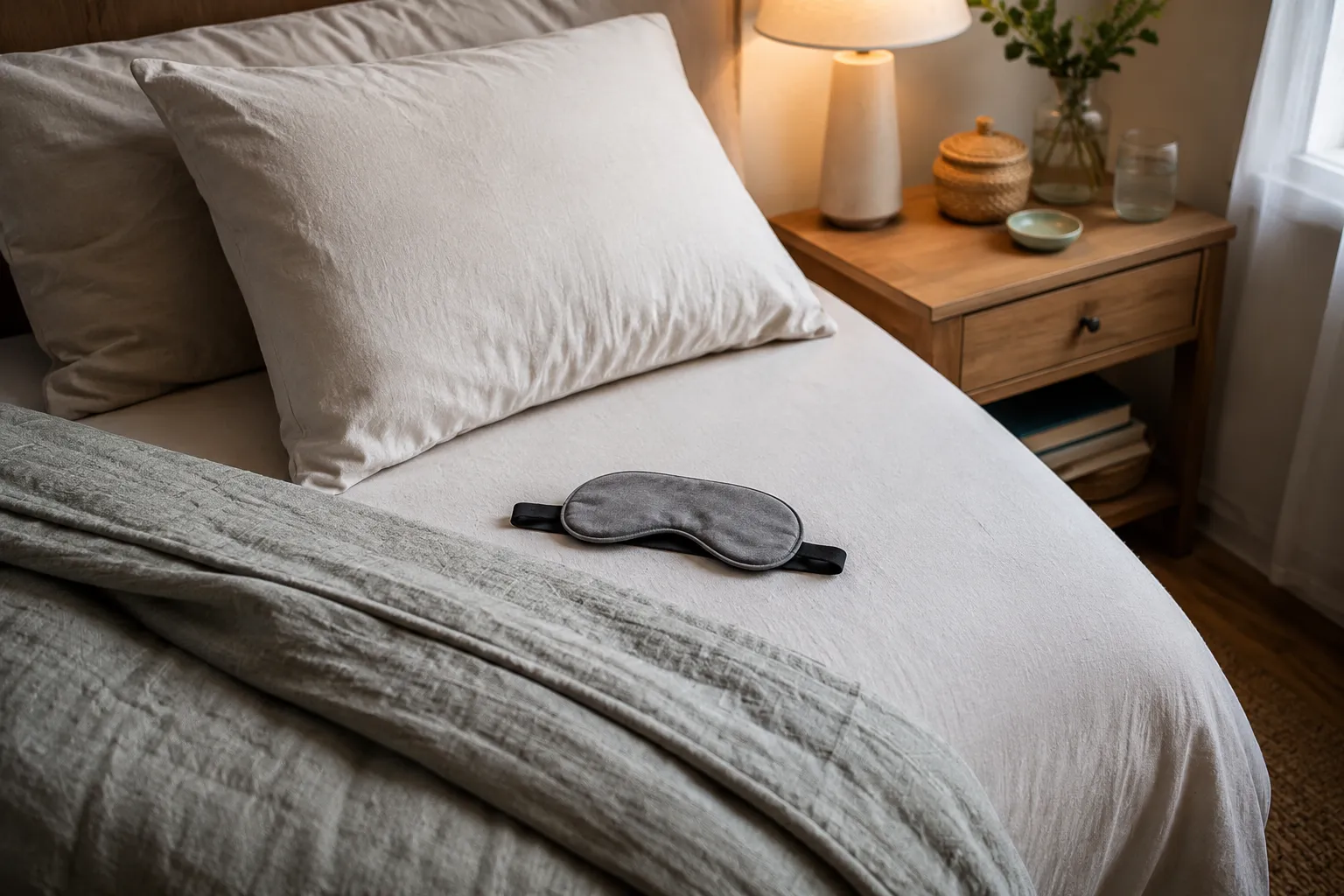
A useful test: put the mask on, lie on your usual side, and rest your head on your real pillow. If you immediately feel the edge of the mask, choose a softer or thinner design.
Back sleepers
Best fit: soft, stable, and comfortable at the back of the head.
Back sleepers usually have more flexibility. Contoured or slightly padded masks may feel comfortable because there is less pillow pressure on the front of the mask.
Still, check the strap. A bulky slider at the back of your head can become noticeable when you are lying flat.
Stomach sleepers
Best fit: thin, simple, and easy to move with.
Stomach sleepers usually do best with thin, flexible masks. Anything stiff or heavily molded may twist as your face turns into the pillow.
Look for simple construction, soft fabric, and a strap that does not need much adjustment.
Combination sleepers
Best fit: secure without being stiff.
If you move around during the night, choose a mask that balances softness and stability. It should not be so loose that it slips, but it should not feel locked onto your face.
The best test is not how it feels when you put it on. It is how it feels when you roll over.
Pay close attention to the nose bridge
The nose area is where many sleep masks fail. A mask can cover both eyes and still let in a triangle of light from below.
Look for a lower edge that curves naturally around the nose. Some masks use a flexible nose area, extra fabric, or a shaped cutout. None of these features is perfect for every face, so focus on the result: does the mask block your most distracting light while still feeling relaxed?
If you are trying to block streetlights or early sunrise, nose fit matters more than fancy fabric.
Pick a material that fits your routine
Material is not just about softness. It affects warmth, cleaning, and whether you will actually use the mask every night.
If you sleep warm, choose lightweight fabric and thinner padding. Thick, plush, or weighted masks may feel cozy in winter but too warm in a small bedroom during summer.
If you dislike friction, smoother fabrics such as silk or satin-style materials may feel more pleasant against the skin. Silk is a natural fiber with a smooth feel, while satin usually refers to a smooth weave that can be made from different fibers. Either way, check the care label. Some smooth fabrics need gentler washing.
If you want something easy to care for, cotton or other washable fabrics may be more practical. Cotton is familiar, soft, and usually less fussy, though thicker cotton padding can hold warmth. This matters if you use shared laundry, have limited drying space, or want a mask you can clean without thinking too much about it.
Foam and molded materials can create space around the eyes, but they can also add bulk. If you choose a foam or structured mask, check whether the edges feel soft and whether the mask traps heat.
Do not overlook the strap
The strap is one of the most important comfort details. A soft mask can still be annoying if the strap pulls, slips, catches hair, or creates a lump behind your head.
An adjustable strap is usually the safest choice. It gives you more control over fit and can work better with different hairstyles or head sizes.
Watch for rough Velcro, hard plastic sliders, bulky buckles, and thin elastic that feels sharp after a while. Side sleepers should be especially careful about where the adjuster lands. If it sits near your temple, ear, or jawline, it may press into the pillow.
A good strap should feel boring. Once it is adjusted, you should not have to keep thinking about it.
Try this comfort test before keeping it
Do not judge a sleep mask only while standing up. Try it the way you will actually use it.
Put it on in your bedroom and lie on your usual pillow. Turn into your normal sleep position. If you are a side sleeper, test both sides. Notice whether the mask shifts, pushes into your cheeks, or leaves a gap near your nose.
Then turn off the lights. Look for leaks around the lower edge and sides. Adjust the strap so it rests gently. If you feel immediate pressure on your temples, eyes, or nose just to get a good seal, the mask’s physical shape is wrong for your face.
Keep it on for a few minutes. Pay attention to your eyelids, lashes, nose bridge, ears, temples, and the back of your head. The mask does not need to feel invisible immediately, but it should not feel like something you are enduring.
Make it part of a simple bedroom routine
A sleep mask works best when it is easy to reach. Keep it on your nightstand, in a small tray, or in the top drawer beside your bed. In a small bedroom, a tiny routine matters: if the mask is buried in a closet or travel pouch, you probably will not use it often.
Pair it with simple light fixes. Close blinds all the way. Turn bright screens away from the bed. Move charging cables to the other side of the room. If hallway light comes under the door, a draft blocker or rolled towel can help reduce the glow.
None of this requires permanent changes, which is the point. For renters, a sleep mask can be part of a no-drill, low-clutter approach to making the bedroom feel calmer.
Keep it clean
A sleep mask touches your face, so cleaning should be realistic. Check whether it is machine washable, hand-wash only, or spot clean only.
If you know you will not hand-wash delicate fabric often, choose something easier. If the mask needs to air dry, make sure you have a place to dry it fully before putting it back in a drawer or travel case.
For nightly use, some people like having a second mask to rotate while one dries. That is convenient, but not necessary. The main goal is choosing a mask that fits your actual habits.
Common mistakes to avoid
Buying the thickest mask because it looks darker
Thicker does not automatically mean better. Bulk can make a mask harder to wear, especially for side sleepers.
Ignoring the strap
Many comfort problems come from the band, buckle, or adjuster rather than the eye covering.
Assuming all contoured masks feel the same
Eye depth, nose shape, edge softness, and strap placement vary a lot.
Choosing a mask that is annoying to clean
A mask can feel great on night one and still become impractical if you never want to wash it.
Expecting a sleep mask to fix every bedroom issue
A sleep mask mainly helps with light. If noise, room temperature, schedule, or stress is the bigger issue, you may need other changes too.
FAQ
What type of sleep mask is most comfortable?
The most comfortable sleep mask is the one that fits your face and sleep position without tightness. Many people prefer soft adjustable straps, gentle fabric, and a shape that reduces light leaks around the nose.
Should a sleep mask touch my eyelids?
It can, but it should not create uncomfortable pressure. If you dislike the feeling of fabric on your eyelids or lashes, try a contoured mask with more space around the eyes.
Are contoured sleep masks better for side sleepers?
Not always. Some contoured masks are comfortable, but others are too bulky against a pillow. Side sleepers should look for soft edges, low-profile construction, and strap hardware that does not press into the side of the head.
Why does my sleep mask let in light near my nose?
The lower edge may not match your face shape. Try a mask with a curved or flexible nose area rather than relying only on strap tension.
Can a sleep mask replace blackout curtains?
It can be a practical alternative if you rent, have a small bedroom, or do not want to install window treatments. It will not darken the whole room, but it can block light from reaching your eyes.
What material is best if I sleep warm?
Look for lighter fabric, thinner padding, and less bulky construction. Thick plush masks, heavy foam, and weighted styles may feel warmer.
What if every sleep mask feels annoying?
Try a lighter fabric, a different shape, or a lower-profile design. If you dislike anything touching your face, you may prefer room-based fixes such as covering small lights, improving blinds, or reducing hallway glow.
If you are deciding specifically between eye clearance and a smooth fabric feel, see contoured vs. silk sleep masks. If the room itself is the bigger problem, start with ways to darken a bedroom without blackout curtains.
Final thoughts
A comfortable sleep mask is not about choosing the thickest or most dramatic-looking option. It is about finding the quietest fit: soft enough to forget, secure enough to stay in place, and shaped well enough to block the light that bothers you.
For renters, apartment dwellers, and anyone with a small bedroom, that can be a practical upgrade. No drilling, no heavy curtains, no complicated setup. Just a darker-feeling bedroom, one small habit at a time.