Sleep masks look simple until you try to use one every night. A mask can feel soft in your hand but annoying on your eyelids. Another can block light well but feel bulky when your face is pressed into the pillow. And if your bedroom gets streetlight glare, early sunrise, hallway light, or a partner’s reading lamp, the details start to matter quickly.
The easiest way to compare these two styles is this: contoured describes the shape, while silk describes the material.
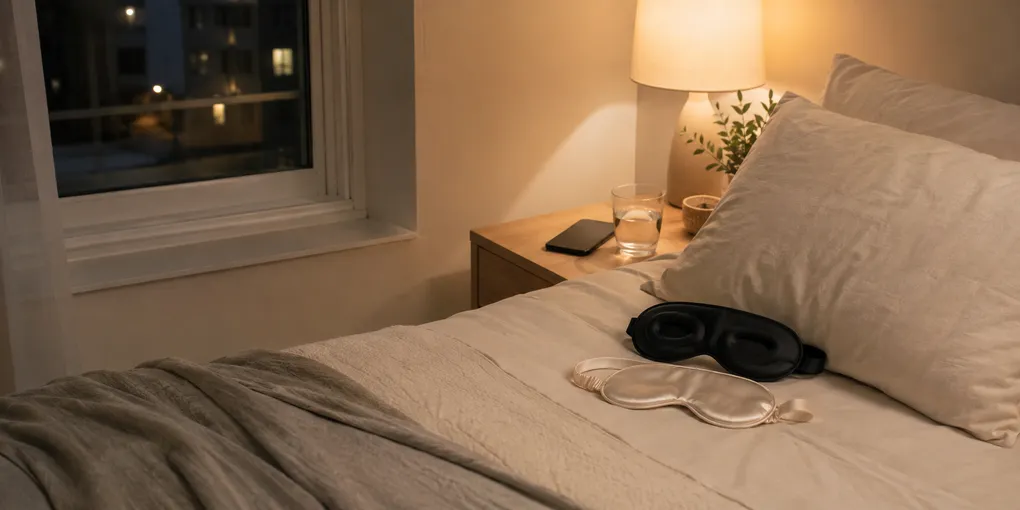
A contoured sleep mask has a shaped design around the eyes. A silk sleep mask is made with silk fabric, usually for a smoother and softer feel. These are not opposite categories. A mask can be contoured, silk, both, or neither.
The right choice depends on your room, your sleep position, and what feels most distracting: light leaks, eyelid pressure, mask bulk, slipping, or fabric texture.
Quick Answer
Choose a contoured sleep mask if you are trying to reduce light from streetlights, early sunrise, hallway gaps, or a partner’s bedside lamp. The shaped eye area can also help if you dislike fabric pressing directly on your eyelids or lashes.
Choose a silk sleep mask if your room is already fairly dark and you mainly want a light, smooth, soothing layer against the skin. Silk is often the better fit for people who dislike bulky bedtime accessories.
Choose a contoured silk sleep mask if you want both: more space around the eyes and a smoother fabric surface.
In a bright bedroom, start with shape and coverage. In a mostly dark bedroom, start with softness and comfort.
Contoured vs. Silk Sleep Masks: Quick Comparison
| Feature | Contoured Sleep Mask | Silk Sleep Mask |
|---|---|---|
| Main difference | Shaped structure | Smooth fabric |
| Best for | Light leaks, eyelid pressure, eye space | Softness, low bulk, simple comfort |
| Eye pressure | Usually less direct contact with eyelids | May touch eyelids if flat |
| Light blocking | Often stronger if the nose area fits well | Depends on thickness, padding, and fit |
| Side sleeping | Good if flexible and tapered | Good if it stays in place and does not bunch |
| Feel | More structured | Softer and lighter |
| Storage | Needs room to keep its shape | Easy to fold or pack |
| Care | Depends on foam, padding, and fabric | Often needs gentler washing |
| Best everyday use | Bright rooms, apartments, shared bedrooms | Softer routines, travel, dim rooms |
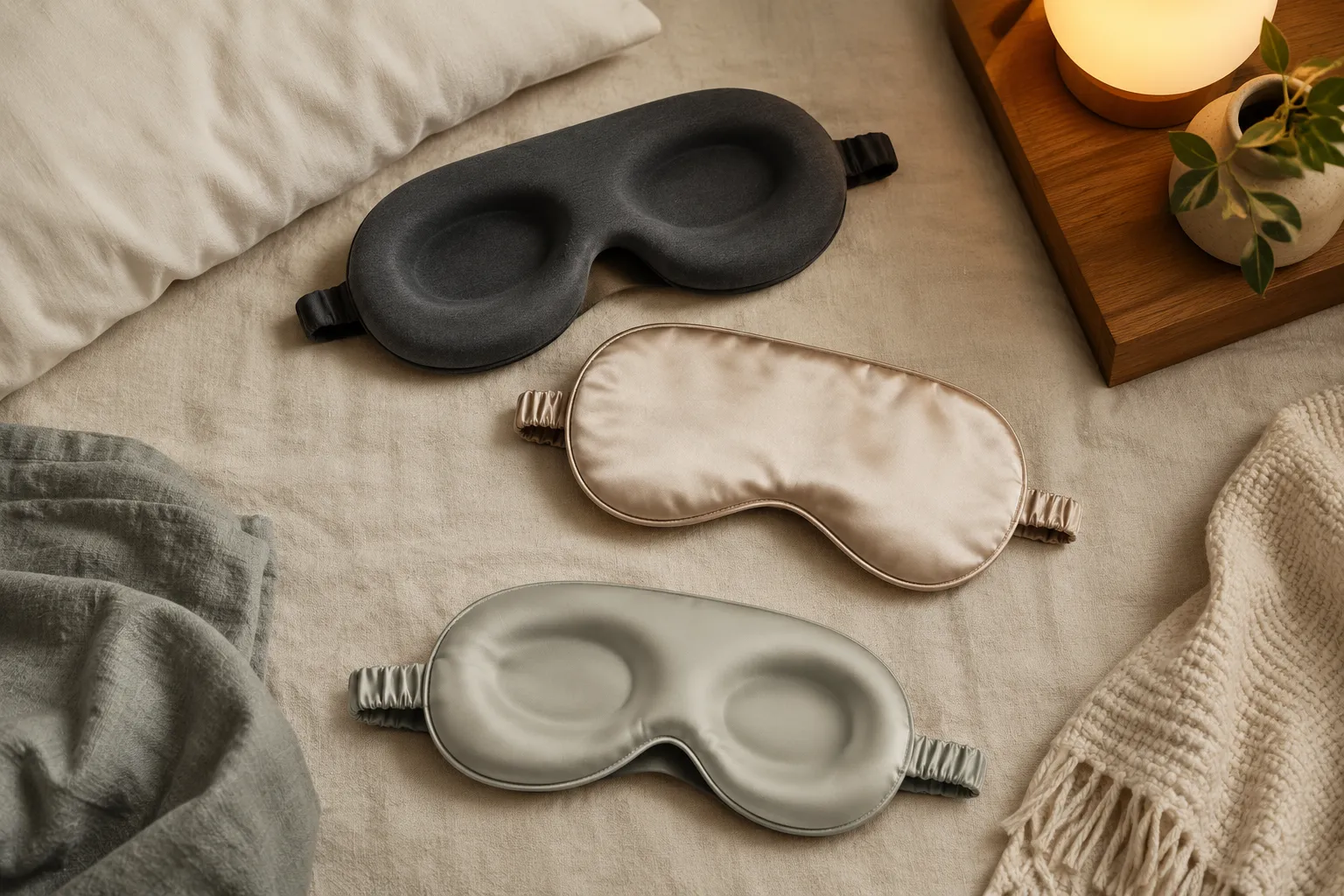
The table shows the real decision clearly. Shape affects pressure and light coverage. Fabric affects softness and feel.
What Is a Contoured Sleep Mask?
A contoured sleep mask is shaped around the eyes instead of lying completely flat. Some have deep eye cups. Others use a softer 3D shape that gently lifts the fabric away from the eyelids.
The point is eye space. If you dislike the feeling of a flat mask resting on your eyelids, a contoured mask may feel less distracting. It can also help reduce light gaps if the mask fits closely around the nose and lower eye area.
When a Contoured Mask Makes Sense
A contoured mask is usually the better starting point if your bedroom is hard to darken. Think of an apartment window facing a streetlight, basic blinds that glow around the edges, a hallway light under the door, or a partner who reads in bed after you want the lights off.
It is also a good style to consider if regular flat masks bother your eyes. The raised area gives your eyelids and lashes more room, so the mask does not have to sit directly on them.
What to Watch Out For
A contoured mask is not automatically comfortable. Some are thick, stiff, or too tall for side sleeping. If the eye cups are bulky, the pillow can push the mask sideways or press the edge into your cheekbone.
When shopping online, look at the side-profile photos. Side sleepers should be cautious with rigid, dome-like cups or thick edges near the temples. A better side-sleeper shape usually has tapered edges that slope down toward the sides of the face, so the pillow is less likely to push the mask out of place.
Also check where the strap hardware sits. A plastic buckle near the ear can become annoying when your head is turned into the pillow.
What Is a Silk Sleep Mask?
A silk sleep mask is defined by its fabric. Many silk masks are flat or lightly padded, though some are shaped. People usually choose silk because it feels smooth, soft, and less bulky than a structured mask.
A silk mask is easy to keep on a nightstand, tuck into a drawer, or pack in a travel bag. If your room is already fairly dark and your main goal is comfort, silk can be a practical choice.
When a Silk Mask Makes Sense
A silk mask works well when softness is the priority. Maybe your curtains already block most outside light, but you still notice a little brightness in the morning. Maybe you want something light for travel, naps, or guest-room use. Or maybe you simply dislike the feeling of thick accessories on your face.
Silk can feel especially natural as part of a quiet bedtime routine because it is simple, compact, and easy to reach for at night.
What to Watch Out For
A silk mask can still have fit problems. If it is flat, it may rest directly on your eyelids. If the strap is too loose, it may slide. If the nose area does not sit close enough, light may leak in from below.
Silk may also require gentler care than basic synthetic fabric. That matters for everyday use. A sleep mask touches your face regularly, so the cleaning routine should be realistic for you.
Which One Is Better for Light Blocking?
For stronger light blocking, a contoured mask usually has the advantage. The shape can help the mask sit more closely around the eye area, especially near the nose bridge, where flat masks often leave a small gap.
But fit matters more than the label. A poorly fitting contoured mask can still let in light. A silk mask with enough padding and good nose coverage can work well in a room that is already dim.
Use your bedroom as the guide. If morning light pours through the blinds, choose coverage first. If the room is mostly dark and you just want a softer barrier, silk may be enough.
Which One Is Better for Eye Pressure?
If eyelid pressure bothers you, choose contoured. The raised eye area is designed to keep the mask from lying flat across the eyes.
This is useful if you feel too aware of your blinking, lashes, or eyelids under a flat mask. A contoured shape gives that area more breathing room.
A silk mask may feel softer, but if it is flat, it can still press directly on the eyelids. Softness and eye clearance are not the same thing.
Which One Is Better for Side Sleepers?
Side sleepers should pay attention to thickness, edge shape, and strap placement.
A contoured mask can be comfortable for side sleeping if it is flexible and low-profile. But a stiff, bulky mask may press into your cheek or shift when your face meets the pillow.
A silk mask is usually flatter, so it may feel easier against the pillow. The tradeoff is that smooth fabric can slide more easily, especially if the strap is narrow or loose.
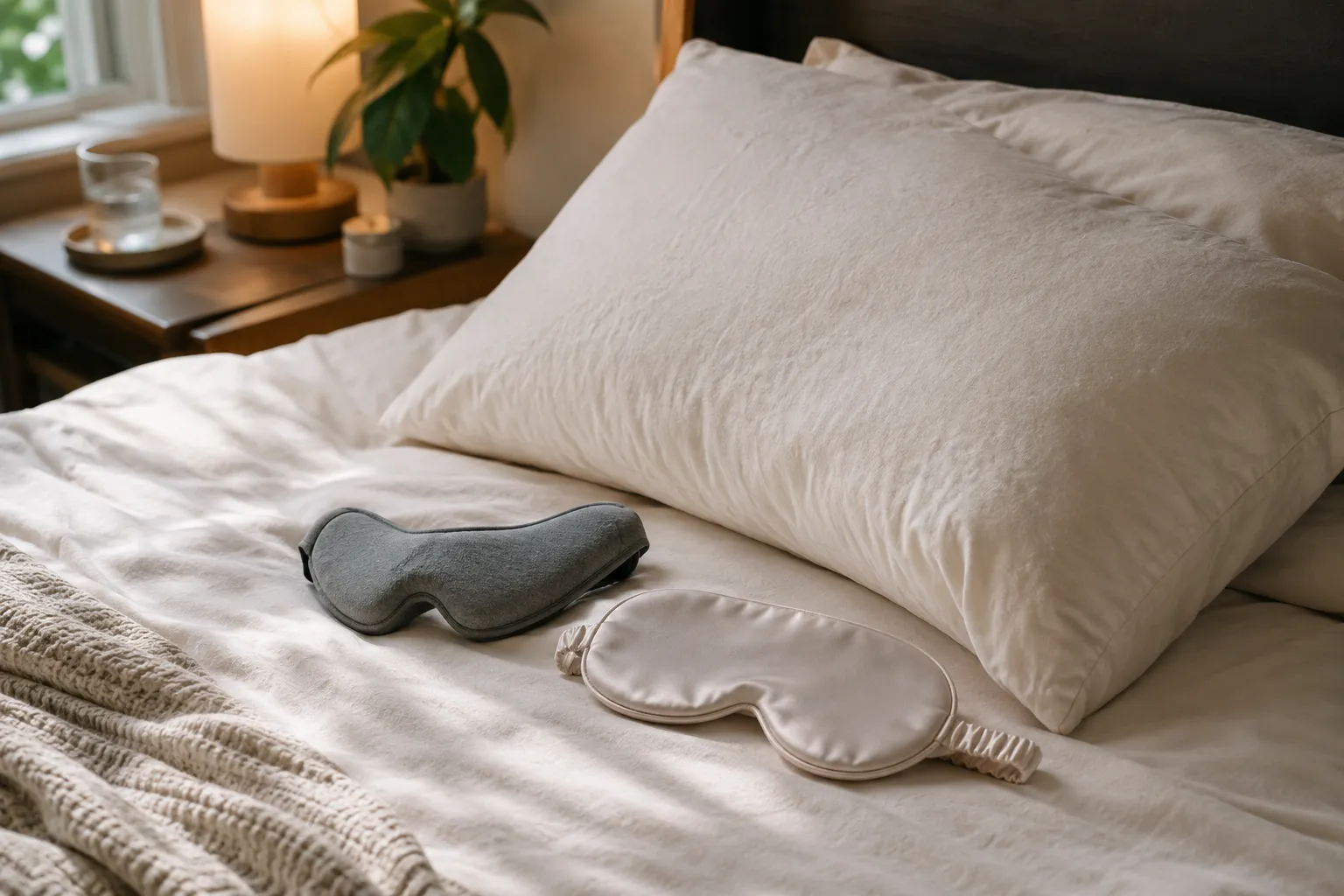
For side sleeping, look for:
- Soft, low-profile edges so the mask does not dig into your cheekbone when pressed against the pillow.
- Tapered sides so the mask slopes toward the temples instead of forming a hard edge.
- A flat, slider-adjustable strap instead of a bulky buckle near the ear.
- Flexible eye cups if you choose contoured, so the mask does not feel rigid against the pillow.
- A secure but gentle band so the mask stays in place without needing to be overtightened.
Also consider your pillowcase. If you use a silk mask with a silk pillowcase, the smooth-on-smooth contact may make slipping more likely. In that case, a wider elastic band or a slightly more textured strap can help the mask stay anchored.
Can a Sleep Mask Be Both Contoured and Silk?
Yes. A contoured silk sleep mask combines a shaped eye area with a silk surface. This can be a good middle ground if you want eye clearance but still prefer a smoother fabric feel.
The key is to look beyond the name. Check whether the face-contact side is actually silk, whether the eye cups look deep enough, and whether the edges taper down toward the sides. For side sleepers, profile photos are more useful than straight-on product photos because they show how thick the mask is near the temples.
A hybrid mask makes the most sense if you are sensitive to both pressure and texture. It can also be useful if you want one mask for regular bedroom use instead of keeping separate masks for home and travel.
How to Choose for Your Bedroom and Routine
A sleep mask is a small item, but it can solve real bedroom problems without changing the whole room.
For a broader fit-first checklist that covers sleep position, nose fit, strap placement, material, and cleaning, see how to choose a sleep mask that actually feels comfortable.
For Apartments and Rentals
Renters often have limited control over windows. Your blinds may come with the apartment, blackout curtains may not be allowed, or you may not want to drill into the wall.
If outside light is strong, a contoured mask is usually more practical. If the room is mostly dark but not quite dark enough, a silk mask may be comfortable and sufficient.
You can also pair a mask with small renter-friendly changes: cover tiny electronic lights, move bright chargers away from the bed, or reduce hallway light under the door.
For Shared Bedrooms
If your partner reads, uses a screen, or wakes up earlier, the mask needs to handle active light in the room. In that case, prioritize coverage and fit over fabric alone.
A contoured mask may be better for a bedside lamp or phone glow. A silk mask can work if the light is occasional, dim, or indirect.
For Morning Routines
Sleep masks are also useful when one person wants to stay in bed while the other starts the day. If your partner opens the curtains, turns on a closet light, or gets ready early, a mask with secure coverage can make the room feel less disruptive.
For this use, choose something easy to find and put on half-asleep. A mask that lives in the same spot every night is more likely to become part of your routine.
For Travel or Naps
Silk masks are usually easier to pack because they lie flat. Contoured masks may offer more eye space and coverage, but they can take up more room and may lose shape if crushed in a bag.
For travel, choose based on what bothers you more: light in unfamiliar rooms or bulk in your luggage.
Beginner Checklist Before Choosing
Check the Fit
The mask should sit securely without needing to be tight. The strap should adjust easily and should not dig behind your ears.
Check the Nose Area
Many light leaks happen around the nose. Look for a shape that sits close without pinching.
Check the Eye Area
If pressure bothers you, choose a contoured design with enough depth. If softness matters more, look for a smooth inner fabric.
Check the Side Profile
Online, side-profile photos are especially helpful. Look for tapered edges, flexible shaping, and minimal bulk near the temples.
Check the Strap
A wide, flat, adjustable strap is often more comfortable than a narrow band or bulky buckle. This matters even more for side sleepers.
Check the Care Instructions
A sleep mask touches your face regularly, so cleaning should be realistic. If the care routine feels too delicate for everyday use, choose a simpler material.
Common Mistakes to Avoid
Choosing Silk Only Because It Sounds Softer
Silk can feel soft, but a flat silk mask may still press on your eyelids. If pressure bothers you, prioritize shape.
Choosing Contoured Only Because It Sounds More Advanced
Contoured does not automatically mean better. A stiff or bulky mask can feel awkward, especially on your side.
Ignoring Product Photos
Do not rely only on front-facing images. Look for side views, strap close-ups, and photos that show the nose area and edge thickness.
Forgetting Your Actual Room
A mask for a dark guest room is different from a mask for an apartment bedroom facing a streetlight. Choose for the light you actually deal with.
FAQ
Are contoured sleep masks better than silk sleep masks?
Not always. Contoured masks are usually better for eye space and light coverage. Silk masks are usually better for softness and a lighter feel. The better choice depends on your bedroom, sleep position, and comfort preferences.
Is a contoured sleep mask good for side sleepers?
It can be. Look for flexible eye cups, tapered edges, and a flat adjustable strap. Avoid thick, rigid cups that may press into your cheek or shift against the pillow.
Do silk sleep masks block light well?
Some do, especially if they have enough padding and a close fit around the nose. A thin or loose silk mask may let light in around the bottom edge.
Which type puts less pressure on the eyes?
A contoured sleep mask usually puts less direct pressure on the eyelids because the shaped eye area creates space over the eyes.
Can a sleep mask be both contoured and silk?
Yes. A contoured silk mask combines a shaped design with a silk surface. It may be a good choice if you want both eye clearance and a smoother fabric feel.
Why does my sleep mask slide off?
The strap may be too loose, the fabric may be slippery, or the mask may not work well with your sleep position. If you use a silk pillowcase, a silk mask may slide more easily. A wider or slightly textured elastic band can help keep the mask in place.
What is better for apartment bedrooms?
If your apartment has strong outside light, start with a contoured mask. If the room is mostly dark and you mainly want a softer feel, a silk mask may be enough.
What should beginners look for first?
Start with fit. Check the nose area, strap, edge thickness, and eye space before focusing on fabric or style.
Final Thoughts
The best sleep mask is the one that fits your face, your pillow, and your bedroom.
Choose a contoured sleep mask if light leaks or eyelid pressure are your main issues. Choose a silk sleep mask if you want something soft, light, and simple. Choose a contoured silk mask if you want a balance of eye space and smooth fabric.
For everyday use, do not choose by label alone. Look at the side profile, strap design, nose fit, edge thickness, and care instructions. A good sleep mask should be easy to use, easy to keep nearby, and comfortable enough to become part of your regular bedtime routine.