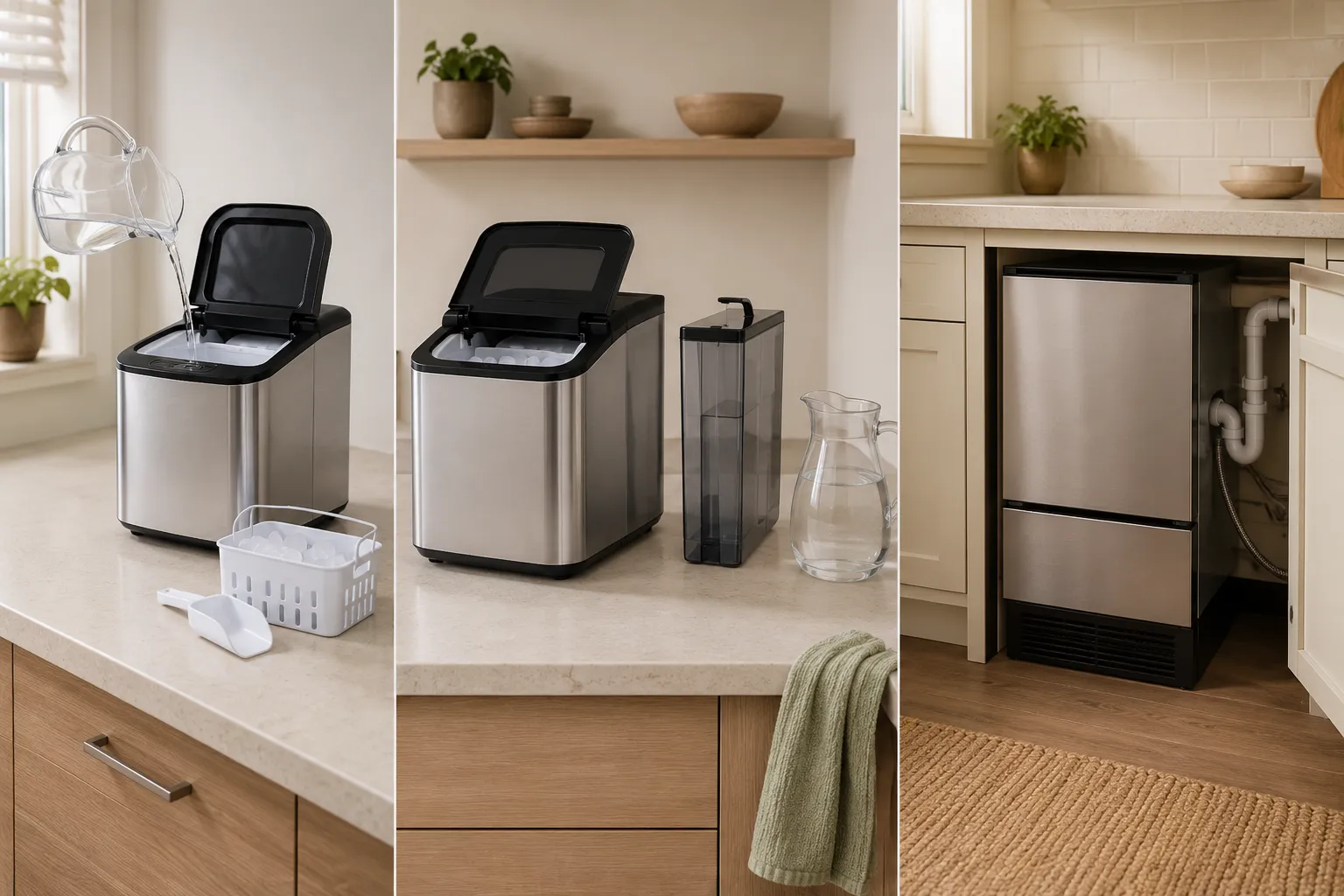
Most countertop ice makers do not need a permanent water line. They use a built-in reservoir that you fill by hand with water, then make ice on the counter near a suitable outlet.
That simple answer has an important limit: not every appliance called an ice maker is a standard countertop reservoir model. Undercounter, built-in, commercial, and direct-water models can have very different supply, drainage, electrical, and installation requirements. Always check the manual for the exact model rather than assuming that a product photo or marketplace title tells the whole story.
For a renter, the useful question is not only “Does it need a water line?” It is also whether you have the counter depth, refill routine, outlet location, ventilation space, cleaning habit, and freezer space to use one comfortably.
The Short Answer
| Ice-maker type | Permanent water line? | What the normal routine looks like |
|---|---|---|
| Countertop model with an internal reservoir | Usually no | Fill the reservoir by hand, make ice, scoop or move finished ice to a freezer, and clean the machine as directed. |
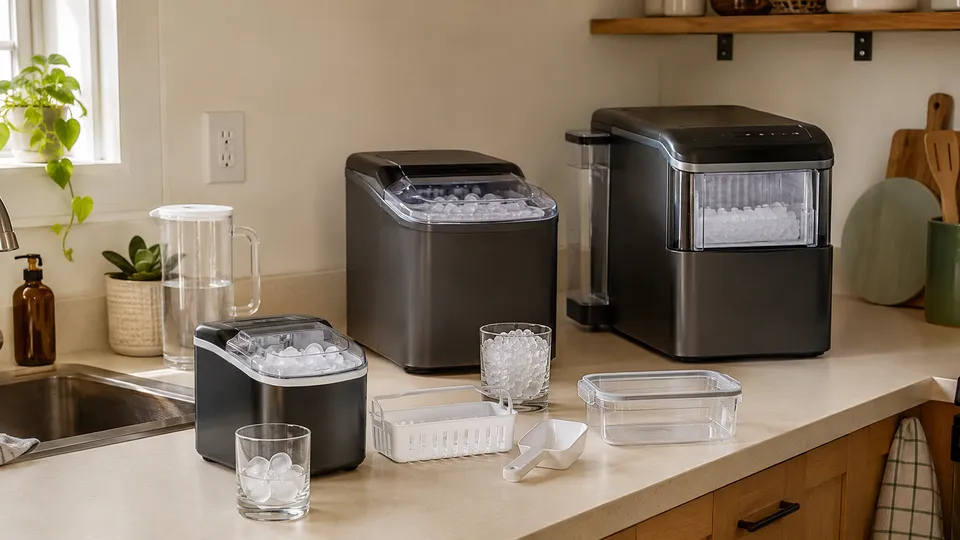
| Countertop model with an optional side tank | Usually no | Refill a larger removable water tank rather than connecting plumbing. |
| Built-in, undercounter, commercial, or direct-water model | It may be required | Confirm water supply, drainage, electrical, ventilation, and installation instructions before buying. |
The first category is the one most apartment shoppers mean by a countertop ice maker. For example, the Igloo IGLICEBSC26 manual lists a 1.5-quart water reservoir, while the Euhomy Pearl L1 product page lists a 1.1-liter tank. Those are refillable reservoirs, not permanent plumbing connections.
How a Manual-Fill Countertop Ice Maker Works
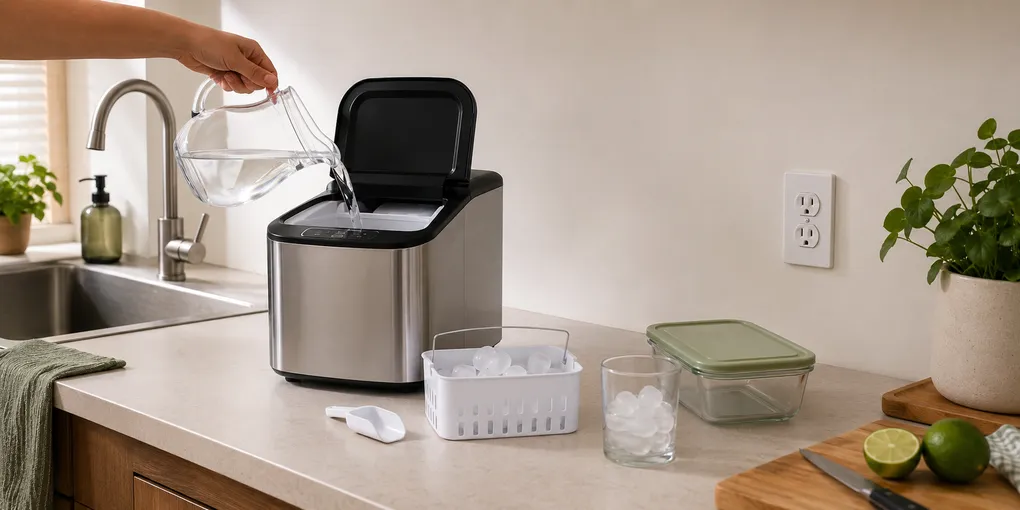
A standard countertop machine holds water in its own reservoir. You add water through the access point specified in its manual, start the machine, and collect ice from its basket. This is why these machines can work in a rental kitchen without a faucet adapter, pipe modification, or a dedicated drain line.
The tradeoff is that water handling becomes part of ownership:
- You fill the reservoir yourself.
- You empty water when the manual tells you to, especially before storage or cleaning.
- You clean the interior and removable parts on the recommended schedule.
- You move ice to the freezer if you want to keep it for later.
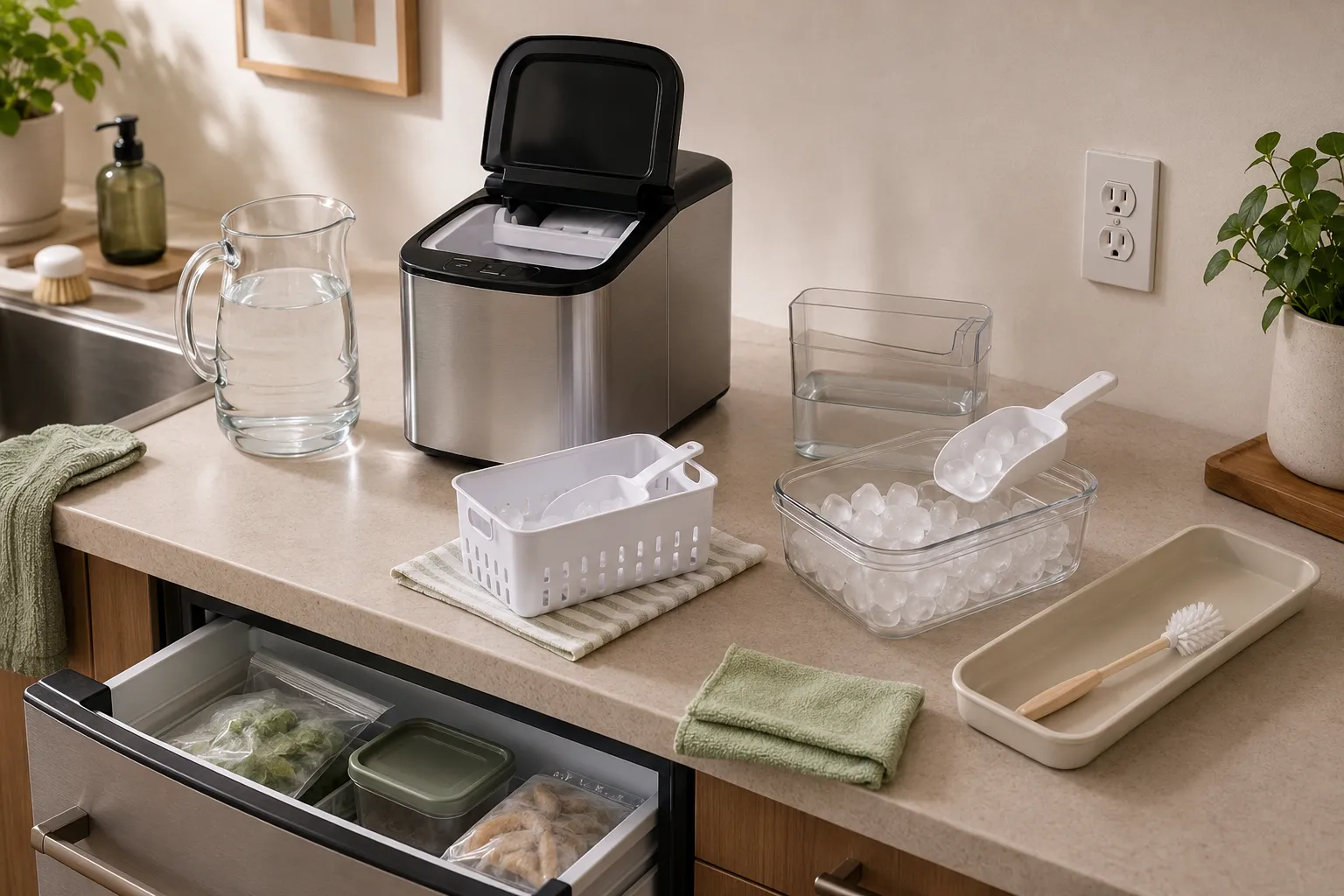
The basket in most countertop machines is temporary holding space, not a freezer. Ice can melt when left inside; many reservoir machines reuse that melted water for another cycle. That is convenient for making more ice, but it does not mean you have a refrigerated bin of ice waiting indefinitely.
What You Still Need Without a Water Line
Removing plumbing from the equation does not make the appliance setup-free. Check these items before ordering.
A usable counter location
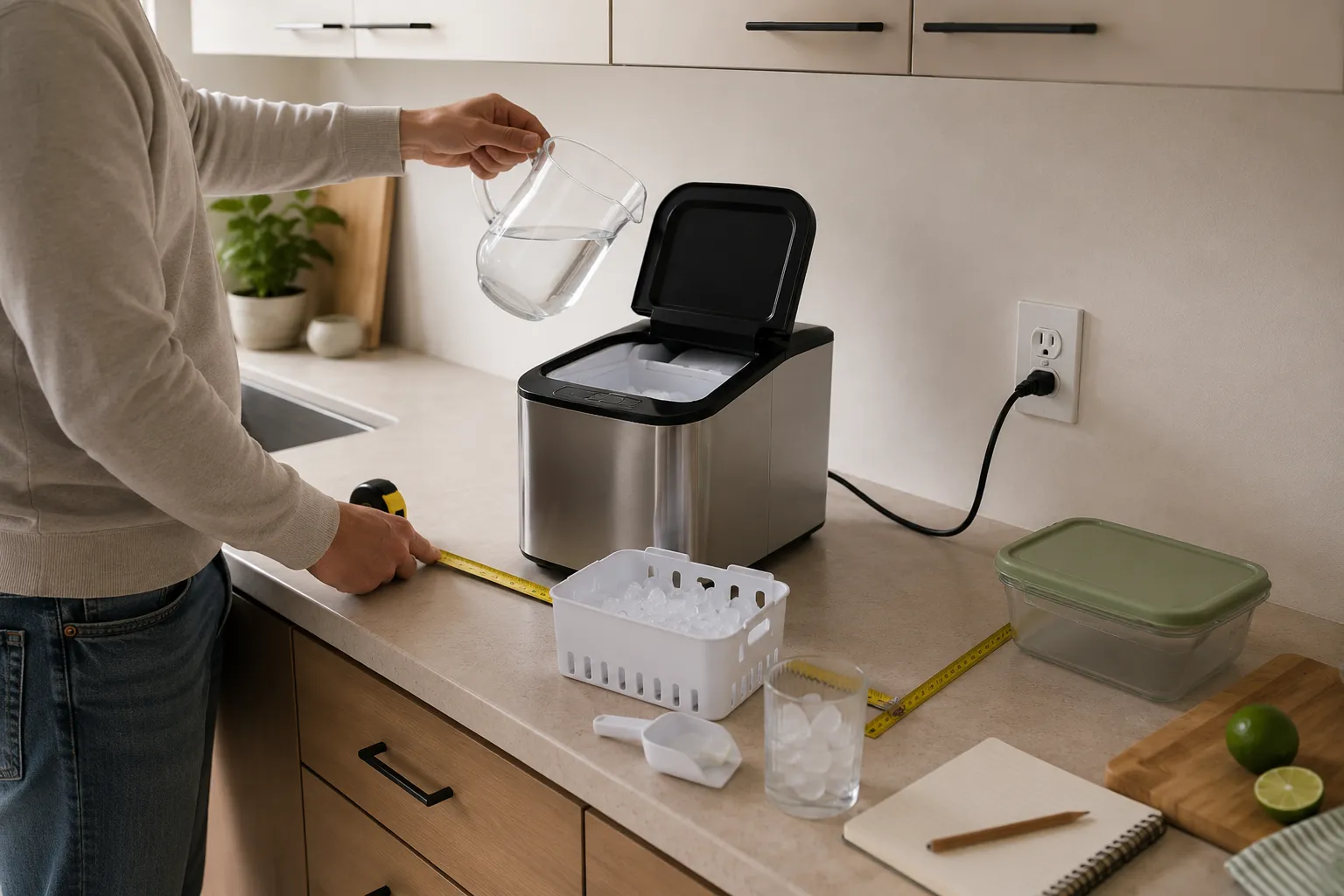
Measure the full working footprint, not only the machine’s width. You need room for its depth, lid or water-fill access, ice basket, scoop, and the space in front needed to use it. Leave only the clearance specified by the exact manual; ventilation guidance varies by product.
For example, the GE Profile Opal 2.0 Ultra lists 4 inches of side and rear clearance. That is a model-specific instruction, not a number to apply to every countertop ice maker.
A suitable outlet and safe cord route
Plan for a stable, level counter near the type of outlet required by the manufacturer. Keep the cord away from the sink, wet surfaces, and cooking heat. Do not make a temporary extension-cord or power-strip arrangement the basis of the purchase; follow the exact product instructions and your building’s rules.
A realistic refill routine
Ask where you will fill a pitcher, where you will set it down, and whether you will be happy repeating that task on busy days. A larger output number does not remove manual refilling. An optional side tank can reduce how often you refill, but it also increases the setup’s width and counter commitment.
A cleaning and storage plan
Water that sits in a machine needs care. Follow the manual’s instructions for cleaning, draining, drying, and any recommended scale treatment. If you will use the machine only occasionally, check that you have somewhere easy to store it rather than leaving it full of water at the back of the counter.
For the full comparison of counter depth, water tanks, ice type, and daily-use tradeoffs, see our guide to countertop ice makers for small apartments.
When an Ice Maker May Need Plumbing Instead
Do not use this article to choose an undercounter or direct-water ice maker. Those products can be designed around a continuous water supply, and some also need a drain connection, dedicated installation space, or professional setup. The product manual and installation instructions control here.
That distinction matters in an apartment. A countertop reservoir machine can be a practical small appliance. A built-in or direct-water model can become a lease, plumbing, drainage, and installation project. If permanent changes to a faucet, supply line, cabinet, or drain are involved, get permission from the landlord or property manager before proceeding.
Is a Countertop Ice Maker a Good Apartment Fit?
It is usually a reasonable fit when all of these are true:
- You use ice often enough to justify a permanent or easy-to-reach counter spot.
- You have measured depth, height, lid access, and the clearance stated in the manual.
- You can refill a reservoir without carrying water across a busy cooking area.
- A suitable outlet is available without an improvised cord setup.
- You have freezer space for ice you want to keep and time to clean the machine.
It is probably not a good fit when your only counter space is beside the stove or sink, the upper cabinet blocks the water-fill lid, you would need to rely on an unsuitable extension arrangement, or you mainly want an appliance to store ice overnight. In those cases, ice trays, reusable freezer containers, or buying bagged ice for occasional gatherings may create less daily friction.
A Renter’s Pre-Purchase Check
Before buying a specific countertop ice maker, confirm these details in its manual and on the product label:
- Water source: Is it an internal reservoir, an optional side tank, or a direct-water model?
- Dimensions: What are the width, depth, height, and required clearance? Can the lid and basket be used under your cabinet?
- Electrical requirements: What voltage, wattage or amps, and outlet guidance does the manufacturer list?
- Water capacity and cleaning: How much water does it hold, and how does the manual say to drain, clean, and dry it?
- Ice storage: Is the basket refrigerated? If not, where will you move finished ice?
- Lease limits: Does your building restrict appliance use, alterations, or water-related equipment in the kitchen?
This is the same measurement-first process that helps with any kitchen purchase. Our guide to small appliances for a first apartment covers how to assess counter space, storage, outlets, and cleaning before adding another appliance.
FAQ
Do countertop ice makers need a drain line?
Standard reservoir countertop models generally use their internal water system rather than a permanent household drain connection. You still need to empty and clean the machine according to its manual. Do not assume this applies to an undercounter, commercial, or direct-water model.
Can I fill a countertop ice maker from the kitchen faucet?
You can fill a pitcher or container from the faucet and add water to the reservoir if that is consistent with the product’s instructions. The machine itself normally does not connect to the faucet on a manual-fill countertop model. Follow the manual’s water-quality and cleaning guidance.
Can I leave a countertop ice maker running all day?
Check the exact manual before establishing any daily-use routine. A countertop ice maker still needs water management, ventilation, cleaning, and attention to its ice basket. It is not the same as a built-in freezer ice maker with long-term frozen storage.
Does a side tank mean the ice maker needs plumbing?
No. A removable side tank is typically another refillable water reservoir, not a permanent water-line connection. Confirm the exact product documentation because accessory and model designs differ.
Final Thoughts
For many renters, a countertop ice maker can avoid a plumbing project because it relies on manual filling. The real decision is whether its refill, cleaning, counter-space, outlet, and freezer-storage routine fits your kitchen.
Check the manual for the exact model before buying, especially when a listing mentions a side tank, direct water, installation, or an appliance category beyond a standard countertop reservoir machine.