Quick Picks
Without dedicated laundry hookups, start with a sink-connected washer if the rental allows it and you can confirm a compatible faucet and secure drain route. Add a compact heated dryer if you can meet its exhaust and electrical requirements. If you have room to air-dry, the washer’s spin cycle and a rack may be enough.
| Apartment situation | Setup to compare | Check before ordering |
|---|---|---|
| Small, frequent loads | BLACK+DECKER BPWM09W + BCED26 | Up to 6.6 lb wash / 8.8 lb dry. Verify the sink connection and dryer exhaust. |
| More laundry and a place to leave both machines | BLACK+DECKER BPW30MW + BCED37 | Up to 26.5 lb wash / 13.2 lb dry. Plan to split a full wash load for drying. |
| No workable heated-dryer location and room to hang clothes | Portable washer with a spin cycle + rack | The rack finishes drying. A separate spin dryer is optional. |
| Space and approval for an installed appliance | BLACK+DECKER BCW27MW ventless combo | Verify water, drainage, power, and placement for the 160 lb unit. |
The load figures are manufacturer ratings. The comparisons below use published specs and manuals.
First Decide What “Portable” Means in Your Apartment
Does a Portable Washer-Dryer Combo Actually Dry Clothes?
Not necessarily. Before buying a portable washer and dryer for an apartment, check what the listing means by dry. A wash-and-spin machine leaves damp laundry for hanging; a separate tumble dryer finishes drying in a second appliance; a true all-in-one machine has a drying cycle in the same drum. “Combo” or “2-in-1” in a product title alone does not tell you which result to expect.
| Category | Water and drainage | Drying result | What makes it practical or impractical |
|---|---|---|---|
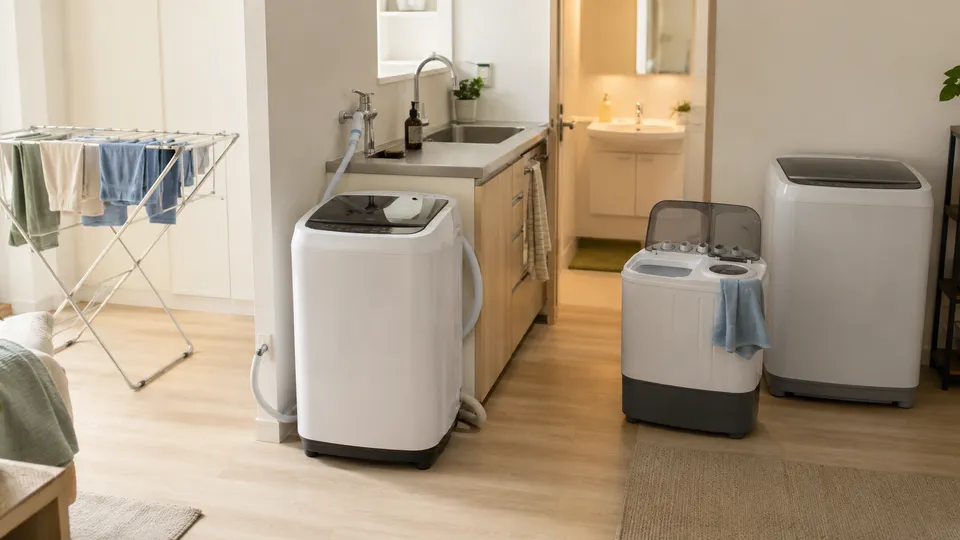
| Wash-and-spin machine, including a twin tub advertised as a washer-dryer combo | Follow its documented fill and drain method; a twin tub requires moving laundry to the spinner. | Spinning extracts water, not a fully dry load. | Choose only if you can finish on a rack or in a separate suitable dryer. |
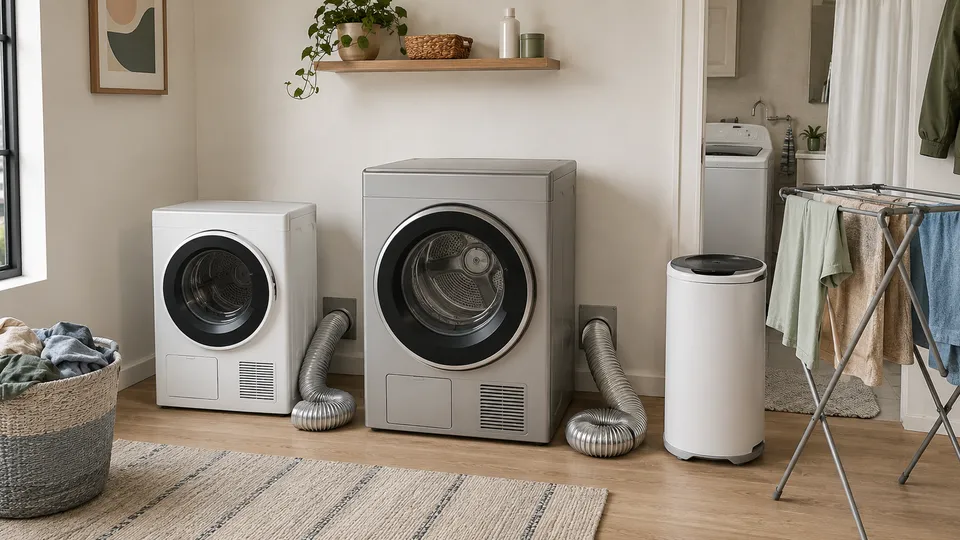
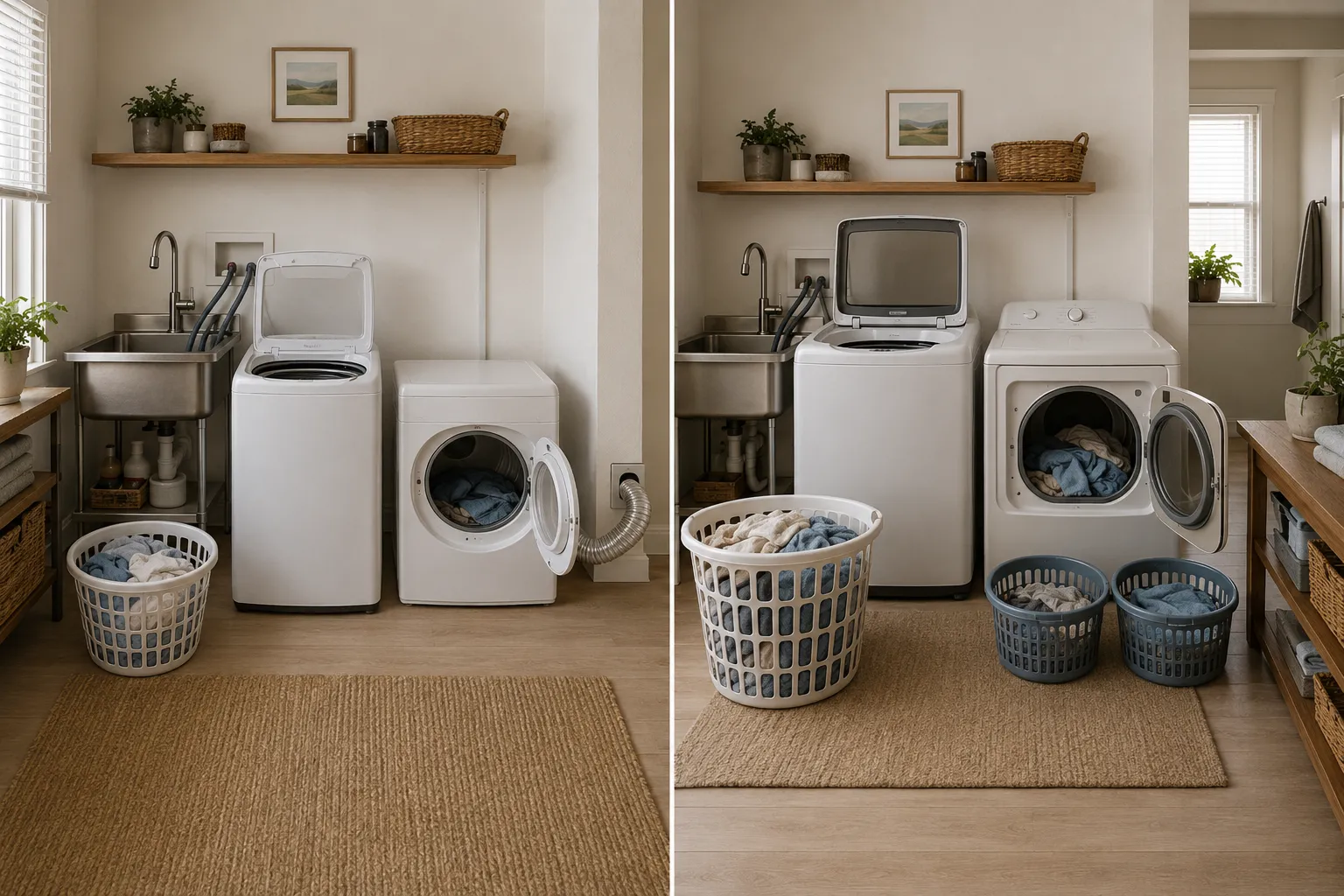
| Portable washer plus compact vented dryer | The washer may use a compatible sink connection and drain hose. | Heated tumble drying. | Requires a model-approved dryer exhaust arrangement, a suitable outlet, and lint access. |
| Ventless washer-dryer combo | Follow the appliance’s installation instructions for water, drainage, power, and placement. | One appliance washes and dries. | It may save an exhaust hose, but it is not necessarily movable or suitable for a temporary sink setup. |
Buying rule: if you want laundry dried without hanging it, look for a documented tumble-drying cycle and dry-load capacity, not just a spin speed or a spin timer. If the manual describes only washing, rinsing, and spinning, budget space for the finishing step. “Without hookups” does not remove the need to verify water supply and drainage, and “ventless” does not mean installation-free.
Start with the apartment rather than the product listing. Check written rental rules, the exact faucet and drain route, a grounded outlet, door and lid clearance, and where damp laundry will sit during transfers. Our guide on using a portable washing machine in an apartment covers the rental, drain, and outlet checks in more detail.
Best Compact Automatic Pair: BLACK+DECKER BPWM09W + BCED26
The BLACK+DECKER BPWM09W and BCED26 are the clearest small-load pair when an apartment can support both stages of laundry. BLACK+DECKER lists the BPWM09W as a 0.9 cu. ft. portable washer with a stated wash load up to 6.6 lb. It includes a drain hose and quick-connect sink adapter, uses cold water only, and measures 17-11/16 W x 18-1/16 D x 31-1/2 H in at 44.1 lb.
The BCED26 is listed as a 120 V / 1,400 W vented dryer with a stated load up to 8.8 lb. It measures 23.6 W x 17.1 D x 27.5 H in, weighs 48.4 lb., includes an exhaust connector, and has a double-layer lint filter. BLACK+DECKER lists the two models as compatible.
On the published limits, this pair is less likely to need split drying loads. Check the dryer instructions and fabric care labels for the actual load and cycle.
Choose this pair when:
- You do small, frequent loads rather than a large weekly laundry session.
- Your exact faucet works with the washer’s supplied adapter and the drain hose can reach safely.
- You have confirmed the dryer location, outlet, clearance, lint routine, and manufacturer-directed exhaust arrangement before purchase.
- You can keep both appliances accessible without blocking the only kitchen or bathroom route.
Do not treat the washer’s quick-connect adapter as universal. Pull-down faucets, pull-out faucets, filtered faucets, and unusual aerators need separate verification. Read portable washing machine faucet compatibility before treating a sink as an approved connection point.
Best for More Washing Capacity: BLACK+DECKER BPW30MW + BCED37
The BLACK+DECKER BPW30MW plus BCED37 is the larger portable pairing to consider only after measuring a true laundry location. BLACK+DECKER lists the BPW30MW at 3.0 cu. ft. with a stated wash load up to 26.5 lb. It has a drain hose, quick-connect sink adapter, rollers, and dimensions of 23.7 W x 24.8 D x 39.4 H in; the unit weight is 99.2 lb.
The compatible BCED37 is listed at 120 V / 1,500 W, with a stated dry load up to 13.2 lb., an included exhaust connector, a double-layer lint filter, and a 23.6 W x 21.5 D x 27.5 H in body weighing 49.5 lb.
A full wash can require more than one drying cycle. Allow room for the open washer lid and dryer door, baskets, sink and exhaust access, and a clear path to move wet clothes. The 99.2 lb. washer is best suited to a space where it can stay between cycles.
Choose this pair when:
- The smaller washer’s stated load would force too many wash cycles.
- You have enough floor space to leave a larger washer in a stable, level location.
- You accept that a fuller wash load may become multiple dryer loads.
- The rental rules and dryer exhaust plan are already confirmed.
Skip it when the larger washer only fits by blocking a doorway, forcing a hose across a walking path, or turning the dryer vent into an afterthought. A larger drum cannot compensate for an apartment that does not have a workable laundry workflow.
Best When a Heated Dryer Is Not Feasible: Washer + Spin Dryer + Rack
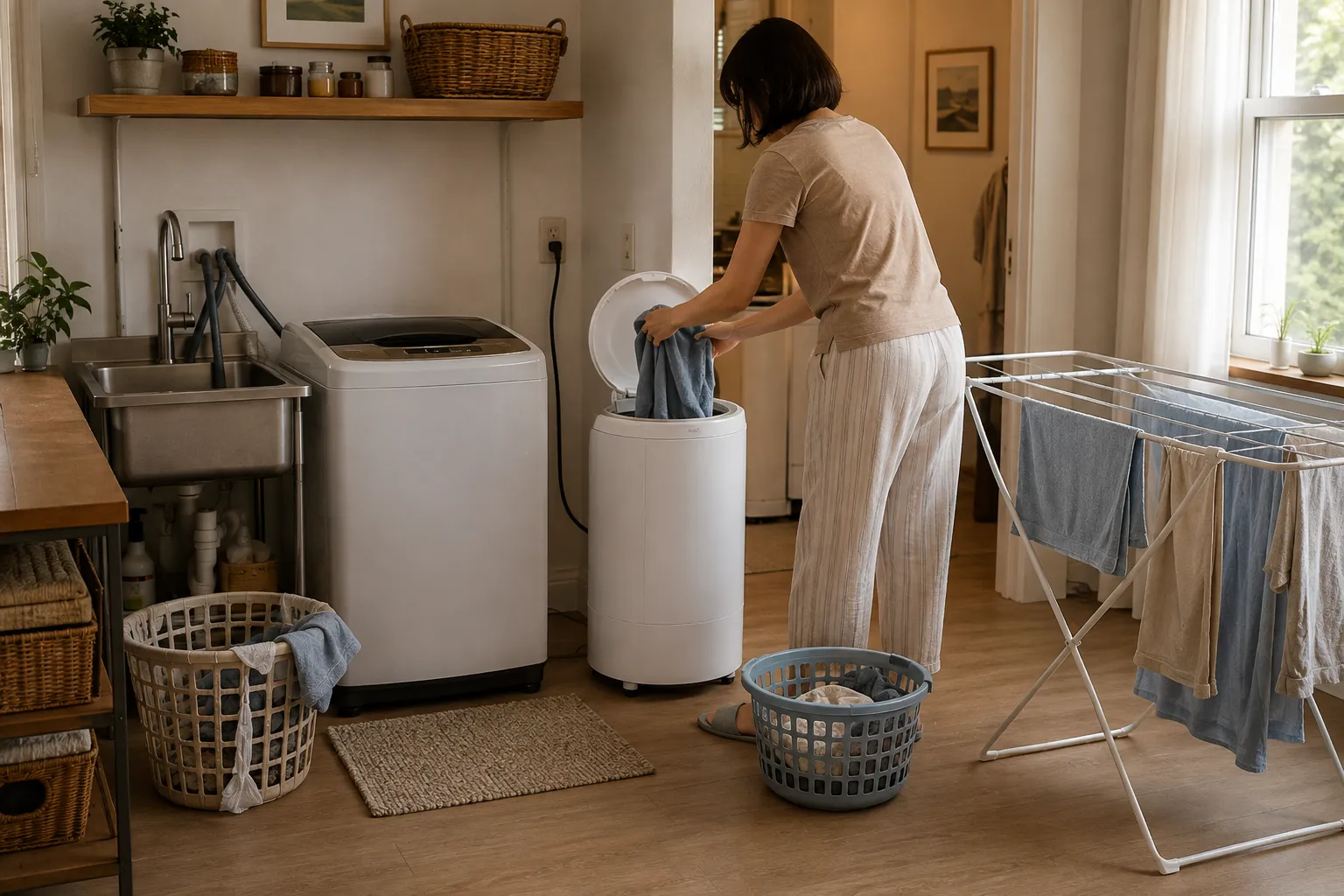
When a compact vented dryer cannot be used as directed, do not try to turn one into a ventless appliance. Start with the washer’s own spin cycle, where provided, and a suitable drying rack. If that routine already works for your loads and available drying space, there is no need to buy a separate spinner.
An optional centrifugal spin dryer adds another water-extraction step before hanging. The Laundry Alternative Ninja 3200 RPM is an example: it uses spinning rather than heat, so it is not a substitute for a tumble dryer. Consider it only when the extra extraction, handling, and storage make sense for your routine; this guide does not establish a measured drying-time improvement over either washer’s built-in spin cycle.
Adding a separate spinner has a different daily tradeoff:
- A spin dryer can reduce how wet clothing is before it goes on the rack.
- It does not deliver a heat-dried, ready-to-fold load at the end of the spin.
- You must move wet clothes from the washer to the spinner and then to the rack.
- The apartment still needs a stable outlet, drainage-aware wash setup, and enough air-drying space.
It is often the better fit for a renter who cannot document a safe exhaust route or whose lease does not permit a heated dryer. It is not the better fit for someone who has no place at all to dry clothes. For the product-level distinction, see whether portable dryers need venting.
Why a Ventless Combo Is Not the Same as a Portable Pair
The BLACK+DECKER BCW27MW shows why the word “ventless” needs context. The manufacturer lists it as a 2.7 cu. ft. washer-dryer combo with a ventless dryer, a stated wash load up to 25.6 lb., and a stated dry load up to 13.2 lb. It measures 23.4 W x 23.1 D x 33.5 H in and weighs 160 lb.
Choose this route only if your apartment can meet the combo’s installation requirements for water, drainage, power, and clearance, and the property allows it. The ventless drying cycle saves an exhaust hose. A full wash may still need to be split before drying because the two load limits differ.
Measure the Full Routine, Not Just the Machines
Before buying a pair or a combo, map the whole routine:
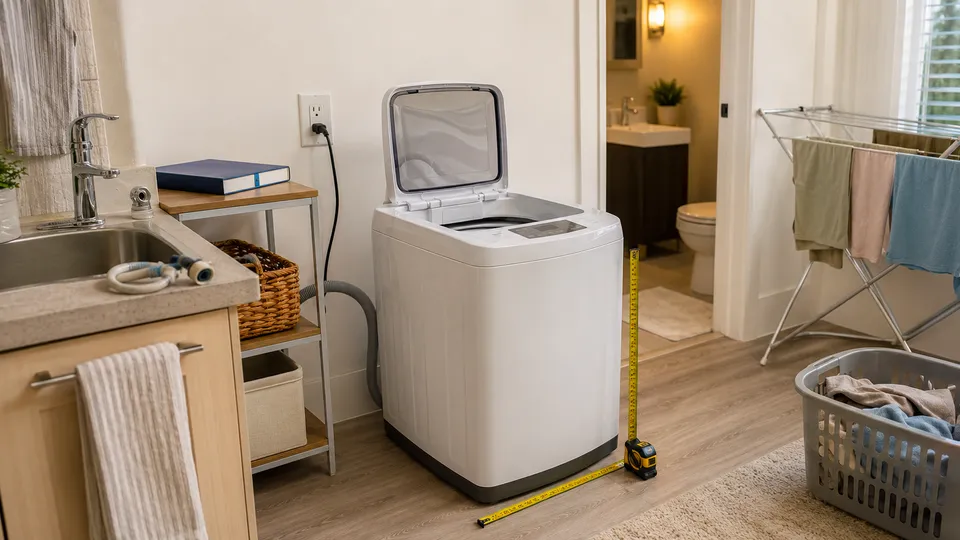
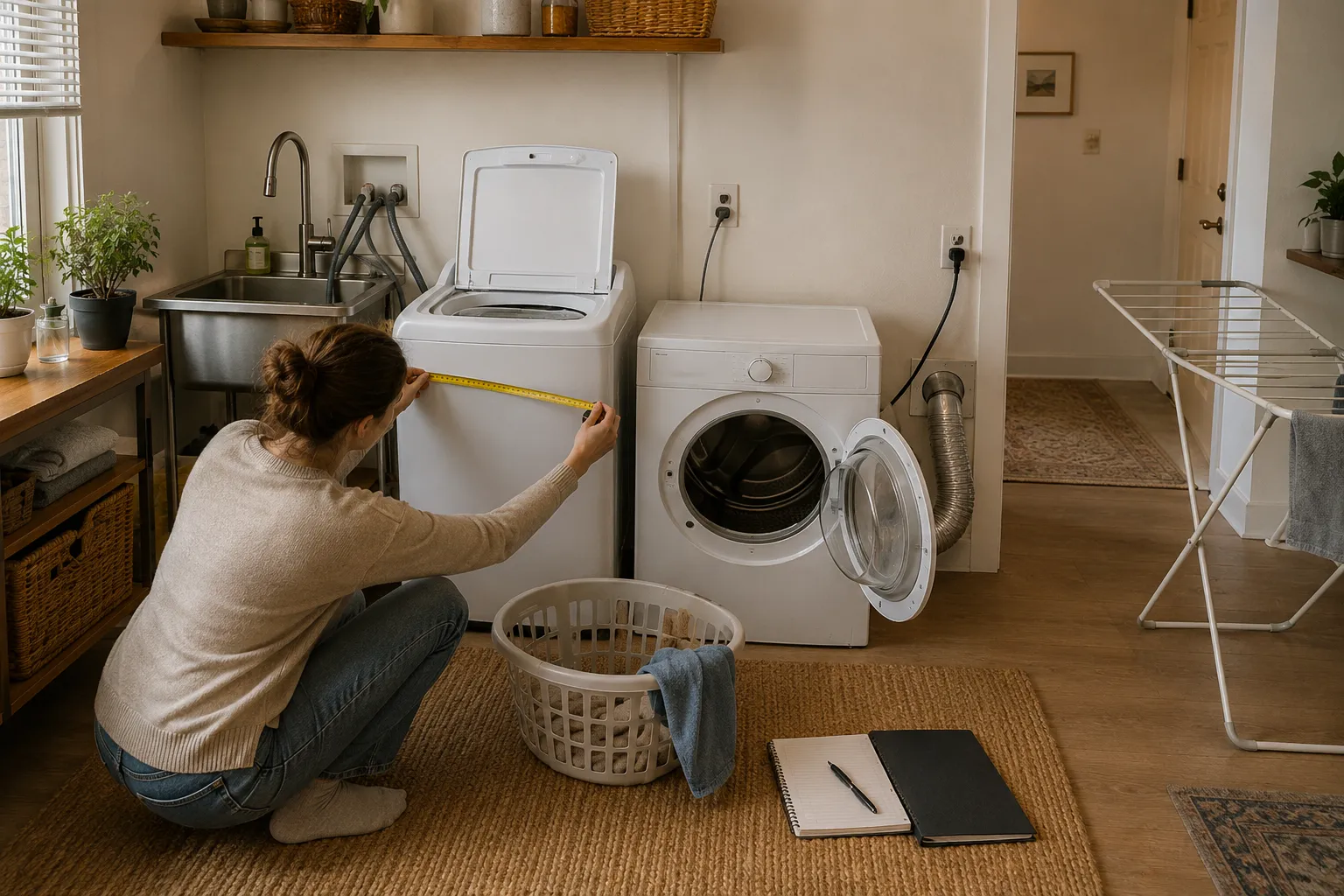
- Measure the body of each appliance, open lid or door, and needed access to controls and lint filters.
- Confirm the washer’s exact faucet connection, cold- or warm-water requirement, and drain-hose route.
- Confirm the dryer type. A vented dryer needs the exact manufacturer-directed exhaust arrangement; a spin dryer needs rack space afterward.
- Include baskets and the path for transferring wet clothing. This can take more space than the product footprints suggest.
- Check rental rules before ordering, especially for water-using and heat-producing appliances.
For a full washer shortlist, return to best portable washing machines for apartments. For dryer models and their operating boundaries, use best portable dryers for apartments.
FAQ
Can I have a portable washer and dryer in an apartment?
Possibly, but only when the lease permits the setup and the apartment supports its water supply, drainage, electrical, placement, and drying requirements. A product being called portable does not establish approval or compatibility with every rental.
Does a portable washer and dryer combo need a water hookup?
A washer still needs a manufacturer-supported water supply and drainage method. Some portable washers use a compatible sink adapter for temporary fill and a drain hose to the sink. A larger washer-dryer combo has its own installation requirements and should not be assumed to work from a temporary faucet connection.
Can I use a compact dryer without a vent?
Not when the exact model is a vented dryer. The BCED26 and BCED37 discussed here include exhaust connectors and are described by the manufacturer as vented models. Use only the arrangement specified in the current manual; do not rely on an improvised indoor exhaust plan.
Is a spin dryer enough for an apartment?
It can be enough for a spin-and-rack routine if you have a place to hang clothes afterward. It removes water but does not use heat to fully finish the load.
Can you stack a portable washer and dryer in an apartment?
Use an elevated or stacked setup only if the manufacturers document an installation method for the exact models. Check the required support, dryer ventilation, lint access, and clearance to open the washer lid. Plan for separate placement if you cannot verify an approved arrangement.
Can a portable washer and dryer run on standard 120V outlets?
Some models use 120 V, but the outlet shape and voltage alone cannot tell you whether the circuit is suitable. The BCED26 and BCED37 instruction manual specifies a properly grounded receptacle and an individual branch circuit for the dryer. Check the washer’s requirements separately and confirm both circuits before choosing a location.
Bottom Line
The best portable washer and dryer setup is the one your apartment can support from water fill through final drying. The BPWM09W plus BCED26 is the smaller automatic pair to compare when sink compatibility and a proper dryer exhaust plan are already in place. The BPW30MW plus BCED37 offers more wash capacity but requires more space and may need split drying loads. When heated drying is not feasible, plan for rack drying after the washer’s spin cycle, with a separate spinner only if useful. Do not buy a wash-and-spin “combo” expecting it to replace a tumble dryer.