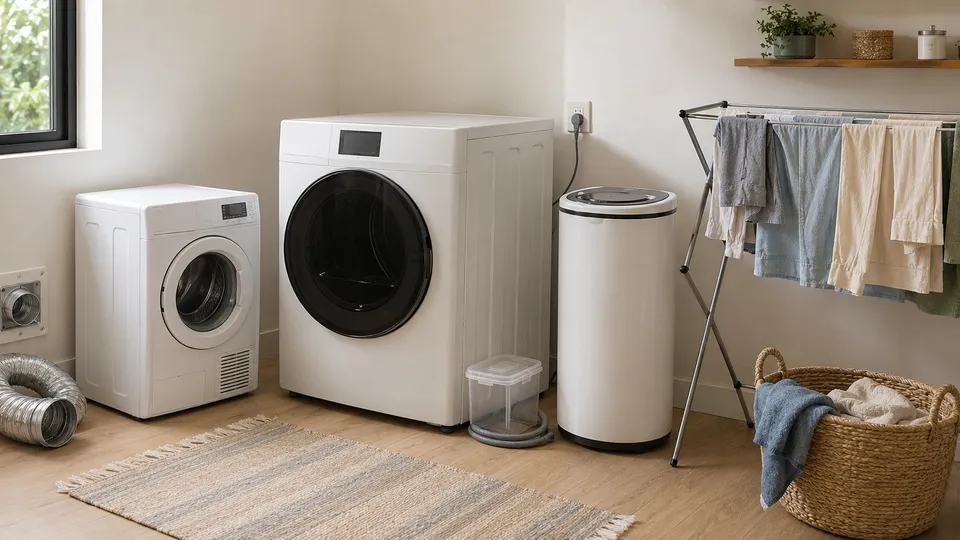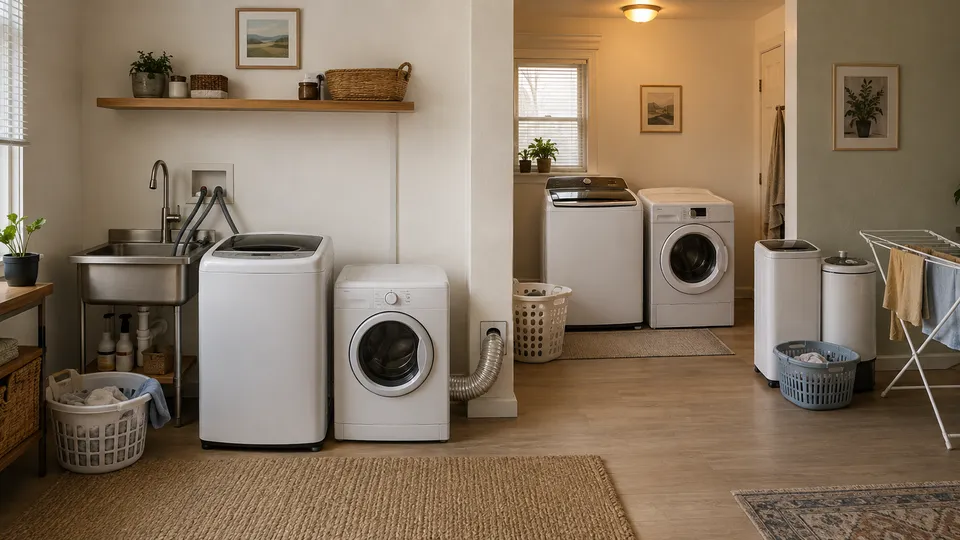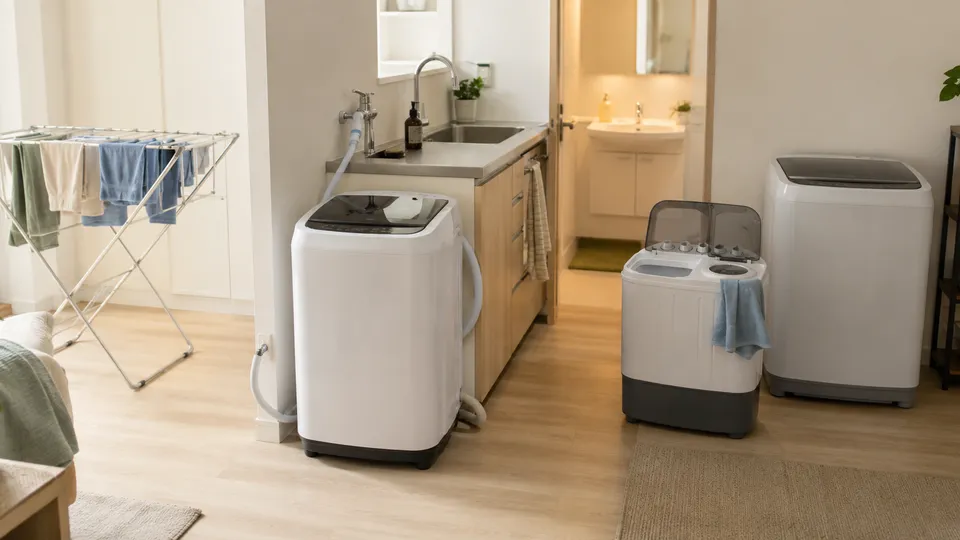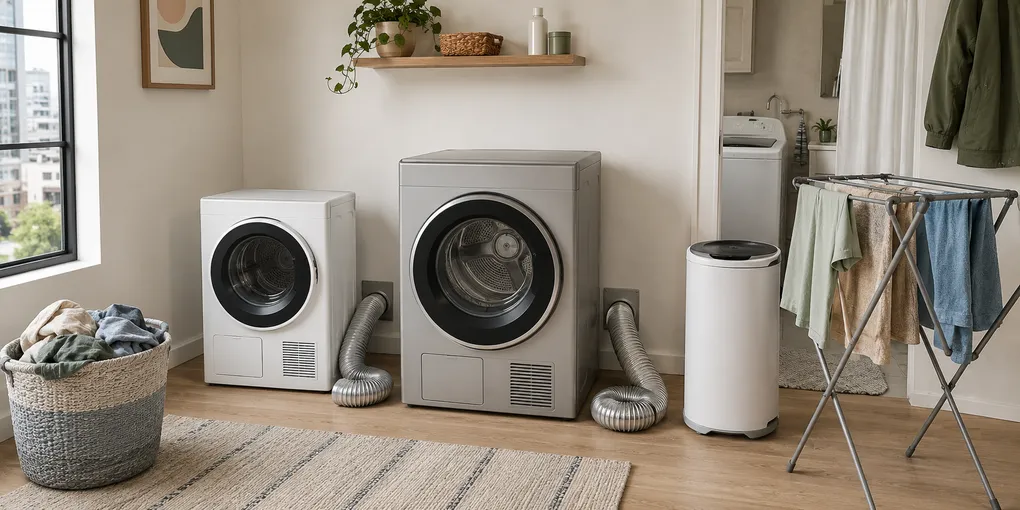
Looking for a portable dryer machine for an apartment means checking the complete drying setup, not simply choosing the smallest product. A compact heated dryer can make apartment laundry more manageable, but it still has power, heat, lint, clearance, and exhaust requirements. A centrifugal spin dryer avoids heat and an exhaust hose, but it removes water rather than fully drying clothing.
The useful question is not simply which dryer is smallest. It is whether your apartment can support the exact drying method. This guide reports manufacturer-listed specifications for three distinct roles. It does not claim hands-on testing, approve an indoor exhaust route, override a lease, or treat a spin dryer as a heated dryer.
If you are still deciding how to wash clothes, start with our guide to the best portable washing machines for apartments. A dryer choice makes sense only after the whole water, drainage, electrical, and drying routine is realistic.
For the complete pairing decision, see portable washer and dryer setups for apartments.
Start Here: Which Apartment Dryer Setup Can You Actually Use?
For an apartment, the exhaust arrangement comes before capacity, brand, or price. The two BLACK+DECKER machines below are compact vented dryers. They are only candidates when the exact manual, your rental rules, a suitable outlet, clearance, lint access, and a manufacturer-directed exhaust route all work together. A standard wall outlet and a small appliance footprint are not substitutes for that check.
| Your real constraint | The category to consider | What not to assume |
|---|---|---|
| You have confirmed an acceptable exhaust route and need clothes to finish drying with heat. | Compact vented dryer, then choose capacity. | A vent hose is not an optional accessory or a solution to improvise after purchase. |
| You do not have an acceptable exhaust route but can manage a drying rack. | Centrifugal spin dryer plus rack drying. | A spin dryer is not a ventless heated dryer and will not leave laundry ready to fold. |
| A listing uses the word “ventless.” | Read that exact model’s current manual before comparing it here. | ”Ventless” does not by itself establish a portable, renter-approved, fully heated-drying setup. |
For the full distinction between externally vented dryers, ventless heat-pump appliances, and centrifugal spin dryers, see do portable dryers need to be vented. This guide stays focused on the specific compact vented and no-heat alternatives compared below.
Quick Picks
| Need | Pick | Why it fits | Important limit |
|---|---|---|---|
| Compact heated dryer for small loads | BLACK+DECKER BCED26 | 2.65 cu. ft., up to 8.8 lb. stated load, 120 V / 1,400 W, and a compact body | It is a vented dryer with a 4-inch exhaust component. |
| More compact-dryer capacity | BLACK+DECKER BCED37 | 3.5 cu. ft., up to 13.2 lb. stated load, and 120 V / 1,500 W | It is deeper, heavier, and still needs an acceptable exhaust plan. |
| No-heat moisture-removal alternative | The Laundry Alternative Ninja 3200 RPM | 13 x 13 x 24 in, standard 110 V, and no exhaust hose | It spin-dries wet clothes; it does not finish them with heated drying. |
Availability, model revisions, electrical conditions, building rules, and manufacturer instructions can change. Confirm the exact model manual before ordering.
Compare Capacity, Power, and Apartment Requirements
| Model or setup | Stated capacity or load | Stated power | Body size | Non-negotiable apartment requirement |
|---|---|---|---|---|
| BLACK+DECKER BCED26 | 2.65 cu. ft., up to 8.8 lb. | 120 V / 1,400 W | 23.6 W x 17.1 D x 27.5 H in | A manufacturer-directed 4-inch exhaust arrangement, accessible lint filter, suitable outlet, and loading clearance. |
| BLACK+DECKER BCED37 | 3.5 cu. ft., up to 13.2 lb. | 120 V / 1,500 W | 23.6 W x 21.5 D x 27.5 H in | The same exhaust and electrical checks, plus room for its deeper body and front door. |
| Laundry Alternative Ninja 3200 RPM | Up to 22 lb. stated wet-laundry load | Standard 110 V | 13 x 13 x 24 in | A stable operating spot and enough room to rack-dry damp clothing afterward. |
The Ninja’s wet-laundry load is not directly comparable with a tumble-dryer drum. Its job is to remove water before rack drying, while the BLACK+DECKER machines are intended to finish a compatible load with heat when their exhaust requirements are met.
Why a No-Exhaust Option Is Not the Same as a Ventless Heated Dryer
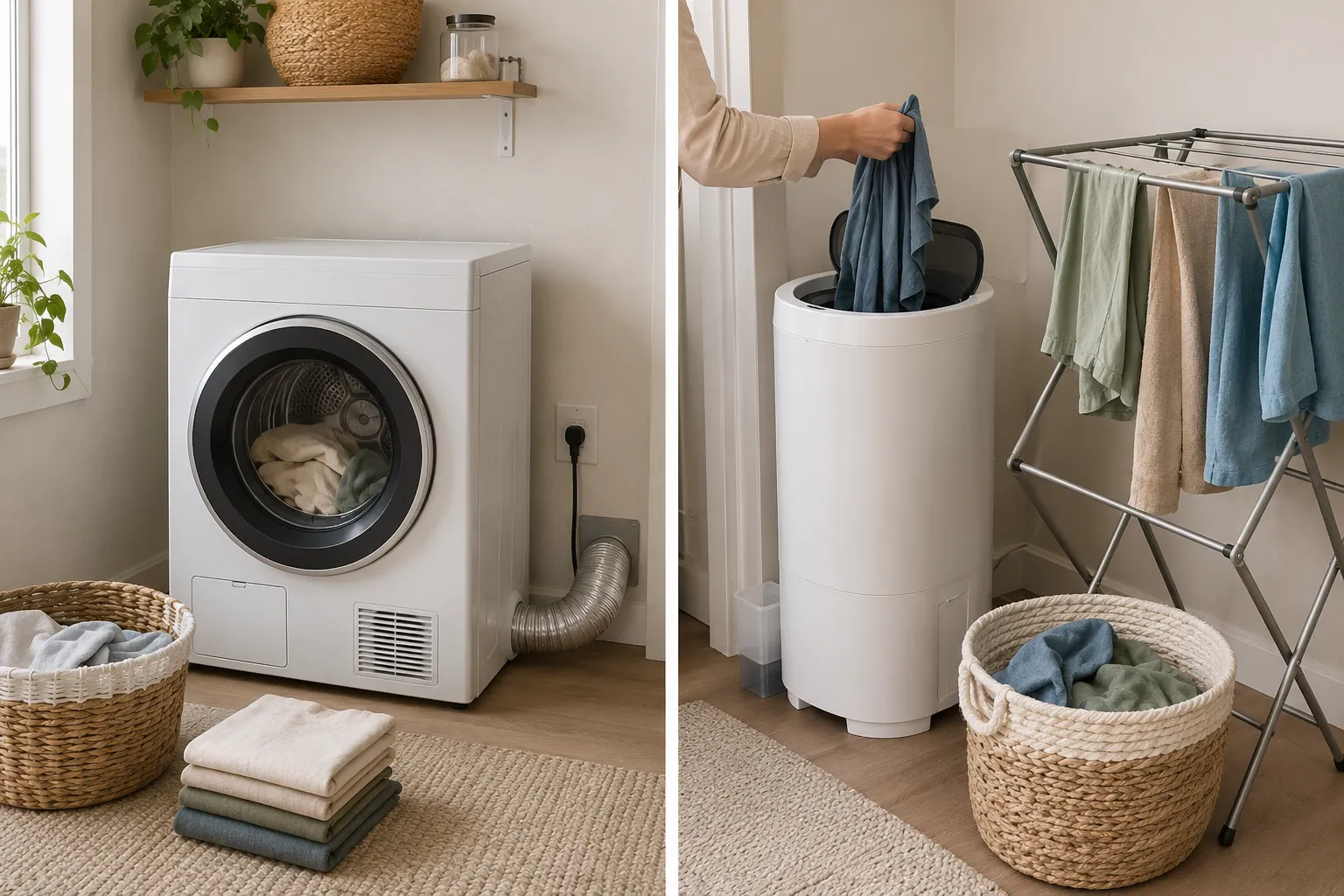
The phrase “portable dryer machine” covers products that solve different apartment problems. Shopping results often place compact vented electric dryers beside centrifugal spin dryers, even though only the heated dryer is intended to finish laundry. A spin dryer is a no-heat, no-exhaust alternative for removing water; it is not a ventless heated dryer. Choose by the apartment’s actual limits first: an approved exhaust route and a suitable outlet point toward a compact heated dryer; no viable exhaust route points toward a spin dryer plus a drying rack, not an unapproved heated-dryer setup.
| Type | What it does | What the apartment must support |
|---|---|---|
| Compact heated tumble dryer | Uses heat and airflow to finish drying laundry. | Its stated power requirements, clearance, lint care, and manufacturer-directed exhaust arrangement. |
| Centrifugal spin dryer | Uses high-speed spinning to remove much of the water from already-washed clothes. | A stable place to operate, its stated outlet requirements, and a place to hang clothes afterward. |
| Drying rack | Lets damp clothing finish through air drying. | Floor or wall space, airflow, and a routine that can accommodate drying time. |
This difference matters for renters. A standard wall plug is not proof that a heated dryer can operate anywhere. Likewise, a product that needs no exhaust hose is not automatically a complete drying solution.
Five Checks Before You Compare Products
1. Confirm the Rental Rules
Read the lease and building rules for language about dryers, heat-producing appliances, exhaust, moisture, electrical loads, and in-unit laundry. A compact body does not make an appliance automatically permitted. Ask in writing when the rule is unclear.
2. Treat Exhaust as a Purchase Condition
Both heated BLACK+DECKER models in this guide are presented by the manufacturer as vented dryers with 4-inch exhaust components. Do not buy one because it looks small and solve the exhaust question later. Confirm that the exact manual, your apartment, and the building rules support the proposed arrangement before ordering.
This is also why a room with no suitable exhaust plan may be a better fit for a spin dryer plus a rack, rather than a compact tumble dryer.
For a direct explanation of what vented, ventless heat-pump, and centrifugal spin dryers each require, read do portable dryers need to be vented.
3. Check the Outlet and the Physical Footprint Together
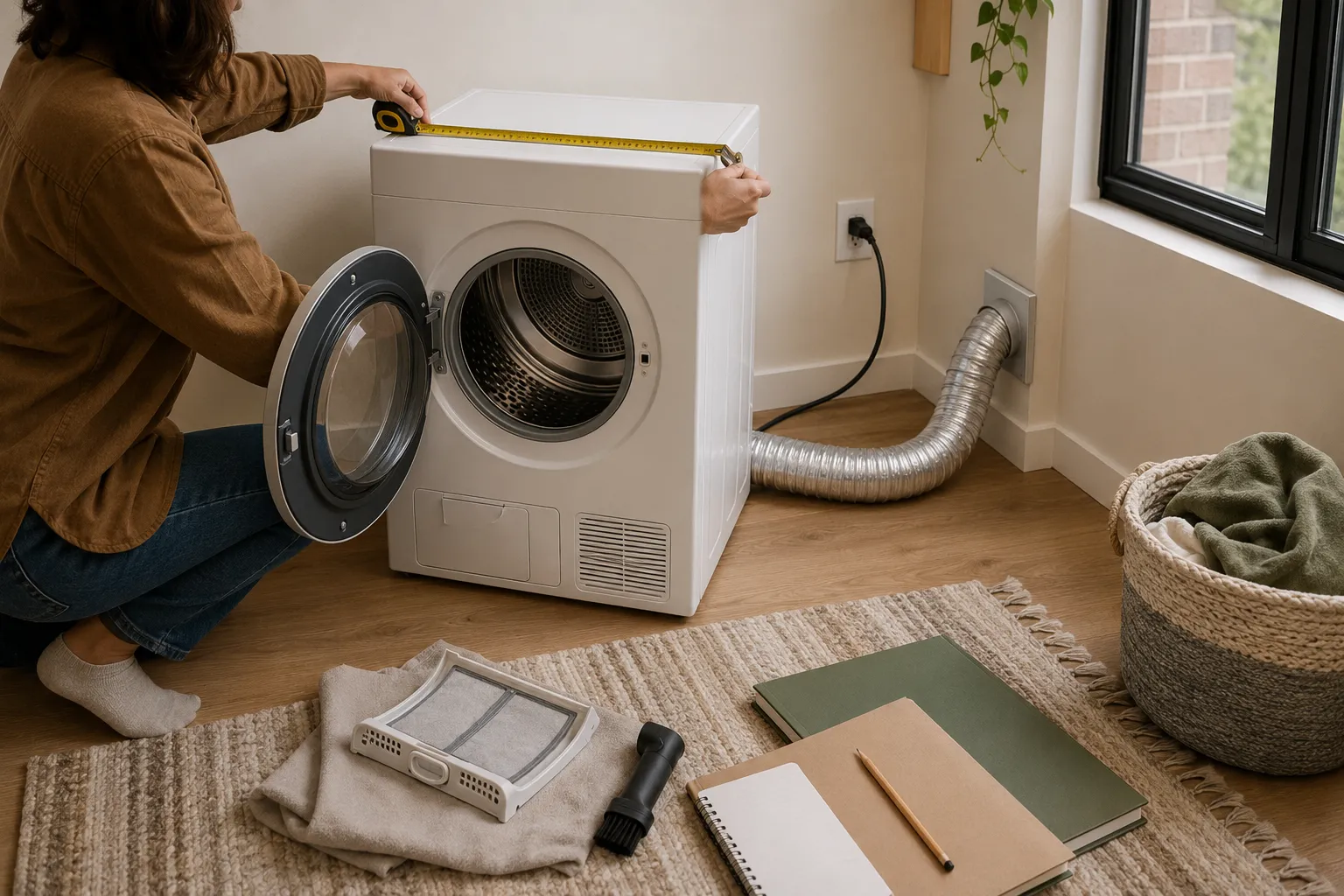
Measure the dryer body, clearance around the door, and the route to the wall outlet before you compare capacity. Do not make an extension cord, power strip, or an overloaded outlet the foundation of a heat-producing appliance plan. Use the exact model’s current electrical instructions.
4. Plan for Lint Care and Heat
Lint filters are not optional maintenance. A small dryer still creates lint and heat in a small room. Leave access to the filter and follow the model-specific cleaning instructions. Do not position a dryer where daily filter care or airflow access becomes impractical.
5. Plan What Happens After the Spin Cycle
A centrifugal machine can shorten rack-drying time, but damp items still need somewhere to finish. Towels, jeans, bedding, and humid weather can make that difference more obvious. Choose the product that matches the whole weekly routine, not the shortest product listing.
For the wider apartment checklist, including water supply, drainage, floor stability, and a drying plan, see can you use a portable washing machine in an apartment.
Best Compact Heated Dryer: BLACK+DECKER BCED26
The BLACK+DECKER BCED26 is the small heated-dryer option for someone whose apartment has already passed the exhaust, outlet, clearance, and rental checks. BLACK+DECKER lists a 2.65 cu. ft. internal capacity, a stated laundry load of up to 8.8 lb., and a body measuring 23.6 W x 17.1 D x 27.5 H in. The company lists the unit at 48.4 lb. and 120 V / 1,400 W.
BLACK+DECKER lists multiple drying settings, sensor dry, a lint filter, and an included exhaust connector with a 4-inch dryer vent hose. Those are useful product features, but the exhaust component is the deciding fact for an apartment. This is not a ventless drying solution.
It fits best when:
- Your regular loads are small enough for the stated
8.8 lb.capacity. - You have confirmed the exact exhaust arrangement before purchase.
- You can leave room to load the front door and access the lint filter.
- You want finished heated drying rather than a separate spin-and-rack routine.
Do not choose it if the plan depends on treating the vent hose as an optional accessory, improvising the electrical route, or placing the dryer in a corner with no working clearance. In those cases, the right answer may be no heated dryer at all.
Best for Fewer, Larger Loads: BLACK+DECKER BCED37
The BLACK+DECKER BCED37 is the capacity step-up for an apartment where a small dryer would create too many tiny cycles. BLACK+DECKER lists a 3.5 cu. ft. drum, a stated laundry capacity of up to 13.2 lb., and dimensions of 23.6 W x 21.5 D x 27.5 H in. It weighs 49.5 lb. and uses 120 V / 1,500 W power.
Like the BCED26, it is a compact vented dryer with a 4-inch exhaust connector, heat settings, and lint-filter maintenance. The extra capacity does not turn it into a casual closet appliance. Its greater depth, heat, and exhaust planning make it a reasonable comparison only for renters with a real laundry location.
It fits best when:
- The BCED26’s stated load size would mean too many drying cycles.
- The deeper
21.5 inbody still leaves a workable path and door clearance. - You have an approved location and an exhaust plan for this exact model.
- You prefer a compact tumble dryer rather than repeated spin-and-rack drying.
Skip the capacity upgrade when its footprint would block a walkway or force you to compromise on exhaust access. More drum space is not useful if the apartment cannot support the appliance around it.
Best When You Cannot Use a Heated Dryer: The Laundry Alternative Ninja 3200 RPM
The Laundry Alternative Ninja 3200 RPM is a different category. It is a centrifugal spin dryer, not a heated tumble dryer. The manufacturer lists a 3200 RPM spin speed, a stated wet-laundry load of up to 22 lb., a 13 x 13 x 24 in footprint, and use with a standard 110 V outlet.
The product page specifically describes no heat and no exhaust or venting. It says the spin cycle removes moisture quickly and then directs users to hang the load to finish. That makes it a realistic alternative for a renter who cannot confirm a compact dryer’s exhaust conditions, but it is not a promise of fully dry clothing at the end of the cycle.
It fits best when:
- A heated dryer’s exhaust route is unavailable or not approved.
- You have room for a rack and want to reduce, rather than eliminate, air-drying time.
- You are comfortable moving wet clothes into a separate appliance after washing.
- The small footprint matters more than hands-off heated drying.
The tradeoff is an extra transfer and an ongoing rack-drying step. Do not compare its capacity directly with a tumble-dryer drum or assume it removes the need for a practical place to manage wet clothing.
Compact Dryer vs. Spin Dryer: What Changes in Daily Use?
| Question | Compact heated dryer | Centrifugal spin dryer |
|---|---|---|
| Does it use heat? | Yes. | No. |
| Does it need an exhaust plan? | These BLACK+DECKER models do. | The Ninja product page says no exhaust or venting. |
| Does laundry come out ready to fold? | That is the purpose of a heated drying cycle, subject to load and settings. | No. It needs hanging time after the spin cycle. |
| Does it add a second transfer? | No extra transfer after loading the dryer. | Yes. You move wet laundry into the spinner. |
| What is the main apartment constraint? | Exhaust, heat, lint care, outlet, and clearance. | A stable operating space plus room to hang clothes. |
The best choice is often determined by the apartment, not by the product’s capacity label. A renter with a documented exhaust route may value a compact heated dryer. A renter without one may get more practical value from a spin dryer and drying rack than from a tumble dryer that cannot be used as directed.
Do Not Let the Dryer Solve Only Half the Laundry Problem
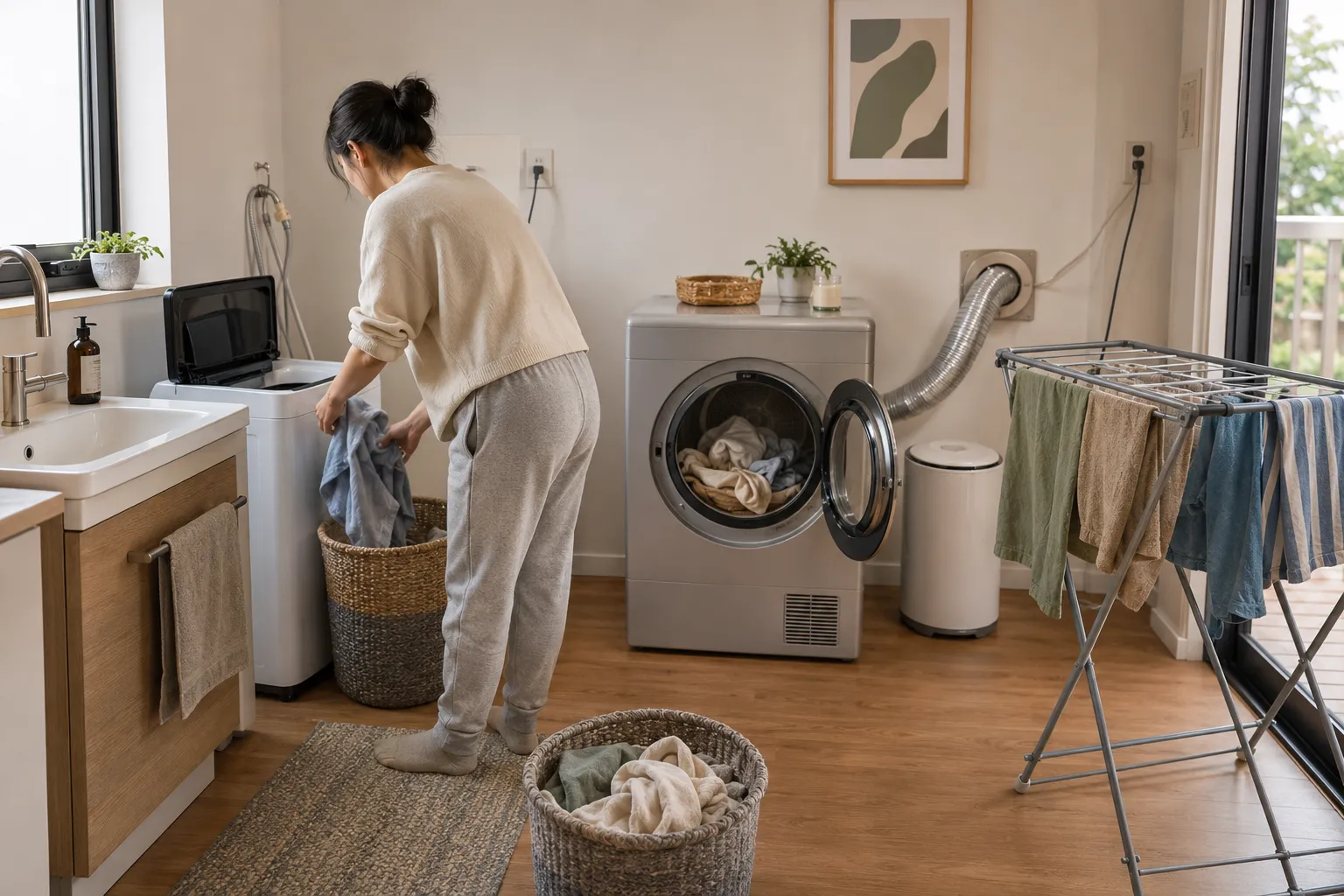
Drying is the last stage of a larger setup. Before buying either category, make sure the washer itself has a documented faucet connection or manual-fill workflow, a secure drain route, and a permitted place to operate. Our portable washing machine faucet compatibility guide covers why a removable aerator is only a starting point, not a universal connection approval.
You should also measure the storage location for both appliances together. A washer that rolls to the sink and a dryer that remains on the floor can consume more usable space than their product dimensions suggest. Include doors, laundry baskets, wet-clothing transfer, ventilation access, and the route you walk through every day.
FAQ
Can I use a portable dryer in an apartment?
Possibly, but only after the rental rules, electrical requirements, location, clearance, and the exact model’s venting or operating instructions are confirmed. A compact dryer is not automatically permitted because it plugs into a standard outlet.
Do compact portable dryers need a vent?
Some do. The BLACK+DECKER BCED26 and BCED37 covered here are vented models with 4-inch exhaust components. Do not treat their compact size as evidence that they can be run without the manufacturer-directed exhaust arrangement.
Is a spin dryer the same as a clothes dryer?
No. A spin dryer uses centrifugal force to remove water. It does not use heat to finish drying clothes, so you still need a drying rack or another appropriate finish-drying method.
Can I use an extension cord with a portable dryer?
Follow the exact model manual. Do not design a dryer setup around an extension cord or power strip simply because the preferred location is farther from an outlet. Heat-producing appliances deserve a documented electrical plan.
Which is better for a tiny apartment: a compact dryer or a drying rack?
A drying rack can be the more realistic choice when there is no documented exhaust route, no approved appliance location, or little margin for heat and lint maintenance. A compact dryer is useful only when the apartment supports its complete operating requirements.
Bottom Line
The BLACK+DECKER BCED26 is the compact heated option to compare when your exhaust and electrical plan are already confirmed. The BCED37 is the larger compact choice for someone who can accept its deeper footprint. The Ninja 3200 RPM is the no-heat alternative for reducing water before rack drying, not a substitute for a finished heated-dryer cycle.
Do not buy the smallest dryer first and ask whether it fits later. Confirm the apartment’s rules and the complete drying workflow first, then choose the product category that the space can actually support.