Lighting is one of those things you don’t think about until a room feels wrong. You’ve cleaned, organized, and arranged the furniture, but something still feels off. The space feels cold, flat, or a little too much like an office after hours.
Most of the time, the problem is not the room. It’s the light.
A single ceiling fixture with a harsh bulb can make even a well-decorated living room feel sterile. Meanwhile, swapping one bulb or adding one lamp in the right corner can make the same room feel warm, settled, and easier to relax in.
This guide covers the practical difference between warm, neutral, and cool light, when to use each one, and how to make better lighting choices without rewiring your apartment or spending heavily on new fixtures.
Warm Light vs. Cool Light: The Simple Difference
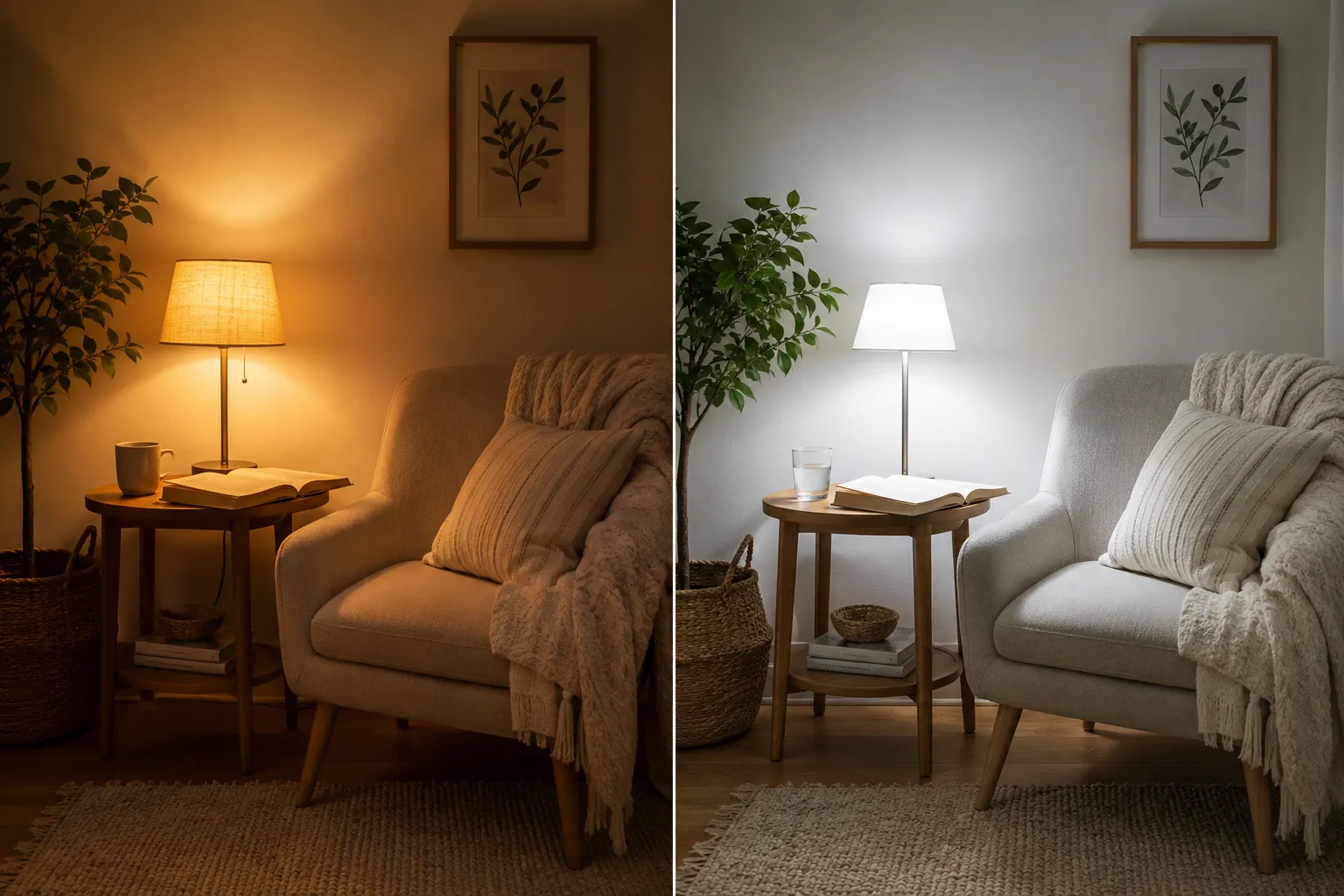
Warm light leans yellow, amber, or candle-like. It’s the kind of glow you see at sunset, in a cozy restaurant, or beside a fireplace. It makes skin tones look softer, wood tones feel richer, and rooms feel more inviting.
Cool light leans white or bluish. It’s closer to midday sun, a bright office ceiling, or a hospital hallway. It can make colors look sharper and details easier to see, but it can also make a room feel stark or clinical if used where you’re trying to relax.
Neither one is wrong. They just belong in different places.
Think of warm light as the default for relaxing, winding down, and making a room feel like home. Think of cool light as a tool for tasks where clarity matters more than mood.
Quick Kelvin Guide for Home Lighting
Light color is measured in Kelvin (K). Lower numbers mean warmer, yellower light. Higher numbers mean cooler, bluer light.
You don’t need to memorize exact numbers, but knowing the basic ranges makes bulb shopping much easier.
| Kelvin Range | Light Appearance | Best For |
|---|---|---|
| 2700K – 3000K | Warm white / soft white | Living rooms, bedrooms, dining areas, reading nooks, anywhere you relax |
| 3000K – 4000K | Neutral white / cool white | Kitchens, bathrooms, home offices, laundry rooms, closets |
| 4000K – 5000K | Cool white / bright white | Task-heavy areas, garages, workshops, detailed craft spaces |
| 5000K – 6500K | Daylight / blue-white | Spaces where exact color matching matters, some workshops, high-focus task lighting |
For most homes, especially small apartments and rentals, the sweet spot is 2700K to 3000K in living areas and bedrooms, and 3000K to 4000K in kitchens and bathrooms.
A common mistake is buying bulbs labeled “daylight” for the whole home. Daylight bulbs can be useful in specific task areas, but in a living room or bedroom at night, they often feel too alerting and can make the space feel less comfortable.
How Light Color Changes the Feel of a Room
Light color does more than help you see. It changes how a room feels.
Warm light wraps the room. It softens hard edges, makes white walls feel less stark, and creates a sense of enclosure that feels safe rather than small. This is especially helpful in rentals with basic white walls, builder-grade flooring, or limited decor.
Cool light flattens the room. It reduces shadows, makes details sharper, and can make a space feel more alert. This is useful when you need to see clearly, but it can make a living room feel like a waiting room if used as the main light source.
Wall color matters too. Warm light brings out warmth in beige, cream, wood tones, terra cotta, and warm neutrals. Cool light can make those same colors look muddy. On the other hand, cool light can make crisp whites, grays, and blues look cleaner, while warm light can make them look slightly yellow.
If your apartment has cool gray walls and you add warm bulbs, the gray may shift toward green or beige. That’s not always bad, but it’s worth noticing before you buy a whole set of bulbs.
Room-by-Room Lighting Recommendations
Not every room needs the same light. Here’s what works in most homes.
Living Room
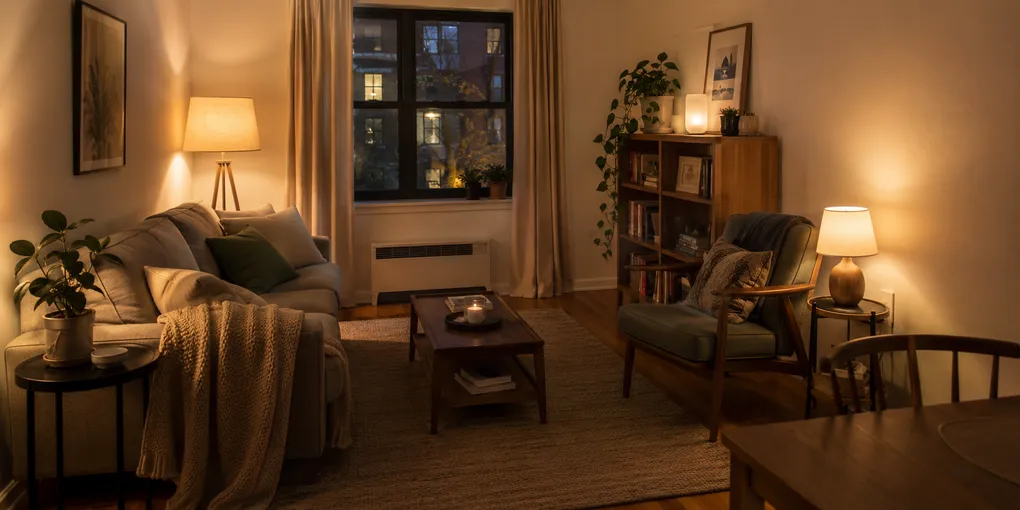
The living room is where most people relax, watch TV, read, talk, or wind down at the end of the day. Warm light in the 2700K to 3000K range is almost always the right choice here.
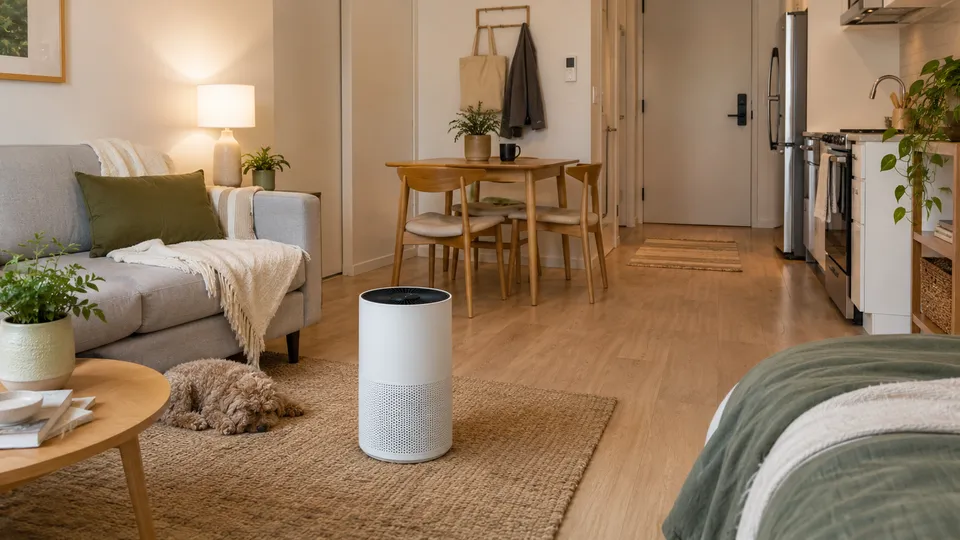
Instead of relying on one overhead fixture, layer the light. A floor lamp near the sofa, a table lamp on a side table, and maybe a small accent light on a shelf create a softer, more inviting space than a single bright source in the ceiling.
If your living room also functions as a work-from-home spot or study area, consider an adjustable lamp with a neutral bulb (around 3500K to 4000K) for task work, and keep the rest of the room warm for relaxing.
Bedroom
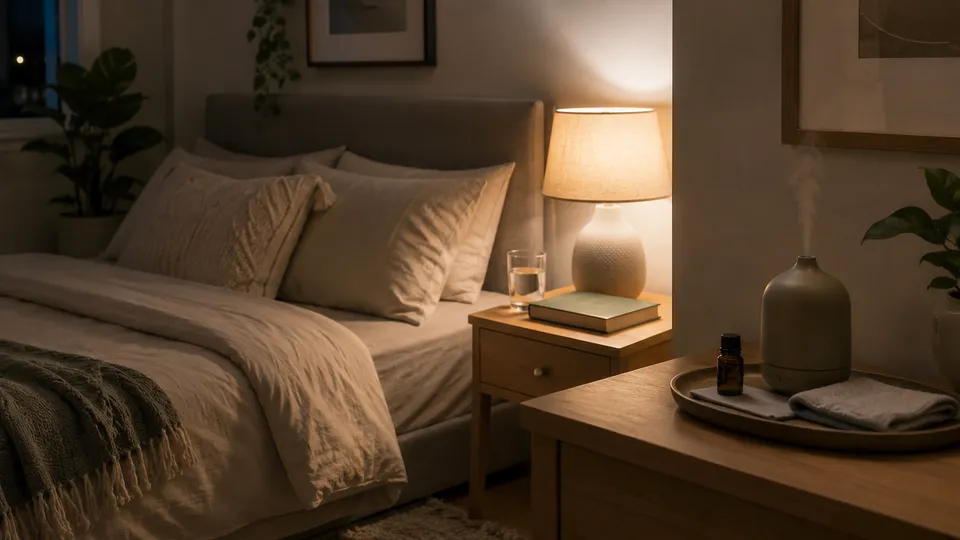
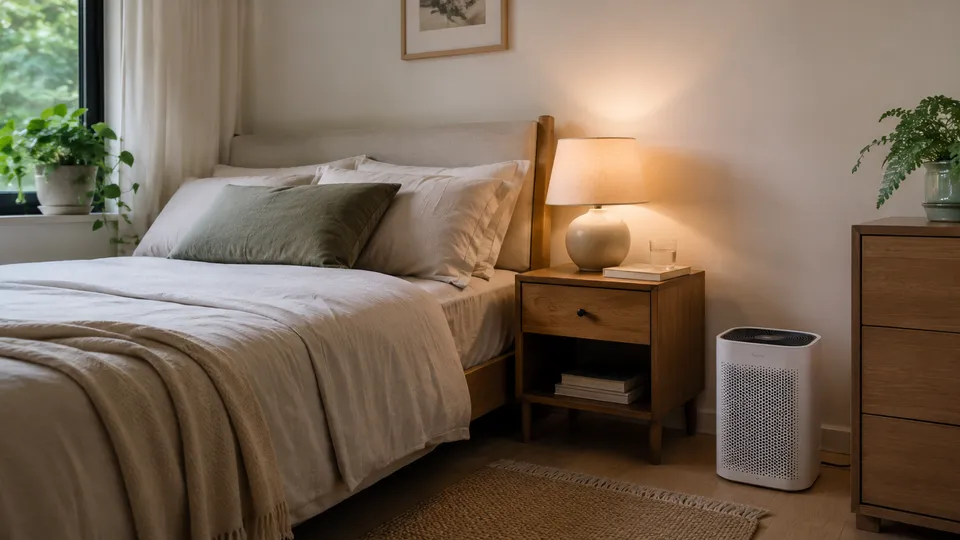
Bedrooms benefit from the warmest light in the home. Stick with 2700K to 3000K bulbs.
A bedside lamp with a warm bulb helps signal to your body that the day is winding down. Overhead lighting in a bedroom should be dimmable or used sparingly. Many people find that they rarely use the bedroom ceiling light at all, preferring bedside lamps, wall sconces, or a soft floor lamp instead.
Avoid cool white or daylight bulbs in the bedroom. They can make the space feel alert and clinical at the exact moment you want it to feel calm.
Kitchen
The kitchen is one of the few rooms where neutral light often works better than warm light.
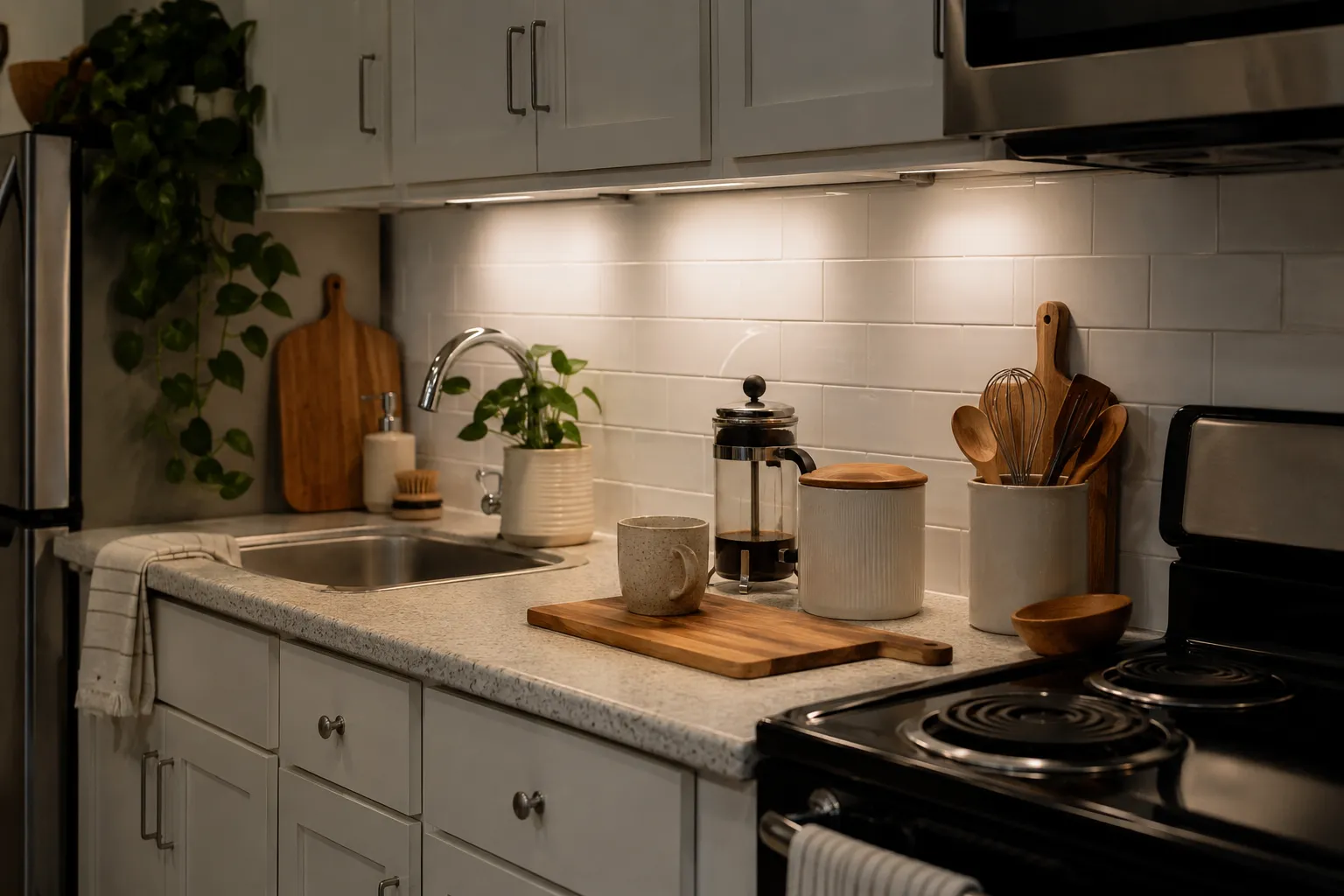
Under-cabinet lighting, task lighting over prep areas, and brighter overhead fixtures benefit from bulbs in the 3000K to 4000K range. This gives you enough clarity to chop vegetables, read recipes, and clean surfaces without the room feeling sterile.
You don’t need the kitchen to feel like an operating room. A neutral 3500K bulb often strikes the right balance: clear enough for tasks, warm enough to still feel like part of the home.
If your kitchen is open to the living area, try to keep the color temperature consistent between the two spaces. A warm living room next to a harsh white kitchen can feel visually jarring, especially in a studio or open-plan apartment.
Bathroom
Bathrooms need practical light, but they don’t need to feel cold.
For most bathrooms, 3000K to 3500K works well. It’s bright enough for grooming and makeup, but warm enough that the room doesn’t feel like a public restroom. Vanity lighting around or beside the mirror is more useful than a single overhead fixture casting shadows downward.
If you do detailed grooming or makeup application that requires exact color matching, a dedicated task light around 4000K to 5000K can help, but keep it contained to the task area rather than lighting the whole bathroom that way.
Home Office or Desk Area
Task lighting for a home office or desk benefits from neutral to cool white, around 3500K to 4500K. This range helps with focus, reduces eye strain during reading, and keeps you alert during work hours.
The key is flexibility. If your desk is in the living room or bedroom, use a dedicated task lamp with a neutral bulb and keep the rest of the room warm. When work is done, turn off the task light and let the warmer ambient lighting take over.
Lighting Tips for Renters and Small Apartments
Renters often face two lighting problems at once: harsh overhead fixtures they can’t change, and limited permission to install new lights. The good news is that most of the best lighting upgrades don’t require tools, wiring, or landlord approval.
Use floor lamps and table lamps. A well-placed floor lamp can light a whole corner better than a ceiling fixture. A table lamp on a side table, shelf, or even a sturdy stool creates pools of warm light exactly where you need them.
Try plug-in wall sconces. These mount to the wall but plug into a standard outlet, so there’s no hardwiring required. They’re great beside the bed, near a reading chair, or in a hallway. Check your lease and wall surface before mounting anything, and use removable adhesive hooks or damage-free mounting methods when possible.
Add under-cabinet lighting in the kitchen. Battery-operated or plug-in LED puck lights under cabinets can transform a dark, shadowy counter into a usable prep area. They’re affordable, renter-friendly, and easy to install with adhesive backing.
Replace bulbs before replacing fixtures. The cheapest and fastest upgrade is often just swapping the bulb. If a room feels harsh, try a warmer Kelvin bulb before buying a new lamp. If a task area feels too dim, try a higher-lumen bulb with a neutral temperature.
Use smart bulbs for flexibility. Smart bulbs let you change color temperature throughout the day: neutral or cool during work hours, warm in the evening, and very warm in the last hour before bed. They’re especially useful in rooms that serve more than one purpose.
Watch for outlets. In older apartments, outlets can be sparse. Before buying a lamp, check where the nearest outlet is and whether the cord will reach without creating a trip hazard or awkward cable trail across the floor.
Common Lighting Mistakes to Avoid
Even a small lighting mistake can make a room feel uncomfortable. Here are the most common ones.
Using one overhead light for everything. A single ceiling fixture creates flat, shadow-heavy light. Layering with floor lamps, table lamps, and task lights makes a room feel more inviting and more functional.
Putting daylight bulbs everywhere. Daylight bulbs (5000K and above) are useful in specific task areas but harsh in living spaces. Use them sparingly and only where you need maximum clarity.
Ignoring lumens. Kelvin tells you the color of the light. Lumens tell you how bright it is. A warm 2700K bulb can still be too bright if the lumens are high. A cool 4000K bulb can feel less harsh if the lumens are moderate. Consider both numbers when choosing bulbs.
Mixing color temperatures in the same room. A warm lamp on one side of the living room and a cool overhead light on the other creates visual discomfort. If budget or access limits how many bulbs you can change at once, start with the lights you use most often.
Forgetting dimming and controls. A dimmable bulb or a smart plug can make a single light source far more versatile. Bright for cleaning or organizing, soft for relaxing or watching a movie.
Choosing bulbs by look alone in the store. A bulb’s appearance in a bright retail aisle tells you almost nothing about how it will feel in your living room at 9 p.m. Buy one bulb first, test it in your space, and only then commit to more.
FAQ
What Kelvin is best for a living room?
For most living rooms, 2700K to 3000K (warm white or soft white) feels the most comfortable. This range creates a cozy, inviting glow that works well for relaxing, watching TV, reading, and spending time with others.
Is cool white or warm white better for kitchens?
A neutral white around 3000K to 4000K is usually best for kitchens. It provides enough clarity for cooking and cleaning without making the space feel cold. If your kitchen is open to the living area, try to match or closely align the color temperatures between the two spaces.
Can I mix warm and cool light in the same room?
It’s generally better to keep color temperatures consistent within a single room. Mixed temperatures can feel visually uncomfortable. The exception is task lighting: a neutral desk lamp in a warm-lit bedroom is fine when the task light is focused and only on while you’re working.
What’s the difference between lumens and Kelvin?
Kelvin (K) measures the color of the light, from warm yellow to cool blue. Lumens measure brightness, or how much light the bulb puts out. You need to consider both: a bulb with the right Kelvin but too many lumens can still feel harsh, and a bulb with the right brightness but the wrong Kelvin can feel cold or dim.
Are smart bulbs worth it for renters?
Smart bulbs can be very useful for renters because they offer dimming, color temperature changes, and scheduling without any wiring changes. They’re especially helpful in rooms that serve multiple purposes, like a living room that doubles as a home office, or a bedroom where you want cooler light during the day and very warm light at night.
What if my rental has harsh built-in lighting I can’t remove?
Turn off the overhead light and rely on lamps instead. Floor lamps, table lamps, and plug-in wall sconces can provide all the light you need without touching the ceiling fixture. If the overhead light is on the same switch as an outlet, use a lamp in that outlet and keep the ceiling bulb unscrewed or switched off.
Does wall color affect how light looks?
Yes. Warm light brings out warmth in beige, cream, wood, and earth tones. Cool light makes crisp whites, grays, and blues look cleaner. Warm light on cool gray walls can shift the gray toward green or beige. Test one bulb before buying a whole set, especially if your walls are a strong or unusual color.
For a bedroom-specific fixture and reading setup, see how to choose the right bedside lamp for reading and relaxing.
Final Thoughts
Good lighting doesn’t require expensive fixtures, professional design, or a renovation budget. It mostly comes down to choosing the right bulb color for the right room, layering light instead of relying on one ceiling fixture, and paying attention to how a space actually feels at night.
For living rooms and bedrooms, default to warm light in the 2700K to 3000K range. For kitchens, bathrooms, and workspaces, neutral light around 3000K to 4000K usually strikes the right balance. Save daylight and cool white bulbs for the rare task areas that truly need them.
If you’re renting or in a small apartment, you have more options than you might think. Floor lamps, table lamps, plug-in sconces, under-cabinet lights, and smart bulbs can all dramatically improve how your home feels without a single hole in the wall.
The best test is simple. Spend one evening in the room with the lights you actually use. If the space feels inviting and easy to settle into, the lighting is probably doing its job. If it feels cold, harsh, or flat, try a warmer bulb or a more layered setup before changing anything else.