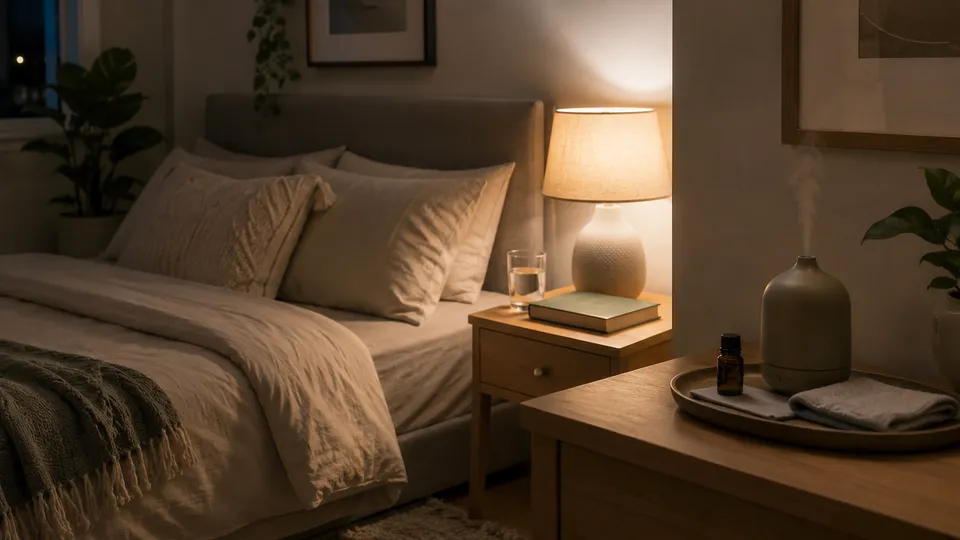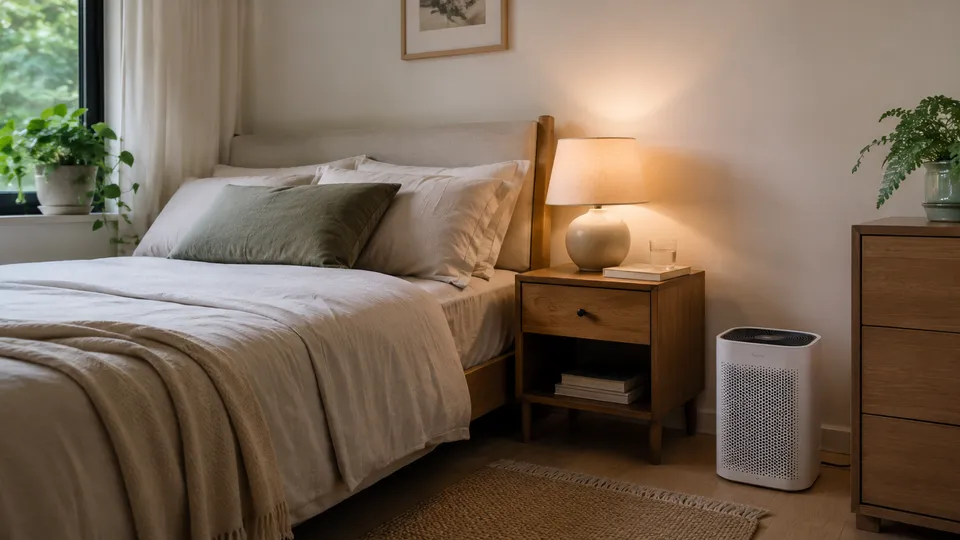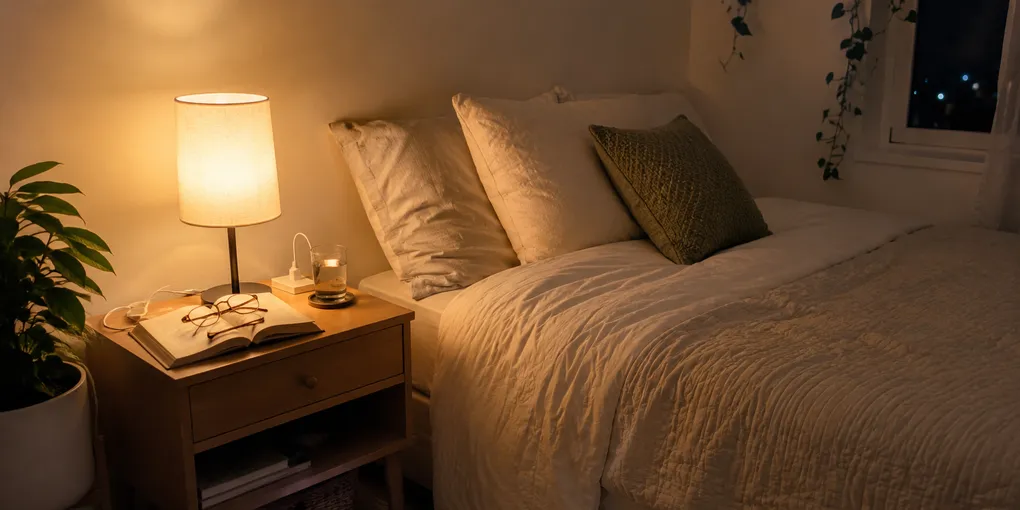
There are few things more annoying than settling into bed with a good book, turning on your lamp, and realizing the light is all wrong.
If it’s too dim, you’re squinting at the page. If it’s too bright, your bedroom suddenly feels like a sterile waiting room. A lamp that’s too short ends up lighting the nightstand instead of your book, while a towering one can put the bare bulb right in your line of sight.
A good bedside lamp shouldn’t just look nice. It should help you read comfortably, make the room feel calmer at night, and be easy to use when you’re already under the covers.
That matters even more in a small bedroom, rental, first apartment, or shared space. You may be working with a tiny nightstand, limited outlets, no permission to hardwire sconces, or a partner who doesn’t want the whole room lit up at midnight.
Here’s how to choose a bedside lamp that works for reading and relaxing without overcomplicating the decision.
Start With What You Actually Do in Bed
Before choosing a bedside lamp, think about your real bedtime routine.
Some people need a lamp for reading physical books every night. Others mostly want a soft glow while they wind down, charge their phone, or get up for water. A lamp used for journaling, nursing, early mornings, or shared-bed reading has different needs than one that’s mostly decorative.
For regular reading, focus on brightness, direction, glare control, and height. For relaxing, focus on warm light, shade softness, dimming, and switch placement. For tiny bedrooms, the footprint matters just as much as the light itself.
A beautiful lamp that eats the whole nightstand or makes you reach behind furniture every night isn’t a good bedside lamp. It’s just clutter with a bulb.
How Bright Should a Bedside Reading Lamp Be?
For bedside reading, a good starting point is around 400 to 450 lumens. That’s usually enough for a book without making a small bedroom feel harsh.
Readers who want a brighter lamp, have a dark shade, or keep the lamp farther from the bed may prefer something closer to 800 lumens. Beyond that, the light can start feeling intense for nighttime use unless the lamp is dimmable, shaded well, or aimed carefully.
The key is to shop by lumens, not watts. Lumens tell you how bright the bulb is. Watts tell you how much energy the bulb uses.
A dim lamp might look cozy from across the room, but the moment you open a book, you’ll find yourself tilting the page, leaning closer, and working harder than you should. On the other side, a bright exposed bulb can create glare, especially in a small bedroom.
Aim for light that clearly reaches the page without lighting the whole room like a desk.
Choose Warm Light for a Relaxing Bedroom
Bulb color changes the mood of the room quickly.
For most bedrooms, warm white or soft white light feels better than cool daylight-style light. Warm bulbs have a softer yellow tone that works well near the bed, especially when you’re trying to wind down. Cooler, bluish bulbs can be useful in workspaces, but beside the bed they often feel too alerting or clinical.
Light color is measured in Kelvin. For bedside lamps, many people prefer a warm range around 2700K to 3000K. You don’t need to memorize the number, but it helps when comparing bulb labels.
A warmer bulb is especially useful in rentals with white walls, basic flooring, or harsh overhead lighting. It can make the room feel softer without changing furniture, paint, or decor.
For a bedroom that also works as a study area or work-from-home corner, an adjustable-color bulb can help. Use brighter, more neutral light when you need to focus, then switch to warmer light at night.

How Tall Should a Bedside Lamp Be?
Lamp height is where a lot of people go wrong.
As a general starting point, a bedside table lamp around 24 to 28 inches tall often works when the nightstand is close to mattress height. The better test, though, is eye level.
When you’re sitting in bed, the bottom of the lampshade should sit around eye level or slightly below. You shouldn’t see the bare bulb from your normal reading position.
A tall bed with a low nightstand may call for a taller lamp, an adjustable lamp, or a plug-in wall sconce. A low platform bed may work better with a shorter lamp. Tiny accent lamps can look cute on a shelf, but they usually won’t reach your book well enough for regular reading.
Don’t judge the lamp by itself. Judge it next to your bed, your nightstand, and the way you sit when you read.
Fabric Shade or Metal Shade?
The shade decides where the light goes.
A soft fabric shade creates a gentle glow, which is great for relaxing. A metal or opaque shade creates a more focused beam, which can be better for reading or shared bedrooms.
| Shade Type | Best For | Watch Out For |
|---|---|---|
| Fabric shade | Soft bedroom glow, relaxing, general bedside light | Dark or thick shades can block too much reading light |
| Light-colored shade | Reading plus relaxing | May feel too bright with a high-lumen bulb |
| Dark shade | Mood lighting, decorative bedrooms | Often too dim for comfortable reading |
| Metal or opaque shade | Focused reading light, shared bedrooms | Can create harsh shadows or glare if poorly aimed |
| Adjustable shade | Readers who change positions | Needs a stable base and reachable switch |
For most people, the best bedside shade hides the bare bulb, softens glare, and still lets enough light reach the page.
A lamp can look perfect during the day and fail at night. Always think about what the shade will do after dark.
Bedside Lighting Solutions for Small Bedrooms
Small nightstands need lamps with small footprints.
A lamp can technically fit on the table and still be wrong for the room. You still need space for a water glass, phone, glasses, book, medication, lip balm, or whatever else lives by your bed. When the lamp base takes over the whole surface, the nightstand becomes less useful.
Narrow-Base Table Lamps
A narrow-base table lamp is the closest option to a classic bedside setup. It works well when you want a traditional lamp but still need room for a book, phone, and water glass.
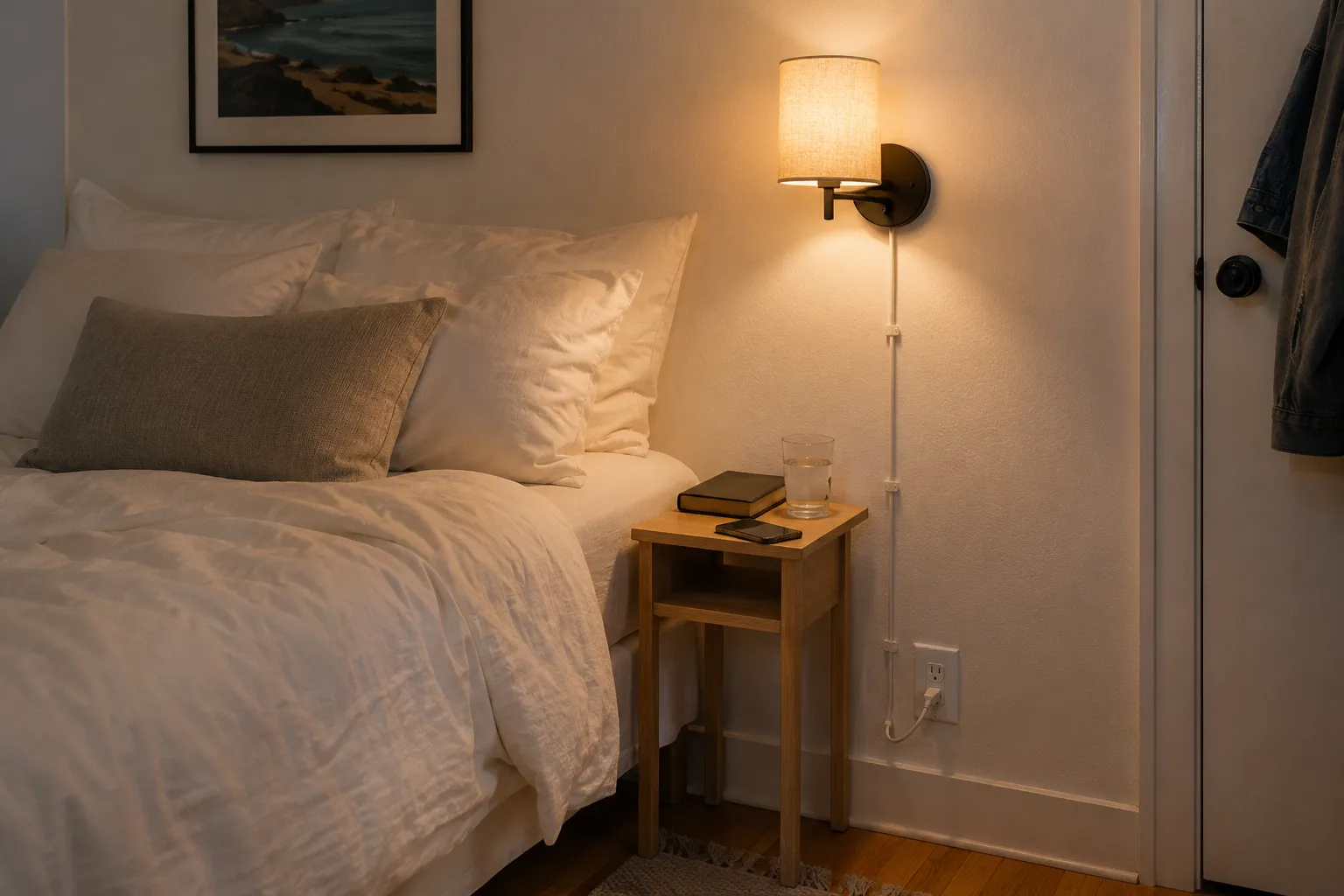
Plug-In Wall Sconces for Renters
A plug-in wall sconce frees up the nightstand and can place the light closer to reading height. Renters should check lease rules, wall surfaces, outlet placement, and mounting instructions before choosing this route.
Clip-On Reading Lights
Clip-on reading lights are useful for bunk beds, dorm-style rooms, headboards, shelves, and very tight corners. They’re best for focused reading, not for creating a soft glow across the whole bedroom.
Slim Floor Lamps Beside the Bed
A slim floor lamp can work when there’s no nightstand at all. Look for a stable base, a shade or head that directs light well, and a switch you can reach from bed.
A small bedroom doesn’t need a smaller version of every standard furniture piece. Sometimes the better answer is moving the light off the tabletop entirely.
Make the Switch Easy to Reach
A bedside lamp should be easy to turn off when you’re already in bed. This sounds obvious, but it’s one of the most common annoyances.
A lamp with a hidden switch under the shade can become irritating fast. So can an inline switch that slides behind the nightstand, a cord that falls between the bed and wall, or a lamp you have to reach across your partner to turn off.
Good bedside switch options include touch controls, pull chains, inline cord switches, and smart plugs. Touch controls are easy to use in the dark, though accidental taps can happen. Pull chains are simple when the chain hangs in the right place. Inline switches work well when they stay near the bed instead of disappearing behind furniture. Smart plugs can help renters control a lamp without changing wiring.
The switch isn’t a small detail. It’s the part you use every night.
Choose Dimming When One Lamp Has to Do More Than One Job
A dimmable bedside lamp is useful because bedrooms don’t need the same light all evening.
You may want brighter light while reading, softer light while winding down, and very low light if you get up at night. In a small bedroom, one lamp often has to act as a reading light, mood light, and practical night light.
Dimming also helps in shared bedrooms. One person can read without flooding the whole room, especially when the lamp has a focused shade or adjustable arm.
Compatibility matters here. A dimmable bulb needs to work with the lamp or dimmer being used. When comparing specific products later, rely on the manufacturer’s compatibility information rather than assuming every dimmable bulb and lamp will work together.
Check Cord Placement and Bulb Compatibility
Before choosing a lamp, check the boring details. They’re the details that keep the lamp from becoming frustrating or impractical.
Make sure the bulb fits the socket and stays within the lamp’s maximum wattage guidance. The bulb shouldn’t touch the shade. The base should feel stable on the nightstand, especially in a tiny room where you may bump the table in the dark.
Cord placement matters too. Keep cords away from walkways, bed legs, and spots where they can be pinched or damaged. Don’t run cords under rugs. A lamp cord stretched across the floor may technically work, but it’s not a good long-term setup.
For rentals, think about outlets before buying. A lamp with the wrong cord length can create a messy trail across the floor or force you into an awkward extension setup.
Common Bedside Lamp Mistakes to Avoid
The biggest mistake is choosing a lamp only because it looks good.
A tiny accent lamp may not provide enough light. A dark shade may create mood but make reading harder. A cool daylight bulb may feel fine at a desk but too sharp beside the bed. A wide lamp base may look balanced in a staged photo but swallow your small nightstand.
Another mistake is expecting one lamp to do everything. Sometimes the better setup is a soft shaded lamp for general bedroom glow plus a small adjustable reading light for books.
Skip any lamp that makes the nightly routine more annoying. The right one should be easy to reach, easy to turn off, bright enough for reading, and soft enough for the bedroom.
FAQ
Can I use a smart bulb in a bedside lamp?
Yes, as long as the bulb fits the lamp socket and follows the lamp’s wattage and compatibility guidance. Smart bulbs can be helpful if you want dimming, color temperature changes, schedules, or voice control. Check compatibility before buying, especially if the lamp already has built-in dimming.
What’s better for reading in bed: a lamp or a wall sconce?
A table lamp is easier for most renters and works well when the nightstand has enough room. A plug-in wall sconce can be better for small bedrooms because it frees up the tabletop and places light closer to reading height. The best choice depends on your lease, wall surface, outlet location, and how much nightstand space you have.
Should bedside lamps match on both sides of the bed?
Not at all. Modern bedroom design often looks better when the two sides relate without matching perfectly. The key is visual balance: similar height, a shared color palette, or compatible shade shapes. One side can have an adjustable reading arm while the other has a traditional fabric shade, as long as the setup feels intentional.
For the bulb temperature and room-feel decision behind that lamp choice, compare warm light vs. cool light for a cozy home.
Final Thoughts
A good bedside lamp doesn’t need to be expensive, oversized, or trendy. It needs to make your evening easier.
For reading, pay attention to lumens, direction, height, and glare. For relaxing, choose warm light, a shade that softens the bulb, and controls you can reach from bed. For small bedrooms, focus on footprint first; a lamp that takes over the entire nightstand isn’t helping.
The right bedside lamp quietly improves the whole routine. You can read without squinting, turn the light off without a struggle, and let the bedroom feel like a place to settle down instead of another room ruled by harsh overhead lighting.